




















































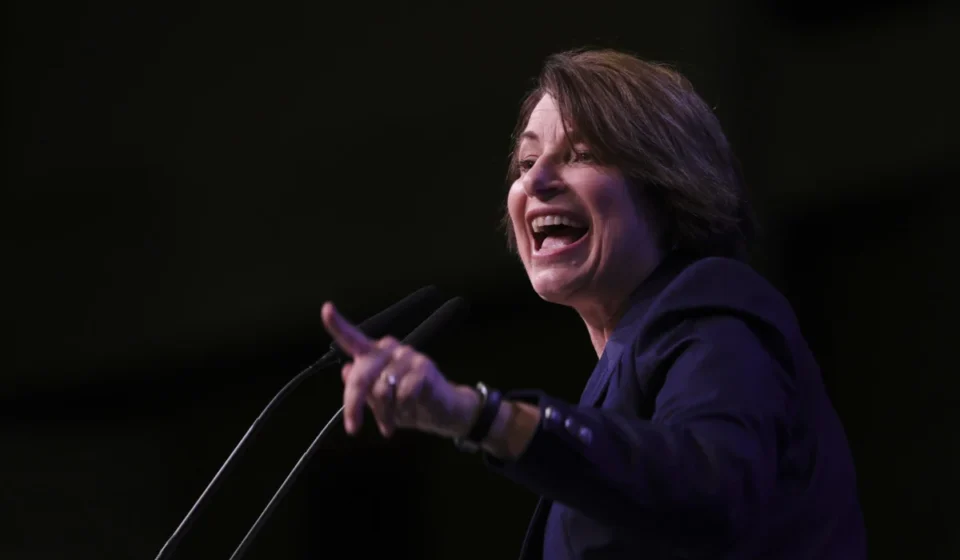

WASHINGTON, D.C. – In a political landscape increasingly defined by volatility and strategic shifts, U.S. Senator Amy Klobuchar has announced a pivotal decision that sends ripples through both Minnesota and Washington D.C.: she is stepping down from her influential Senate perch to run for governor of her home state. Her declaration, made with characteristic resolve, marks a significant moment for the Democratic-Farmer-Labor (DFL) Party, who, facing an unexpected void, saw in Klobuchar their strongest contender to maintain control of the governor’s mansion.
The Call to Govern: Senator Klobuchar’s Pivotal Shift
Senator Klobuchar, a veteran of Capitol Hill known for her pragmatic approach and formidable work ethic, articulated her motivation with unambiguous clarity. "I truly do love my job in the Senate," Klobuchar stated, "but I love my state more than any job and I believe that we can get to a better place. I don’t like the status quo." This sentiment underscores a deeper frustration with the perceived inertia of national politics and a yearning for more direct, tangible impact at the state level.
Her entry into the gubernatorial race immediately positions her as the heavily favored candidate, with polls and political analysts predicting a strong path to victory. If successful, Klobuchar would make history as Minnesota’s first female governor, a milestone that adds another layer of significance to her already storied career. Her campaign strategy is multifaceted: while aiming to forge a distinct identity, she plans to subtly distance herself from current Governor Tim Walz, laying the groundwork for a fresh mandate. Central to her platform is an ambitious 40-point plan meticulously designed to reform state government and aggressively address any allegations of fraud, signaling a commitment to transparency and accountability from day one.
Klobuchar’s impatience for change is not just a rhetorical flourish but a core tenet of her political persona. "Patience is a virtue, but it’s one I don’t have," she quipped, conveying a readiness to swiftly implement her vision. This declaration sets the tone for what promises to be an energetic and reform-driven administration, should she win. To bolster her ticket, Klobuchar has already selected former Fergus Falls Mayor Ben Schierer as her lieutenant governor candidate, a move aimed at broadening her appeal across diverse regions of the state and highlighting a focus on local governance expertise.
A Sudden Turn: The Chronology of a Candidacy
The genesis of Klobuchar’s gubernatorial bid traces back to an unexpected announcement in early January when Governor Tim Walz reversed course and decided not to seek a third term. This abrupt decision, communicated to Klobuchar with just a single day’s notice, sent shockwaves through the DFL Party, leaving a gaping hole at the top of their ticket. Klobuchar herself reflected on the suddenness, noting, "I’d been saying, ‘Maybe you could wait two weeks,’" highlighting the compressed timeline she faced in making such a monumental career choice. Despite the short notice, she waited two weeks herself to officially file as a gubernatorial candidate, a period likely spent in intense deliberation and consultation.
The ensuing days saw Klobuchar fielding urgent calls from both state DFL leaders and national Democrats, all urging her to consider the governorship. The pressure was immense, reflecting her unique standing as a political heavyweight capable of unifying the party and securing the crucial "blue" column for Minnesota. While many of her Senate colleagues “made the case for me to stay there,” Klobuchar ultimately concluded that the circumstances presented a "unique moment we were in as a state," compelling her to prioritize Minnesota’s immediate needs over her established career in Washington.
Klobuchar’s Senate tenure, which began in 2007, saw her steadily climb the ranks of Democratic leadership. Through a combination of seniority, strategic acumen, and sheer grit, she ascended to the No. 3 spot in Senate Democratic leadership as chair of the Steering and Policy Committee, a position that wielded considerable influence over legislative priorities and committee assignments. Her journey to this point included a notable bid for the White House, further cementing her national profile and experience on the biggest political stages.
Beyond the political calculations, Klobuchar cited a series of recent tragedies and "horrors" that have shaken Minnesota as profoundly influencing her decision. These included the shocking murders of former Minnesota House Speaker Melissa Hortman and her husband, the devastating mass shooting at Annunciation Catholic School, and the controversial deaths of Renee Good and Alex Pretti at the hands of federal agents during Operation Metro Surge. These events, she explained, underscored a deeper societal unease and a pressing need for transformative leadership. "I’ve always believed that we could get to higher ground and it’s been one thing after another that’s made that hard in Minnesota," she lamented, framing her candidacy as a direct response to these collective traumas and a renewed commitment to healing and progress.
A Force to Be Reckoned With: Supporting Data and Political Profile
Senator Klobuchar enters the gubernatorial race not merely as a candidate but as a political phenomenon with a formidable track record and unparalleled recognition. Having represented Minnesota in the U.S. Senate since 2007, she is a known political commodity, boasting a "universal name ID" that few, if any, other DFL candidates could rival. Jacob Rubashkin of Inside Elections aptly characterized her as "the strongest DFL statewide candidate over the past decade," a testament to her consistent electoral success and broad appeal across Minnesota’s diverse electorate.
Electoral Strength and Fundraising Prowess:
Her strength is not just anecdotal. Klobuchar has already demonstrated an extraordinary capacity for fundraising, amassing over $7 million in campaign cash—a sum that far outpaces her political rivals and signals a well-oiled financial machine ready to support a robust statewide campaign. This impressive war chest is bolstered by a nationwide fundraising base cultivated during her time in the Senate and her presidential run, along with an existing statewide infrastructure that can be seamlessly redirected to her gubernatorial contest. The DFL Party is keenly aware of her drawing power, betting that having Klobuchar’s name at the top of the ballot will create a coattail effect, lifting the fortunes of other DFL candidates down the ticket.
Policy Positions and Governance Philosophy:
Klobuchar’s campaign is built on a promise of fundamental change, encapsulated in her 40-point plan for government reform. While specific details of the plan are still emerging, it is expected to target areas such as enhancing government transparency, streamlining bureaucratic processes for greater efficiency, strengthening accountability measures, and potentially leveraging technological advancements for improved public services. Her focus on cracking down on fraud aligns with her past as a prosecutor and signals a zero-tolerance approach to corruption.
A key pillar of her campaign rhetoric, consistent with broader Democratic messaging, is the issue of "affordability." Amid rising prices for oil, food, and other necessities, Klobuchar is expected to articulate policies aimed at easing the financial burden on Minnesota families, addressing economic anxieties that resonate deeply across the state. Her strategic decision to "distance herself from Gov. Tim Walz" is likely less about ideological divergence and more about projecting an image of fresh leadership and a renewed sense of urgency, signaling that her administration would not merely be a continuation of the status quo but a vigorous new chapter.
Bipartisan Acumen and Legislative Achievements:
Throughout her career, Klobuchar has carved out a reputation as a moderate willing to engage across the aisle, earning accolades for her ability to "get things done" in an often-gridlocked Washington. She has demonstrated a consistent willingness to take on powerful interests, including the pharmaceutical industry and tech giants, albeit with a pragmatic, often incremental approach. This ability to forge common ground with Republicans is a defining characteristic. Senator Tammy Baldwin (D-Wis.), a close colleague, praised Klobuchar’s approach: "When she’s trying to persuade a colleague on an issue, she’s really prepared. She also has the instinct to know where an agreement can be forged."
Notable examples of her bipartisan successes include:
- Red River Flood Protection: Working closely with Sen. John Hoeven (R-N.D.), Klobuchar championed a massive $3.2 billion public-private partnership for flood prevention along the Red River, a complex undertaking that required "a lot of legislation." This project exemplifies her ability to collaborate on shared regional interests, even with senators from opposing parties.
- Blatnik Bridge Replacement: In partnership with Sen. Baldwin, Klobuchar secured over $1 billion to replace the aging 60-year-old Blatnik Bridge, a critical transportation artery connecting Duluth, Minnesota, and Superior, Wisconsin. This funding, initially greenlit by former President Joe Biden’s infrastructure bill, faced uncertainty after Trump’s election, necessitating intensive lobbying efforts by the Democratic senators, including successfully persuading Transportation Secretary Sean Duffy, a northern Wisconsin native.
- Take It Down Act: In a powerful display of bipartisan legislative prowess, Klobuchar partnered with Sen. Ted Cruz (R-Texas) to pass the Take It Down Act. This landmark legislation criminalizes the non-consensual sharing of AI-generated intimate images and mandates that social media platforms remove such content within 48 hours. Klobuchar even leveraged her position as chairman of the Joint Congressional Committee on Inauguration Ceremonies, putting her in direct contact with First Lady Melania Trump during President Donald Trump’s second oath of office, to successfully lobby for the president’s support of the bill. She views this as a "model to take down other inappropriate things on platforms," signaling her commitment to addressing online harms.
Tim Lindberg, a political science professor at the University of Minnesota Morris, characterized Klobuchar’s bipartisanship as "politically palatable," noting that she finds ways to work with Republicans on common interests without necessarily embracing their broader initiatives.
Work Ethic and Public Engagement:
Klobuchar is famously a "workaholic" on Capitol Hill, a trait she candidly admits often wears out her staff. Senator Hoeven corroborated this, observing that she "probably gets no more than six hours of sleep." This relentless dedication extends to her engagement with constituents; Senator Baldwin highlighted that Klobuchar "visits every single county in Minnesota every year," demonstrating a profound understanding of the state’s diverse communities and keeping "her finger on the pulse."
Background and Education:
Klobuchar’s formidable intellectual background includes a degree from Yale and a law degree from the University of Chicago. Her early career as Hennepin County attorney provided her with executive experience, and she has authored several books on policy, further solidifying her intellectual credentials. While her father, Jim Klobuchar, a prominent and admired sports and politics reporter for the Star Tribune, initially contributed to her name recognition, Amy Klobuchar has long since surpassed him in statewide prominence, becoming by far the best-known Klobuchar in Minnesota.
Reactions and Endorsements: Official Responses to the Candidacy
The announcement of Amy Klobuchar’s gubernatorial bid has elicited a spectrum of responses, ranging from enthusiastic support within the DFL to analytical commentary on the strategic implications of her move.
From the Halls of Congress:
Senator John Hoeven (R-N.D.), who collaborated extensively with Klobuchar on critical regional issues like the Red River flood protection project, offered insight into her decision-making. He speculated that Klobuchar might have been weighing her future in the Senate, asking, "Do I stay and see how that plays out or do I go back to Minnesota?" Hoeven, himself a former Republican governor of North Dakota before entering the Senate, offered a candid assessment of the executive role: "Governor was the better job. I am deeply honored to be in the Senate, but as governor you can set your agenda and work with people to achieve it and Amy would really like that." This perspective from a seasoned politician who has held both roles lends significant weight to Klobuchar’s choice, suggesting a desire for more direct executive authority.
Senator Tammy Baldwin (D-Wis.), another close colleague, spoke to Klobuchar’s impressive legislative skills and dedication to her constituents. She recounted learning a great deal from Klobuchar about the intricacies of Senate workings and praised her meticulous preparation and natural ability to find common ground. Baldwin’s observation that Klobuchar "visits every single county in Minnesota every year" underscores the deep connection Klobuchar maintains with the diverse corners of her state, a trait highly valued in a gubernatorial candidate.
The sentiment among "a lot of people in the Senate" who urged her to stay highlights the respect and influence Klobuchar commanded in Washington. Her ascent to the No. 3 leadership position as chair of the Steering and Policy Committee underscored her importance to the Democratic caucus. Yet, Klobuchar’s own conviction that "people understood the unique moment we were in as a state and why I made that decision" indicates a shared understanding, even among her colleagues, of the compelling factors drawing her back home.
Political Analysis and Party Strategy:
Tim Lindberg, the political science professor, provided a key analytical lens, suggesting that Klobuchar may have experienced "some frustration working in a closely divided Senate." He pointed to the filibuster rule, which often requires a supermajority of 60 senators to advance legislation, as a significant impediment to progress. "Being governor allows her to be in a power position where she can do things and make big changes," Lindberg explained, articulating a common appeal of executive office for experienced legislators. He also highlighted the strategic advantage of Klobuchar entering an open race "fairly early," effectively "eclipsing all other possible (Democratic) contenders" and consolidating DFL support.
Jacob Rubashkin of Inside Elections echoed the sentiment of Klobuchar’s formidable candidacy, emphasizing her "universal name ID and a track record of being the strongest DFL statewide candidates over the past decade." He further noted her established "nationwide fundraising base from her time in the Senate and presidential run, and an existing statewide infrastructure that she can redirect to her gubernatorial contest," all of which contribute to her overwhelming advantage.
The Candidate’s Own Voice:
Klobuchar herself has been forthright about her motivations. Her explicit statements about loving her state "more than any job" and her impatience with the "status quo" are powerful articulations of her drive. Her vision for "restoring people’s trust in our government again" and her commitment to keeping Minnesota "together as a state, despite the political divides" speak to a desire for unity and effective governance in challenging times. Her account of personally lobbying President Trump for the "Take it Down Act" underscores her willingness to engage with any political actor to achieve her legislative goals, a trait that could serve her well in the executive branch.
The Road Ahead: Implications for Minnesota and Washington
Amy Klobuchar’s decision to seek the governorship sets in motion a cascade of implications, profoundly affecting both Minnesota’s political landscape and the dynamics within the U.S. Senate.
For Minnesota’s Political Landscape:
The path to the governor’s mansion for Klobuchar is not entirely devoid of challengers. She will first face a Democratic primary in August against progressive challenger Kobey Layne. While Layne has garnered some attention, Klobuchar’s immense name recognition, fundraising advantage, and party backing make her the overwhelming favorite to secure the DFL nomination.
The general election in November promises a more spirited contest, though Klobuchar will still enter as the frontrunner. She will face one of three Republicans vying for their party’s nomination in August: House Speaker Lisa Demuth, former healthcare executive Kendall Qualls, or My Pillow CEO Mike Lindell. The Republican primary winner will face an uphill battle against Klobuchar. Republicans have not won a statewide seat in Minnesota in 20 years, a streak that underscores the DFL’s dominance in statewide races and Klobuchar’s inherent advantage.
Klobuchar’s campaign strategy is already taking shape, focusing on broad appeal and contrasting herself with national figures. She is "hitting Trump on a variety of issues," including the vague "reflecting pool fiasco," a tactic likely aimed at energizing her Democratic base and independent voters wary of the former president. Concurrently, she champions the Democratic mantra of "affordability," a message designed to resonate with all Minnesotans grappling with rising costs. Her fundraising appeals, however, have specifically targeted Mike Lindell, whose personal allegiance to Trump and false claims about the 2020 election have made him a polarizing figure, drawing multi-million dollar judgments and making him the most recognizable (and often controversial) figure among the GOP contenders. This strategic focus aims to define the general election narrative early and rally opposition against a perceived extremist threat.
If Klobuchar wins, her governorship promises a period of rapid transformation, guided by her "40-point plan" and her stated impatience for change. Her emphasis on government reform, fraud crackdown, and restoring public trust could lead to significant restructuring within state agencies. The nuanced implications of "distancing herself from Gov. Tim Walz" will become clearer through her policy choices, potentially indicating a more aggressive or different approach on key issues like economic development, public safety, and climate change, even within the broader DFL framework.
For the U.S. Senate and National Influence:
Klobuchar’s departure from the Senate, if she wins, will undoubtedly leave a significant void for Minnesota. Her seniority and legislative skills have translated into tangible benefits for the state, most notably her ability to direct billions of federal dollars towards critical projects.
The loss of her clout will be difficult for any appointed or elected successor to replicate immediately. As the No. 3 Democrat in leadership and a seasoned legislator, Klobuchar held significant sway over committee assignments and legislative priorities. This influence was instrumental in securing crucial funding for Minnesota and the surrounding region.
The Blatnik Bridge replacement project, for example, benefited from over $1 billion in federal funds largely due to the diligent efforts of Klobuchar and Senator Baldwin. Similarly, the $3.2 billion Red River flood prevention project, a massive public-private partnership, required extensive legislative work that Klobuchar, alongside Senator Hoeven, spearheaded. These projects are not merely lines on a budget; they represent vital infrastructure and safety measures that directly impact the lives and livelihoods of Minnesotans. An appointed or newly elected senator, lacking Klobuchar’s seniority and established relationships, would face an immense challenge in replicating this level of influence and securing comparable federal resources.
Her absence could also impact specific national legislative efforts she championed, particularly in areas like antitrust reform, consumer protection, and election security, where she had developed a strong voice and track record. While the Democratic Party will undoubtedly seek to fill her leadership role, the institutional memory and legislative expertise she embodies will be irreplaceable in the short term.
Broader Political Implications:
Klobuchar’s move also reflects a broader trend in American politics: the increasing frustration of experienced federal legislators with the perceived gridlock and polarization in Washington, leading them to seek more impactful executive roles at the state level. The governorship, as Senator Hoeven noted, offers a unique opportunity to "set your agenda and work with people to achieve it," a stark contrast to the often-compromise-laden, slow-moving legislative process in Congress.
Furthermore, the prospect of Minnesota electing its first female governor underscores the ongoing evolution of political leadership and the breaking of historical barriers. Klobuchar’s moderate, bipartisan approach, honed over years in the Senate, will be closely watched to see how it translates into state governance, offering a potential model for effective leadership in an era marked by deep political divisions. Her bid is not just a personal career choice but a significant indicator of the current state of American politics and the enduring desire for decisive, impactful leadership.