























































The Agentic Shift: Box Unveils Architect and Next-Generation Context Retrieval at BoxWorks 2026

At the 2026 edition of BoxWorks, the premier enterprise content management summit, Box CEO Aaron Levie took the stage to announce a fundamental shift in how organizations interact with their data. As the enterprise software landscape pivots from simple generative AI chatbots to "agentic" workflows—systems capable of autonomous decision-making and task execution—Box is positioning its platform at the center of this evolution.
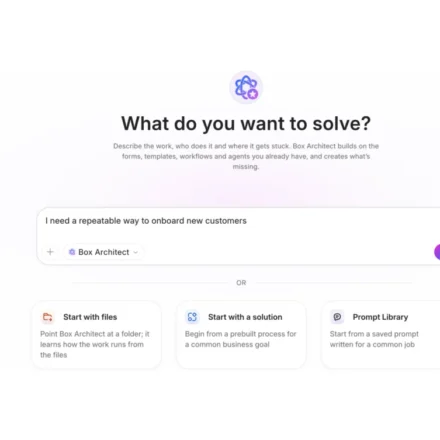
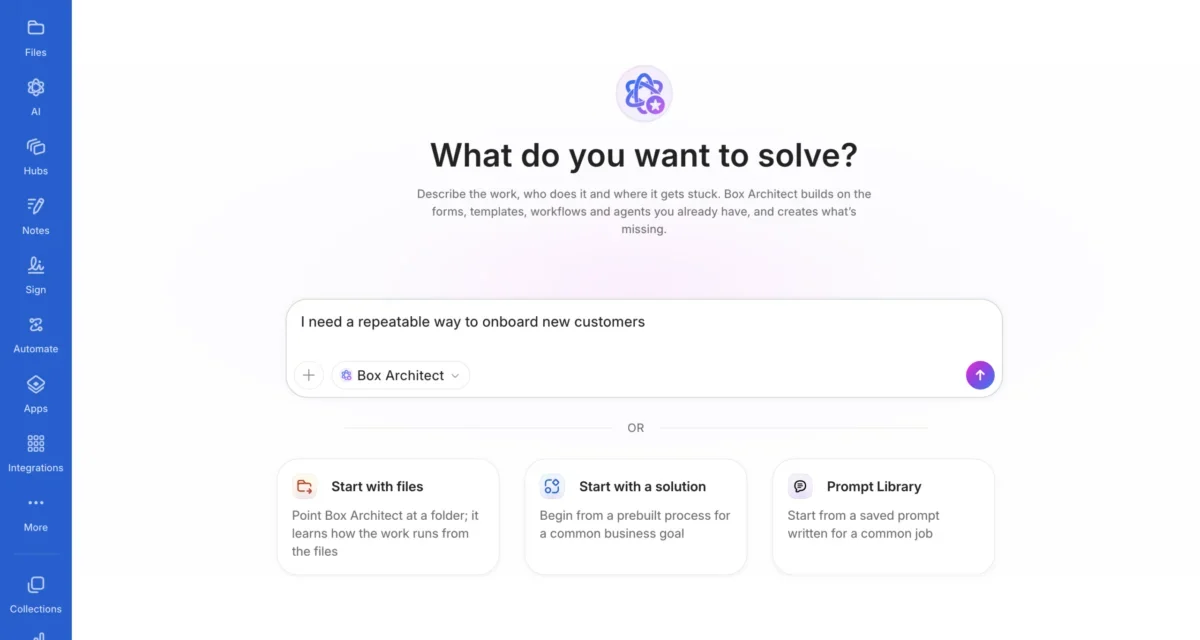
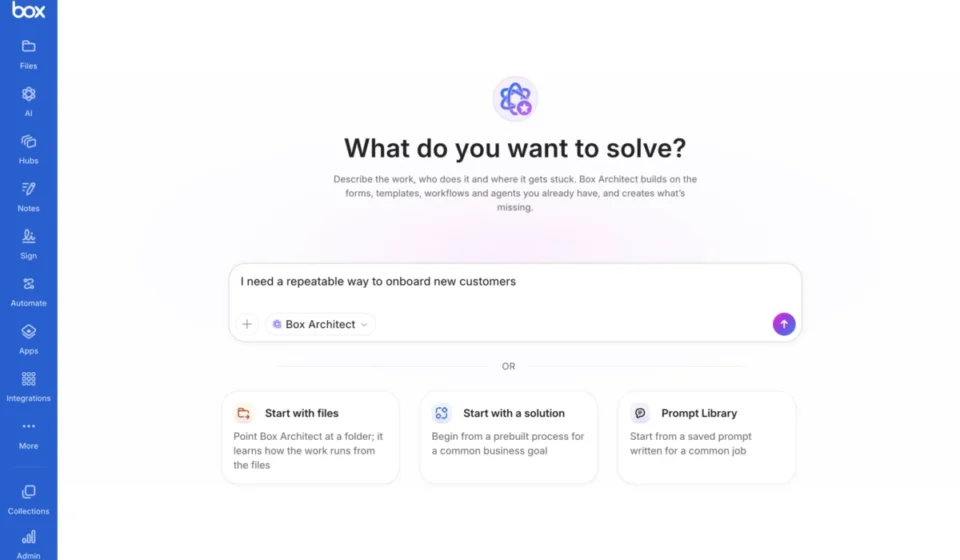
The centerpiece of this announcement is Box Architect, a natural-language-driven tool designed to automate complex, document-centric processes. Complementing this, the company unveiled a new Context Retrieval engine powered by Nvidia’s Nemotron open models, aimed at drastically increasing the speed and accuracy of AI agents while significantly reducing the computational overhead of token consumption.
Main Facts: The Rise of Agentic Automation
Box Architect is designed to bridge the gap between human intent and technical execution. Traditionally, building automated workflows required specialized developers, complex API integrations, and significant maintenance. Box Architect changes this paradigm by allowing non-technical users to describe a desired outcome in plain language.
The system serves as an "agentic operator," effectively orchestrating Box’s internal capabilities—including Box Forms, Box Extract, Box Sign, and Box Automate—to complete end-to-end business tasks. For example, a banking institution can instruct Architect to build an onboarding workflow that captures client data via Forms, extracts key metadata, validates identity documents, triggers e-signature requests, and initiates account provisioning, all without writing a single line of code.
Key features of the platform include:
- Natural Language Design: Users define goals, and the system maps out the necessary stages, decision branches, and required human touchpoints.
- Governance-First Approach: Architect inherently respects existing Box permissions, content classifications, and data retention policies, ensuring that automation does not bypass security protocols.
- Observability and Refinement: Once a workflow is live, Architect monitors performance, providing feedback and recommendations for optimization to ensure the process remains efficient over time.
Chronology: The Road to BoxWorks 2026
The trajectory of these announcements reflects a multi-year effort by Box to transition from a secure cloud storage provider to an intelligent content cloud.
- 2023–2024: Box began integrating generative AI through its initial Box AI offering, focusing on document summarization and basic Q&A features.
- Early 2025: The company shifted focus toward "Enterprise Advanced" tiers, establishing the "AI Unit" consumption model to manage the costs and scalability of large-scale AI deployment.
- Thursday, 2026 (BoxWorks): Box officially unveiled Box Architect and the new Context Retrieval engine.
- Q4 2026 (Upcoming): Beta launch of Box Architect for Enterprise Advanced customers.
- Early 2027 (Upcoming): General availability of the Nvidia-powered Context Retrieval engine.
Supporting Data: Efficiency Through Advanced Retrieval
While Architect provides the "how" of automation, the new Context Retrieval engine provides the "what." In the era of LLMs, the biggest challenge is the "context window"—the limit of how much data a model can process at once. Sending too much irrelevant data (noise) to a model increases latency and costs (via token usage) while often decreasing output quality.
Box CTO Ben Kus highlighted internal testing results that demonstrate the power of the new engine, which leverages Nvidia’s Nemotron open models:
- 20% Improvement in Search Accuracy: By utilizing multimodal indexing, the engine scans not just text, but images, audio, and video files, combining keyword search with semantic understanding.
- 4x Faster Response Times: The engine reduces latency, allowing agents to act in near real-time.
- 90% Token Reduction: By delivering only the most relevant, context-rich segments of a document to the LLM, the system dramatically lowers the volume of tokens required for inference, directly addressing the "cost-per-query" challenge that has plagued enterprise AI adoption.
This architecture ensures that agents operate only on data for which the user has authorized access, maintaining the strict compliance standards required by enterprise customers.
Official Responses and Industry Analysis
The reception from industry analysts suggests that Box is moving in lockstep with the broader market trend toward "Agentic AI."
Jason Andersen, Vice President and Principal Analyst at Moor Insights & Strategy, emphasized that the shift is not merely technical but cultural. "Architect makes it easier to build agents and workflows based on the collective knowledge of a team or business, rather than being siloed in individual productivity," Andersen noted.
However, Andersen also offered a cautionary note regarding the implementation of autonomous systems. "I’d still recommend human oversight during the creation process with any agent development project," he stated. "Using observability tools is non-negotiable to ensure that the agents are running in a fashion that meets the risk and cost management needs of the business."
Andersen praised the integration of Nvidia’s Nemotron, noting that the use of open-weight models allows for better customization and transparency. "Context management is the secret sauce for AI performance," he added. "If the model doesn’t have the right context, it can’t be useful. Box’s approach here is significantly improving output accuracy and agentic performance, which leads to higher end-user satisfaction."
Implications: The Future of Enterprise Operations
The Shift from "Human-in-the-Loop" to "Human-on-the-Loop"
The introduction of Box Architect signals a change in the role of the knowledge worker. Rather than performing repetitive tasks (such as moving files or copying data between apps), employees will increasingly act as "architects" of their own workflows. By supervising AI agents, staff can focus on high-value decision-making, leaving the execution to the automated system.
Security and Governance in an Autonomous Age
The most critical implication for the enterprise is the integration of governance into the AI layer. By building permissions and retention policies directly into the Architect workflow, Box is attempting to solve the "shadow AI" problem—where employees use disparate, insecure tools to automate tasks. By keeping these agents within the Box ecosystem, IT departments retain visibility and control.
The Cost of Intelligent Content
With the launch of the Context Retrieval engine, Box is effectively tackling the economic barriers to AI. By reducing token consumption by up to 90%, the company is making it financially viable to run high-frequency, complex agents that were previously too expensive or slow for enterprise-scale deployments. This makes the "Enterprise Advanced" tier—which includes a 20,000 AI Unit allocation—a more compelling value proposition for large corporations.
Challenges Ahead: The Need for Design Principles
Despite the technological breakthroughs, the success of these tools will depend heavily on the customer’s internal governance. As Andersen pointed out, technology alone is not a panacea. "To get the most benefit from context management, a good set of design principles and governance are also needed," he warned.
Box’s roadmap indicates that as the technology matures, the company will likely provide more prescriptive templates and best-practice libraries to help customers navigate the complexity of agent development.
Conclusion
Box’s announcements at BoxWorks 2026 underscore a significant evolution in the company’s mission. By empowering users to build their own agentic workflows via Architect and optimizing the data pipeline with Nvidia-powered retrieval, Box is moving closer to an era where the "Content Cloud" is not just a repository for files, but an active, intelligent participant in the enterprise workflow.
As these tools move toward general availability in late 2026 and early 2027, the focus will undoubtedly shift toward execution—how effectively businesses can balance the agility of autonomous agents with the rigid requirements of enterprise-grade security and compliance. For now, Box has laid the foundation for a more automated, efficient, and intelligent future of work.