





































Minnesota’s Senate Showdown: National GOP’s ‘Dream Candidate’ Michele Tafoya Faces Grassroots Backlash

WASHINGTON D.C. / ST. PAUL, MN – In the high-stakes battle for control of the U.S. Senate, the national Republican Party has placed a significant bet on former sportscaster Michele Tafoya to capture the Minnesota seat being vacated by retiring Senator Tina Smith. Hailed by the National Republican Senatorial Committee (NRSC) as a "dream candidate" with unparalleled name recognition and media savvy, Tafoya’s rapid ascent has nonetheless proven to be a double-edged sword, sparking considerable resentment and division among Minnesota’s deeply rooted Republican grassroots. The early, unequivocal endorsement from Washington has not only ruffled feathers but has ignited a fierce internal debate about local autonomy versus national strategic imperatives, exposing deep ideological fissures within the state party just weeks before a crucial endorsing convention.
The fight for Minnesota’s open Senate seat is more than just a local contest; it is a pivotal front in the broader national struggle for power in Washington. With the U.S. Senate delicately balanced, every race carries immense weight, and the Republican Party sees Minnesota as a prime opportunity to flip a seat currently held by a Democrat. Tafoya, 61, a familiar face to millions from her decades covering major sports leagues, possesses a unique public profile that national strategists believe can cut through the political noise. Her ability to command attention and articulate a message, honed over years in broadcasting, is precisely what the NRSC, under Chairman Sen. Tim Scott (R-S.C.), highlighted when it declared her "the only candidate with the common-sense leadership Minnesotans are desperately craving" shortly after she announced her candidacy in January. However, this top-down embrace has inadvertently triggered a robust pushback from within her own party, where loyalty to local processes and conservative principles often trumps expediency and national directives.
A Candidacy Forged in the National Spotlight
Michele Tafoya’s journey from the sidelines of professional sports to the political arena has been a carefully considered transition, culminating in her high-profile bid for the U.S. Senate. Her broadcasting career, spanning three decades, saw her cover the NBA, NFL, Olympics, and college football, making her a household name long before she entered politics. Many Minnesotans became familiar with Tafoya during her stints as a sportscaster and reporter for local outlets like KFAN in Minneapolis, where she covered the Vikings, the Midwest Sports Channel, and WCCO-TV, cementing her connection to the state despite her Californian roots. This established public persona and instant name recognition are undoubtedly her most significant assets in a crowded field.
Following the February 2022 Super Bowl, Tafoya made a decisive break from her broadcasting career, signaling a new chapter. She launched a political podcast, using the platform to explore her evolving views and test the waters for a potential political career. For several years, she deliberated over the timing and nature of her entry into public service. Her strategic engagement with the political establishment became clear when she met with the National Republican Senatorial Committee in December of last year. This meeting laid the groundwork for her official declaration of candidacy approximately a month later, swiftly followed by the NRSC’s powerful endorsement.
The national party’s quick and vocal support for Tafoya, however, immediately set her apart from other hopefuls who had been diligently working the grassroots in Minnesota. A slate of other Republicans were already vying for Smith’s seat, each with their own unique background and appeal to different segments of the GOP base. These included Adam Schwarze, a decorated Navy SEAL whose military service resonates with many conservatives; Royce White, a former NBA player who has cultivated a significant following; and Tom Weiler, a Navy veteran and experienced political campaigner. David Hann, a former Minnesota Republican Party candidate, was also in the race at that time but withdrew his candidacy last month, while Mark York, a seven-generation farmer from Lake Wilson, continues to run, emphasizing his deep local ties. The NRSC’s decision to bypass this diverse field and unilaterally throw its weight behind Tafoya sent a clear message: Washington had its preferred candidate, and the concerns of the state’s traditional political infrastructure appeared secondary. This perceived disregard for the local endorsement process and the efforts of other committed candidates quickly became a flashpoint, fueling resentment and accusations of external interference.
Deepening Divides: Ideology and Influence
The national Republican Party’s unequivocal endorsement of Michele Tafoya has illuminated and exacerbated existing divisions within the Minnesota GOP, exposing a significant chasm between establishment Republicans and the more conservative, often populist, MAGA-aligned activists. The state party itself has been in a prolonged period of "disarray," as noted by Tim Lindberg, a political science professor at the University of Minnesota-Morris. Plagued by a lack of statewide officeholders for two decades, the Minnesota Republican Party is currently low on cash and deeply fractured, making it susceptible to external influence but also highly protective of its internal processes.
For many of the 2,500 Republican delegates set to vote on endorsing a GOP Senate candidate in Duluth at the end of the month, the NRSC’s intervention is seen not as a boon, but as an unwelcome intrusion. Frank Long, a delegate and long-time party activist from Watertown Township who supports Adam Schwarze, articulated this sentiment clearly: "You have people who would see (support from the national party) as a plus, and there also are people who would see it as meddling from Washington." He stressed that the state’s Republicans are "not a monolithic organization," highlighting the diverse viewpoints and priorities that define the party base.

A significant source of this disgruntlement stems from Tafoya’s past and evolving policy stances, which diverge from the hardline conservative positions favored by many delegates. Her previously stated support for abortion, though now qualified as limited to procedures within the first 12 weeks of pregnancy, remains a sticking point for staunchly pro-life segments of the party. Similarly, Tafoya’s backing of "red flag" laws – measures that allow law enforcement to temporarily remove firearms from individuals deemed a danger to themselves or others by a court – is vehemently opposed by many gun-rights delegates who view such legislation as an infringement on Second Amendment liberties. These issues touch upon fundamental tenets of the conservative platform and generate deep-seated ideological friction.
Further complicating Tafoya’s standing among some delegates are her past remarks about former President Donald Trump. In 2022, she penned an open letter to Trump in a now-deleted Substack post, expressing her hope that he would not seek the presidency again and, while acknowledging his accomplishments, characterized his politics as "messy." This historical critique clashes sharply with the fervent loyalty many Minnesota GOP delegates feel towards Trump and the MAGA movement. While Tafoya has since strategically aligned herself more closely with Trump’s platform, particularly by immersing herself in culture war issues such as her fierce opposition to transgender women participating in female sports, her past comments continue to raise questions about the sincerity of her conservative bona fides for some. This perceived ideological fluidity creates an impression of political opportunism rather than steadfast conviction for a segment of the party base.
The national party’s intervention also manifests in a stark financial advantage for Tafoya. In the two months following her announcement, she successfully raised over $2 million, a sum that eclipses the combined fundraising efforts of all her GOP rivals. This significant financial boost was directly facilitated by the national Republican machinery. Filings with the Federal Election Commission show the NRSC contributing $62,000 to Tafoya’s campaign, and Senate Republican Leader John Thune’s leadership political action committee has held joint fundraisers with her campaign. Beyond direct cash, the national party’s endorsement brings invaluable support in recruiting experienced campaign staff and securing top-tier campaign consulting – essential resources for a candidate who has never before run for political office. This infusion of capital and expertise, while crucial for competitiveness in a general election, is viewed by some as an unfair tilting of the scales in the endorsement process, reinforcing the narrative that Washington is dictating outcomes rather than supporting a genuinely grassroots selection.
Voices from the Grassroots: Responses and Rebuttals
The national Republican Party’s strategic move to elevate Michele Tafoya has not gone unanswered by the candidates and delegates on the ground in Minnesota, who feel their voices are being sidelined. Their responses underscore the deeply held belief in grassroots political power and a skepticism towards what is perceived as D.C. influence.
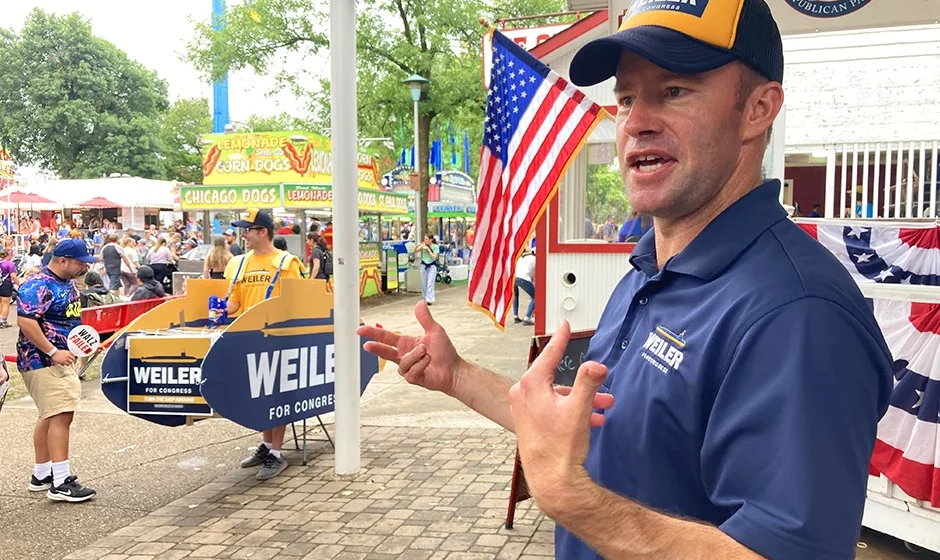
Tom Weiler, a Navy veteran and one of the Republicans vying for the endorsement, openly expressed his disappointment and surprise at the NRSC’s decision. He recounted reaching out to the NRSC last fall seeking support for his own campaign but felt he was dismissed because he was "not rich or famous." Weiler’s experience highlights a sentiment prevalent among many local candidates: that the national party prioritizes celebrity and wealth over substance and local connections. "It was clearly a decision made in Washington, D.C., without any input from Minnesotans," Weiler asserted, crystallizing the core grievance of many state party members. He has taken a nuanced stance on the upcoming endorsement, indicating he would continue his campaign unless convinced the delegates chose a candidate "who can win and be an effective senator for Minnesota," suggesting a potential challenge to the endorsed candidate if he feels the choice is strategically flawed.
Adam Schwarze, the former Navy SEAL, has adopted a military-like resolve in his campaign, describing his pursuit of the Senate seat as a "no-fail mission." Schwarze, who has amassed over $1 million in campaign funds by March 31st – the second-largest war chest among GOP Senate candidates after Tafoya – strongly believes in the grassroots process. He characterizes Tafoya as a "D.C. out-of-the-box candidate," a term designed to emphasize her perceived disconnect from local party activists. Schwarze exudes confidence in his ability to earn the endorsement, even if it requires multiple rounds of balloting at the convention. His rallying cry, "Minnesotans are not for sale," coupled with his declaration that "This is a grass-roots state," resonates deeply with delegates who feel their collective power is being challenged. Unlike Weiler, Schwarze has vowed to abide by the endorsement, pledging to support the delegates’ chosen candidate, a commitment shared by former NBA player Royce White, who previously won the GOP endorsement for his 2024 Senate run against Sen. Amy Klobuchar. This commitment to party unity, post-endorsement, is seen by many as a crucial test of loyalty to the grassroots process.
Meanwhile, Tafoya’s campaign has notably declined requests for an interview and information, choosing instead to focus on its strategy and outreach. This lack of direct engagement with local media on the internal party dynamics may further fuel the perception among some delegates that she is beholden to national interests rather than local accountability.

Political science professor Tim Lindberg offers a broader perspective on the NRSC’s intervention, suggesting it was partly necessitated by the Minnesota state party’s aforementioned "disarray." He notes the NRSC is "banking" on Tafoya’s widespread popularity and name recognition from her sports career to carry her through. However, Lindberg also cautions that this strategy could "backfire" in Minnesota’s endorsement process, which is heavily influenced by dedicated party activists in both Democratic and Republican state conventions. "It’s not clear that the people at these conventions really care about electability," he observes, implying that ideological purity and adherence to grassroots principles might weigh more heavily than general election appeal for many delegates. This fundamental tension between national electability calculations and local party priorities forms the crux of the current internal struggle.
Implications for November and Beyond
The current internal strife within the Minnesota Republican Party over Michele Tafoya’s candidacy carries significant implications, not only for her individual campaign but also for the state GOP’s long-term health and the national balance of power in the U.S. Senate. The upcoming endorsing convention in Duluth, where Tafoya needs to secure 60% of the delegate vote, represents a critical juncture. Even if she fails to gain the official party endorsement, Tafoya has stated her intention to continue her campaign and participate in the August 11 primary. This decision, while within her rights, historically poses a formidable challenge in Minnesota’s political landscape.
Minnesota’s political history shows that Republican voters rarely reward non-endorsed candidates in statewide primary elections. Delegates, having invested time and effort in the endorsement process, often view primary challenges to the endorsed candidate as a betrayal of party unity and a disruption of the grassroots will. Adam Schwarze’s pointed remark that Republicans "don’t reward people who take shortcuts" directly speaks to this sentiment. A contested primary could drain vital resources, exacerbate internal divisions, and leave the eventual nominee weakened and financially depleted heading into the general election against a well-funded Democratic opponent.
Should Tafoya secure the endorsement and advance to the general election, her strategic path will likely involve a pivot back to a more moderate stance. She herself once expressed this inclination, telling WDAY Radio after Tina Smith announced her retirement, "I think Minnesota is starving for a moderate Republican who doesn’t tell them that they’re going to ban abortion who is the antithesis of the Tim Walz regime." This potential shift from her more recent alignment with culture war issues and the Trump platform would be a calculated move to appeal to Minnesota’s famously independent and often moderate electorate, which has consistently favored Democrats in statewide contests. However, such a shift could also open her to accusations of political opportunism from both the Democratic opposition and the very conservative base she would need to energize.
The Democratic field, meanwhile, is already engaged in its own primary battle, with Rep. Angie Craig (D-2nd District) and Lt. Gov. Peggy Flanagan locked in a fight for their party’s nomination. Both Craig and Flanagan have amassed significantly larger war chests than even Tafoya and Schwarze, highlighting the financial might of the state Democratic Party and its national allies. Any Republican nominee will face an uphill climb in a state that has not elected a Republican to a statewide office in two decades.
For the national Republican Party, the stakes are immense. Flipping a Senate seat in Minnesota is crucial for their goal of preventing a Democratic takeover of the U.S. Senate in November’s midterm election. They have clearly identified Tafoya as their best hope due to her unique public appeal and fundraising potential. However, the current backlash from the grassroots demonstrates the potential pitfalls of a top-down approach in a state that prides itself on its "grass-roots" political identity. The outcome of this primary and endorsement process will not only determine who represents the GOP in November but will also serve as a barometer for the ongoing tension between the national party’s strategic ambitions and the deeply held convictions of its state-level activists. Whether this intervention ultimately unifies or further fractures the Minnesota Republican Party remains to be seen, but the internal struggle itself is a compelling narrative of power, principle, and political identity.