






















































A Tale of Two Classics: Minneapolis Reimagines Stravinsky and Beckett for the Modern Era

This week, the cultural heartbeat of Minneapolis finds itself rhythmically tethered to two cornerstones of 20th-century art. At Orchestra Hall, the Minnesota Orchestra is launching its ambitious “Sound Unbound” series by marrying Igor Stravinsky’s 1910 masterpiece, The Firebird, with the cutting-edge digital artistry of BAFTA-winning designer Tal Rosner. Meanwhile, across downtown, the Guthrie Theater is hosting a production of Samuel Beckett’s Waiting for Godot, a play that continues to resonate with haunting clarity in our era of profound global uncertainty.
The Intersection of Symphony and Screen: Tal Rosner’s Firebird
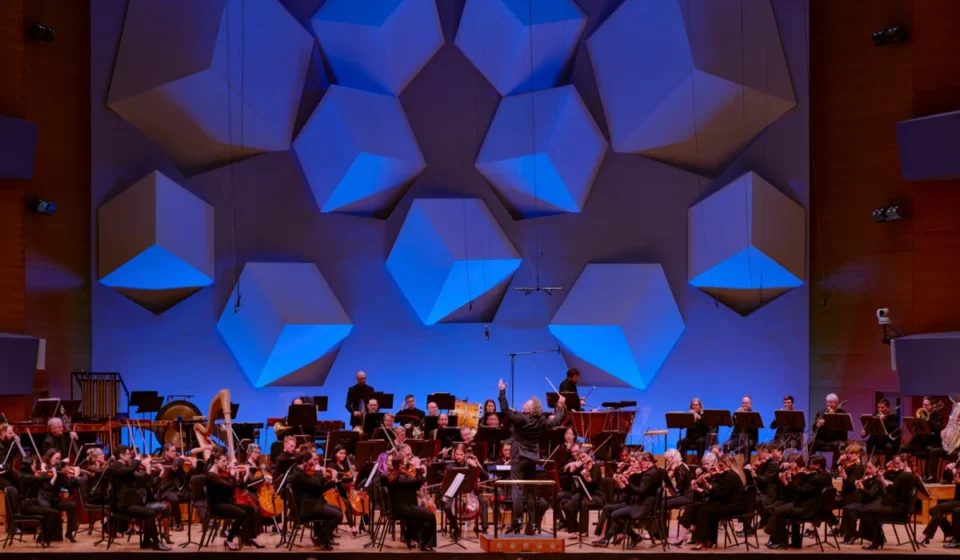
The iconic, acoustically tuned cubes that line the back wall and ceiling of Orchestra Hall—usually serving a purely functional purpose in sound diffusion—are being transformed this weekend into a high-tech canvas. For the Minnesota Orchestra’s season opener, London-based visual artist Tal Rosner has employed the architectural idiosyncrasies of the hall to create a site-specific video mapping installation.
The Mechanics of the Vision
Video mapping is a sophisticated technique that requires a precise, pixel-perfect alignment between digital animation and physical structures. Rosner, who has spent weeks calibrating his visuals to the specific geometry of the hall, views the cubes as a "serendipitous" constraint.
“Almost every design decision I made is rooted in the fact that the cubes are the projection surface,” Rosner explained. “All the design elements are in constant consideration of the layout of the cubes, so the mapping is very, very, very accurate. This is a piece that is going to be impossible to replicate anywhere else.”
Rather than providing a literal retelling of the Russian folktale—which involves Prince Ivan, the sorcerer Koschei, and a bevy of princesses—Rosner has opted for a metaphorical approach. He does not project images of actors or dancers; instead, he uses color, rhythm, and light. “I don’t show the princesses, but the princesses are represented by golden ribbons,” he noted. This abstraction is intentional, designed to mirror the rhythmic complexity of Stravinsky’s score while allowing the audience’s imagination to fill in the narrative gaps.
A Career Built on Rhythm
Rosner’s path to this project is as eclectic as his work. Raised in a family of musicians—his father ran a conservatory and his brother is a composer—Rosner initially pursued a career in television graphics, harboring a youthful dream of working for MTV. His evolution into an artist who collaborates with world-class orchestras is a testament to his belief that a concert hall offers a unique, expansive canvas that television simply cannot replicate.
"If you work with an orchestral piece, the scope of what you can do and the canvas to do it on is much bigger," Rosner said. His collaborative process with the Minnesota Orchestra’s in-house lighting crew reflects a shift in his artistic philosophy. "As the years progressed, I’m much more aware of everyone else on the team," he added. "It’s not just ‘Look at me! Look at me!’ Now it’s a much more holistic approach."
Historical Context: Stravinsky’s Modernist Revolution
To understand the weight of this performance, one must look back to the inception of The Firebird. Commissioned for Sergei Diaghilev’s Ballets Russes, the piece served as a bridge between the Romantic traditions of the 19th century and the explosive modernism that would define the 20th.
When Stravinsky’s The Rite of Spring followed just three years later, it famously incited a "brouhaha" in Paris, signaling a total break from musical conventions. The Firebird was the precursor to that seismic shift. By presenting this work within the “Sound Unbound” series, the Minnesota Orchestra is not merely performing a relic of the past; they are exploring the origins of the radical artistic inquiry that still informs our contemporary aesthetic.
The Existential Mirror: Waiting for Godot at the Guthrie
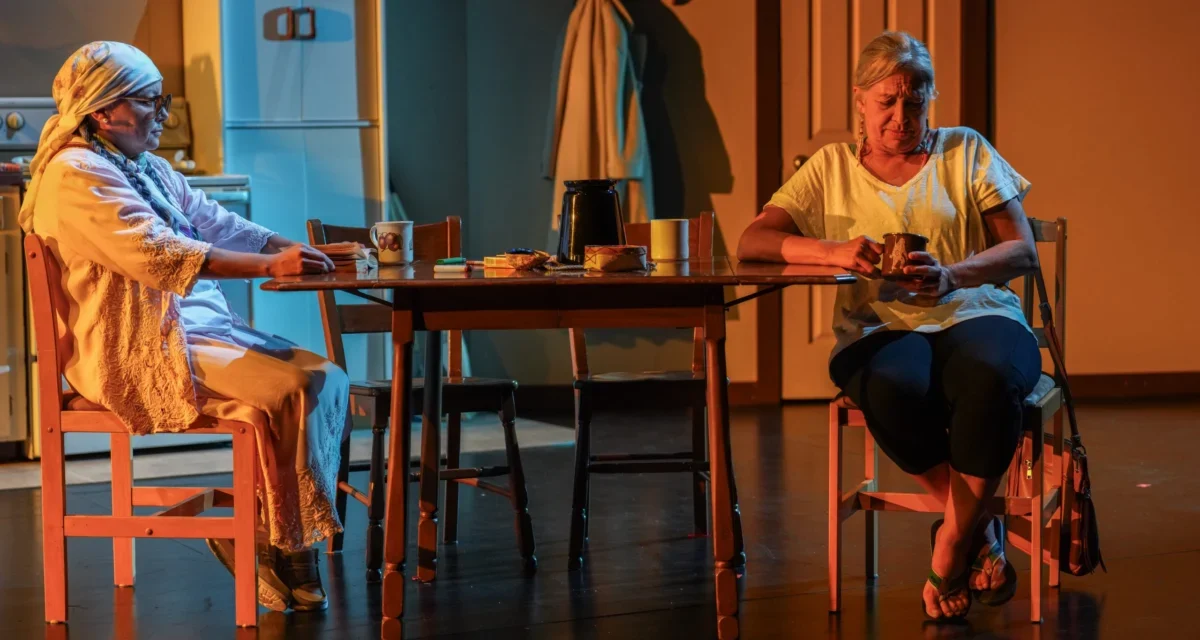
While Rosner’s Firebird explores the visual boundaries of music, the Guthrie Theater’s production of Samuel Beckett’s Waiting for Godot dives into the psychological boundaries of human endurance. Directed by the Guthrie’s artistic director, Joseph Haj, the play remains one of the most challenging and essential texts of the modern era.
The Weight of Silence
Beckett was famously rigorous with his scripts, documenting every pause, silence, and stage direction with obsessive precision. These mandates often leave directors little room for deviation. However, Haj and his cast have succeeded in stripping the play to its barest bones, finding an immediacy that feels uncomfortable—and necessary—in today’s hyper-polarized climate.
The play, written in the aftermath of World War II and the French Resistance, serves as a meditation on hope in the face of despair. As we confront what many have termed "end times fascism," the image of Vladimir and Estragon—two men trapped in a desolate landscape waiting for a savior who never arrives—has taken on a renewed, chilling relevance.
Performance and Chemistry
The cast, led by David Strathairn as Vladimir and Jimmy Kieffer as Estragon, carries the burden of the play’s existential weight with remarkable grace. While opening night saw a minor rhythm slip, the chemistry between the two actors quickly solidified, drawing the audience into the play’s repetitive, circular logic.
Strathairn, a veteran of both stage and screen, brings a gravitas to the second act that is genuinely moving. His performance is bolstered by William Sturdivant’s portrayal of the mercurial Pozzo and Jim Lichtscheidl’s delivery of Lucky’s famously chaotic monologue. Accompanied by Darron L. West’s immersive sound design, the production creates a claustrophobic, terrifying sense of reality that forces the viewer to confront the same question as the characters: How do we keep hope alive when the world seems so bleak?
Implications for the Twin Cities Arts Scene
The simultaneous staging of these two works highlights a significant trend in the Minneapolis arts scene: the commitment to re-examining 20th-century classics through a 21st-century lens.
- Technological Integration: The Minnesota Orchestra’s collaboration with Rosner signals a move toward "multimedia classical," where the visual experience is considered as vital as the acoustic one. This is a strategic move to attract younger, tech-savvy audiences while respecting the traditional core of the orchestra’s repertoire.
- The Persistence of Existentialism: The Guthrie’s decision to stage Godot at this specific moment suggests that theaters are moving away from escapist fare and toward content that mirrors the current societal anxiety. By framing Beckett within the context of contemporary "end times" fears, the production becomes a communal act of processing.
Supporting Data and Performance Details
Minnesota Orchestra: The Firebird
- Program: Igor Stravinsky’s The Firebird, George Walker’s Icarus in Orbit, and Sergei Prokofiev’s Concerto No. 2 in G minor for Piano and Orchestra, featuring Vadym Kholodenko.
- Conductor: Thomas Søndergård.
- Dates: Friday, Sept. 25, at 8 p.m. and Saturday, Sept. 26, at 7 p.m.
- Location: Orchestra Hall, 1111 Nicollet Mall, Minneapolis.
- Pricing: $64–$159.
The Guthrie Theater: Waiting for Godot
- Playwright: Samuel Beckett.
- Director: Joseph Haj.
- Dates: Runs through Oct. 11. Specific times: Wednesday (1 p.m., 7 p.m.), Thursday (7:30 p.m.), Friday (7:30 p.m.), Saturday (1 p.m., 7:30 p.m.), and Sunday (1 p.m., 7 p.m.).
- Pricing: $25–$91.
Conclusion: A Disquieting Stir
Whether through the vibrant, digital ribbons of Rosner’s Firebird or the desolate, gravel-pit existentialism of Beckett’s Godot, Minneapolis audiences are being challenged this week to look beyond the surface of what they know. Both productions prove that the art of the 20th century, when handled with vision and audacity, does not merely sit on a shelf—it breathes, it evolves, and most importantly, it invites a disquieting stir that forces us to reconcile with the world as it stands today.