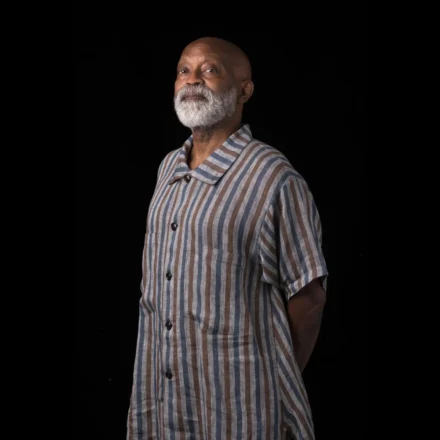



























































DES MOINES, Iowa — For Paul Grinvalds, the marathon is more than a race; it is a pursuit of discipline that has taken him across all 50 states to complete 114 marathons. Yet, at 68 years old, Grinvalds has learned that his most formidable opponent isn’t the distance or the course elevation—it is the mercury. Even in the relatively mild conditions of the 50s Fahrenheit (10°C), Grinvalds describes the air as "a bit warm." When the temperature climbs beyond 60°F (15.5°C), his internal cooling systems begin to falter.
Grinvalds admits that marathoners are a notoriously stubborn breed. "If we have a goal and it’s hot, a lot of times we’re still going to try to do that goal," he said. "Which is just stupid because you’re almost guaranteed to have a very painful experience."
That "painful experience" is increasingly becoming a structural reality for the sport of long-distance running. As climate change, driven by the combustion of fossil fuels, nudges global temperatures to record-breaking highs, the traditional marathon calendar is being upended. From race organizers shifting dates to the depths of autumn to incorporating "escape hatches" for mid-race withdrawals, the endurance community is scrambling to adapt to a planet that is no longer as hospitable to those who push their bodies to the limit.
A Chronology of Climate-Induced Disruption
The shifting landscape of road racing is perhaps best exemplified by the Twin Cities Marathon in Minneapolis-St. Paul. For over four decades, the race was a staple of the first Sunday in October. However, that tradition has been dismantled by the volatile reality of modern weather.
In 2023, the event was abruptly canceled due to record-shattering heat and humidity. By 2025, starting temperatures had reached nearly 70°F (21°C)—a dangerous threshold for high-exertion activity. In response, race officials performed an exhaustive analysis of historical climate data. The conclusion was stark: to ensure the safety and viability of the event, the race had to move. Beginning in 2027, the Twin Cities Marathon will permanently shift to later in October.

"The cancellation was devastating for our runners and for the organization," said Ed Whetham, the marathon’s race director. When asked about the potential for colder, even snowy conditions in late October, Whetham was pragmatic: "We’ll take a 39-degree (4°C) start over a 70-degree (21°C) start any day."
This trend is not isolated to the Midwest. In 2024, the Sioux Falls Marathon in South Dakota was forced to cancel its event entirely due to extreme heat, prompting organizers to permanently move the race from August to September. Similarly, iconic races such as the Air Force Marathon in Ohio, the Little Rock Marathon in Arkansas, and the Long Beach Marathon in California have all moved their start times to the pre-dawn hours, desperate to capture the cool of the morning before the day’s heat takes hold.
The Physiology of Failure: Why Heat is the Ultimate Barrier
To understand why a few degrees matter, one must look at human biology. Dr. Chris Minson, a professor of human physiology, explains that when the ambient temperature rises into the upper 50s and 60s Fahrenheit, the human body enters a state of physiological conflict.
"As you get to warmer temperatures, you end up having a bigger competition between blood supplying your muscles to keep running and blood flow to your skin for thermal regulation," Minson explains.
The physics of running is inherently inefficient. When an athlete runs, only about 25% of the energy consumed is converted into forward motion. The remaining 75% is converted into heat. In a standard marathon, the body must dump this thermal load to survive. When the air is hot, and particularly when it is humid—preventing the evaporation of sweat—the body’s cooling mechanism breaks down.

This leads to a dangerous cascade: dehydration, heat exhaustion, and potentially fatal heatstroke. This is precisely what happened during the 2025 Los Angeles Marathon. Facing unseasonably warm conditions, organizers took the unprecedented step of allowing runners to stop at the 18-mile mark and still receive a finisher’s medal. While the decision drew criticism from some traditionalists online, the data supported the move: only 14 of the 27,000 participants required hospital treatment, and all were discharged the same day.
"We welcome the feedback, but when we’re grading ourselves on it, it has to do with how safe our runners were on the day of the event," said Meg Treat, a spokesperson for the race.
Supporting Data: A Warming Global Trajectory
The anecdotal evidence from race directors is backed by a mountain of climate data. The contiguous United States experienced its warmest July on record recently, and 2024 was globally the hottest year ever recorded. According to the World Meteorological Organization, the Earth is on a trajectory to see average global temperatures rise by more than 1.5°C (2.7°F) above pre-industrial levels between 2025 and 2030.
Climate Central, a research group that analyzed 221 marathons, found that climate change is actively degrading the conditions required for safe, optimal performance. Their research suggests that by 2045, the "optimal" racing conditions—usually found in the low 40s (6–7°C)—will become a relic of the past for 46 of the 51 major U.S. marathons studied.
"The ability to go outside, to exercise, to take advantage of your human body and being healthy—that’s something that’s getting challenged by climate change," said Andy Pershing, who led the Climate Central research.

Official Responses and Safety Measures
The sports science community is now pivoting toward mitigation and acclimation. Jessica Murfree, who leads a laboratory at the University of North Carolina-Chapel Hill, notes that the problem extends far beyond the marathon finish line. It affects everything from college football to tennis, forcing governing bodies to draft new policies on "wet bulb" globe temperatures and mandatory hydration breaks.
"If we can’t walk, if we can’t exercise or go for runs, it’s too hot, can we still stay physically active while remaining cool?" Murfree asks. Her research suggests that society must prepare for a future where outdoor exercise becomes a seasonal or time-restricted activity, with a heavier reliance on indoor facilities or water-based sports like swimming.
For the most elite athletes, acclimation is a grueling process. Some, like John Seals of West Des Moines, utilize extreme methods such as training in the midday sun and sitting in saunas to force their bodies to adapt. These techniques are standard for those preparing for the most punishing events on Earth, such as the 135-mile ultramarathon in Death Valley, California. But as Douglas Casa of the Korey Stringer Institute notes, such extreme adaptation is not for the average recreational runner.
Broader Implications: A Culture Shift
The implications of this warming trend are profound. We are witnessing the end of the "set-it-and-forget-it" race calendar. For decades, runners could rely on the fact that a marathon in October would be cool and a marathon in May would be mild. That predictability is gone.
The most difficult hurdle, according to experts like Casa, may not be the temperature itself, but the human psyche. "If someone was smart enough to say, ‘OK, it’s a little hotter today than usual, I’m going to run a 7-minute mile instead of a 6:30 mile,’ then they won’t get any hotter than normal," Casa says. "It’s just that runners are sometimes very locked into what they normally do and what their goals are."

As the world continues to warm, the marathon is becoming an exercise in humility. The sport is no longer just a test of heart and lungs; it is now a test of situational awareness. For runners like Paul Grinvalds, the goal remains the same—to cross the finish line—but the path to that goal is increasingly defined by the ability to respect the heat, adjust expectations, and, ultimately, live to run another day.
The race, quite literally, is changing. As the planet warms, the marathon community must find new ways to balance the pursuit of personal bests with the harsh, new reality of a changing climate. The era of the "perfect race day" is fading, replaced by an era of adaptation, caution, and, perhaps most importantly, survival.