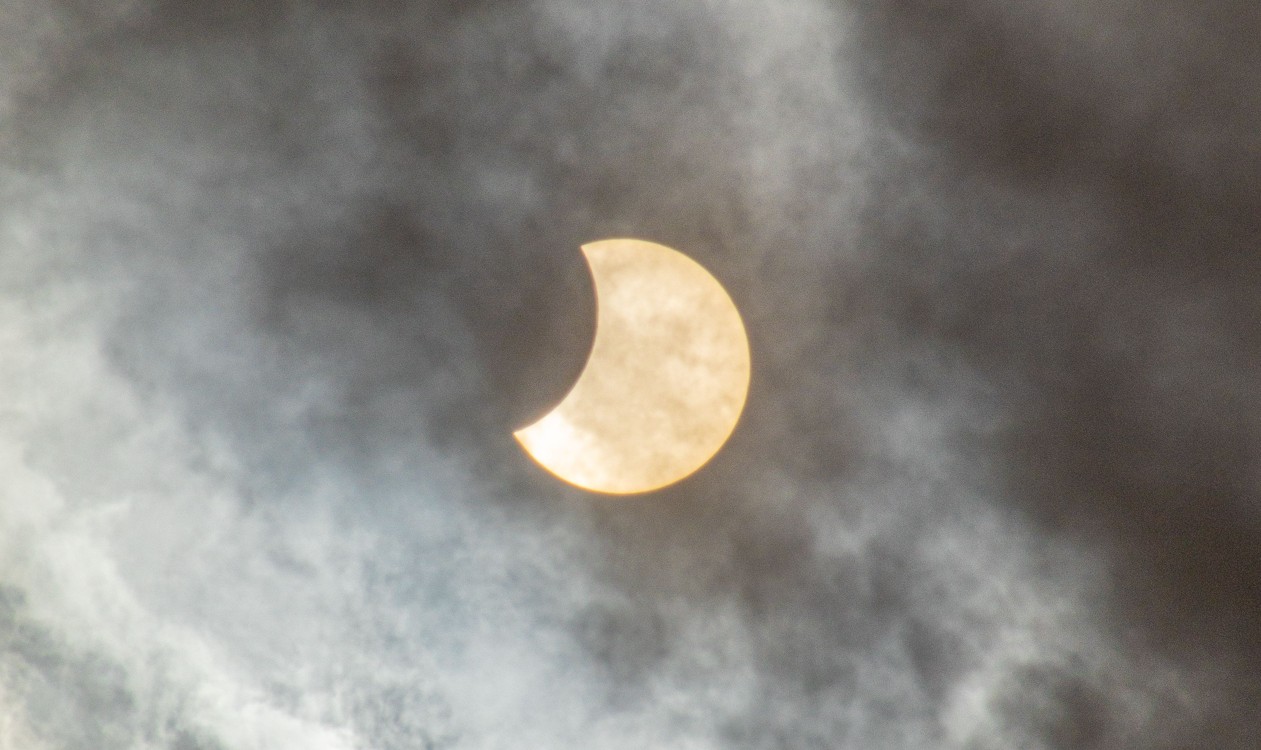
On August 12, 2026, humanity will witness one of the most spectacular celestial events of the decade. For the first time in several years, a total solar eclipse will sweep across parts of the Arctic, Greenland, Iceland, and Europe. This event, where the Moon passes directly between the Earth and the Sun, will cast a narrow shadow—known as the path of totality—across a highly diverse geographic corridor.
For observers positioned precisely within this narrow path, the Sun will vanish entirely behind the lunar disk, plunging the landscape into sudden, mid-day twilight. Outside this zone of totality, hundreds of millions of people across North America, Europe, and North Africa will experience a partial solar eclipse of varying magnitudes.
Main Facts: The Path of Totality and the Mechanics of the Eclipse
A total solar eclipse is a rare alignment of cosmic geometry. Despite the Sun being roughly 400 times larger than the Moon, it is also approximately 400 times farther away from Earth. This coincidence allows the Moon to perfectly cover the solar disk when their orbits align.
The August 12 event is particularly notable because of its high-latitude path. The shadow of the Moon—the umbra—will first touch down in a remote region of northeastern Russia. From there, it will travel across the Arctic Ocean, skim the frozen expanse of Greenland, pass directly over Iceland, cross the North Atlantic Ocean, and make landfall in northern Spain before terminating in the Mediterranean Sea just past the Balearic Islands.
The Phenomenon of Totality
Within the path of totality, observers will experience a dramatic shift in their environment:
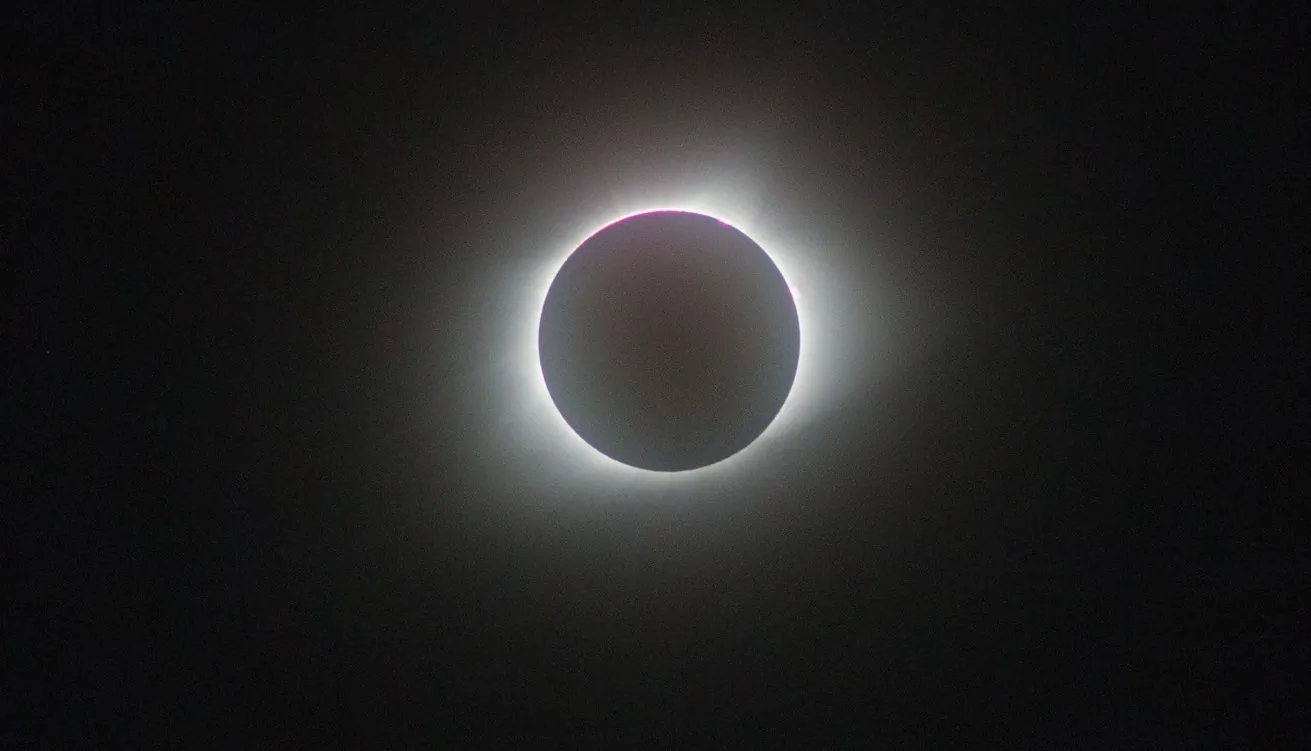
The Solar Corona: The Sun’s outer atmosphere, normally hidden by the blinding light of the photosphere, will become visible as a glowing, pearlescent halo.
Rapid Temperature Drops: As solar radiation is abruptly cut off, local temperatures can plummet by several degrees within minutes.
Environmental Changes: Daylight will fade into an eerie, 360-degree twilight. Sharp, unusual shadows will cast across the ground, and local wildlife may exhibit nocturnal behaviors, mistaking the sudden darkness for nightfall.
For those outside the path of totality, the experience is notably different. In places like the United Kingdom, France, Germany, and parts of the United States and Canada, the Moon will only cover a portion of the Sun. This partial eclipse does not produce the dramatic darkness of totality, nor does it allow for the safe viewing of the solar corona without specialized eye protection.
Chronology: Timeline of the Celestial Shadow
The progression of the eclipse is calculated with mathematical precision by astronomers. The shadow moves at thousands of miles per hour, making timing crucial for those hoping to capture or view the event.
According to global tracking data compiled by NASA and astronomical agencies, the key phases of the eclipse on August 12, 2026, will unfold according to the following chronological timeline (all times in Coordinated Universal Time – UTC):
1. 15:34 UTC – Commencement of the Partial Phase
The partial eclipse begins as the Moon’s outer shadow (the penumbra) first touches the Earth’s surface. This initial contact occurs in the high northern latitudes, signaling the start of the event for observers in the Arctic region.
2. 16:58 UTC – Onset of Totality
The core shadow (the umbra) touches down on Earth, marking the official beginning of the total solar eclipse. The path of totality begins its rapid journey across Greenland and down toward the North Atlantic.
3. 17:46 UTC – Greatest Eclipse
The moment of maximum eclipse occurs. This is the point where the axis of the Moon’s shadow pass closest to the center of the Earth. At this juncture, the duration of totality reaches its maximum potential for observers positioned along the centerline in the Denmark Strait, just off the coast of Iceland.
4. 18:34 UTC – Termination of Totality
The Moon’s umbra leaves the Earth’s surface. The final moments of totality will be visible at sunset in the Mediterranean Sea, just off the eastern coast of Spain and the Balearic Islands.
5. 19:58 UTC – Conclusion of the Global Event
The partial phase of the eclipse ends entirely as the penumbra slips off the Earth’s disk, restoring normal solar illumination globally.
Supporting Data: Regional Analysis and Environmental Challenges
Successfully viewing a total solar eclipse requires balancing orbital mechanics with local geography and meteorology. The August 12 path presents distinct challenges and advantages across its key viewing sectors.
+-------------------+--------------------+------------------------+------------------------------------+
| Region/Country    | Timing (Local)     | Key Viewing Challenges | Local Features                     |
+-------------------+--------------------+------------------------+------------------------------------+
| Iceland           | Late Afternoon     | Volatile cloud cover   | High probability of clear viewing  |
|                   |                    |                        | along the western coastline        |
+-------------------+--------------------+------------------------+------------------------------------+
| Northern Spain    | Late Evening       | Low solar altitude,    | Dramatic sunset photography;       |
|                   | (Before Sunset)    | mountain obstructions  | favorable summer weather forecasts |
+-------------------+--------------------+------------------------+------------------------------------+
| United States     | Afternoon          | Partial eclipse only;  | Greater magnitude in Alaska        |
|                   |                    | low solar coverage     | and the Northeast                  |
+-------------------+--------------------+------------------------+------------------------------------+
Iceland: The Premium, High-Risk Seat
Iceland is positioned directly in the path of totality, making it one of the most geographically favorable locations for international travelers.
The Location: The capital city of Reykjavik lies close to the southern edge of the path, ensuring a significant eclipse experience. The western fjords and the Snæfellsnes Peninsula are positioned even closer to the centerline, offering maximum duration.
The Weather Risk: Iceland’s subarctic maritime climate is notoriously unpredictable. Heavy cloud cover can develop rapidly. Historical meteorological data indicates that cloud cover in Iceland during August averages between 60% and 80%.
Mitigation: Even under light cloud cover, observers will still experience the sudden darkness of the shadow. However, a completely clear sky is required to see the delicate structures of the solar corona.
Spain: The Low-Angle Sunset Spectacle
As the shadow moves south, it sweeps across northern and central Spain. This region offers a dramatic but challenging viewing profile.
The Low Sun Angle: By the time the shadow reaches Spain, the Sun will be positioned very low on the western horizon—ranging from roughly 10 degrees down to mere fractions of a degree at sunset.
The Obstruction Risk: Because the Sun is so low, physical barriers such as mountains, hills, and buildings can easily block the view. Observers in mountainous regions like Galicia, Asturias, or the Pyrenees must select elevated viewpoints with an unobstructed view of the western horizon.
The Weather Advantage: Unlike Iceland, summer weather in Spain is highly stable, with a very low probability of cloud cover. This makes Spain the preferred destination for photographers seeking to capture the "sunset totality," where the eclipsed Sun sits right on the horizon.
North American and European Partial Visibility
For those outside the path of totality, the eclipse remains a significant partial event:
The United States and Canada: The partial eclipse will be visible across the northern tier of the United States, stretching from Alaska down through the Great Lakes and into the Northeast. Eastern Canada will see a deep partial eclipse during the afternoon hours.
Continental Europe: Countries such as the United Kingdom, Ireland, France, and Germany will see a "sunset eclipse." In these locations, the Sun will set while still partially covered by the Moon, offering unique photographic opportunities as the crescent Sun dips below the horizon.
Official Responses and Expert Insights
Astronomical organizations and government agencies are preparing public safety campaigns and scientific operations ahead of the event.
Safety Warnings from NASA and Eye Specialists
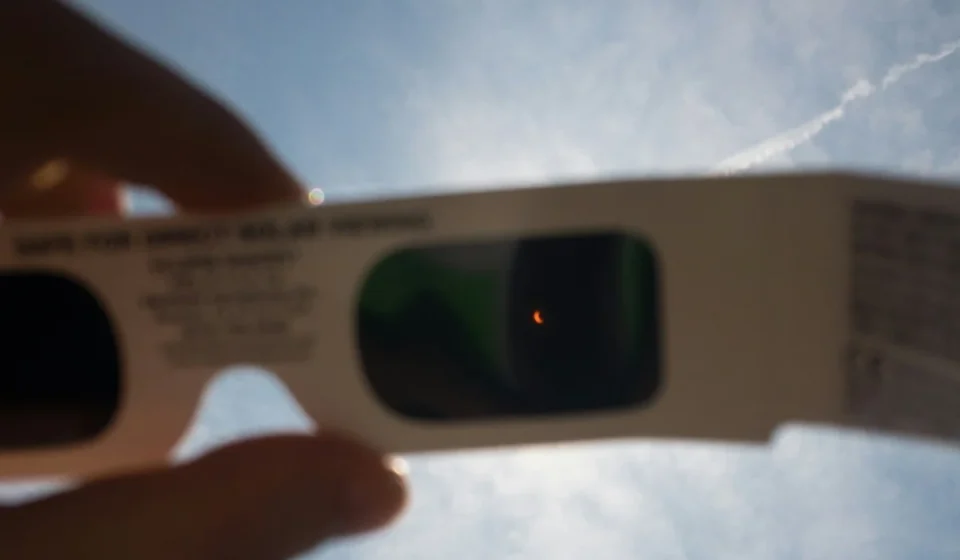
NASA, along with the American Astronomical Society (AAS) and European space agencies, has issued strict safety directives. Looking directly at the Sun during any partial phase of an eclipse without specialized eye protection can cause permanent eye damage, known as solar retinopathy.
"Ordinary sunglasses, no matter how dark, are not safe for looking at the Sun," warns a safety advisory from NASA. "During a solar eclipse, you must use certified solar viewing glasses that comply with the ISO 12312-2 international safety standard."
The only time it is safe to view the eclipse with the naked eye is during the brief window of totality—when the Moon completely blocks the Sun’s bright face. As soon as the first bead of sunlight reappears (the "diamond ring" effect), safety glasses must be put back on immediately.
       Partial Phase             Totality            Partial Phase
   +--------------------+  +------------------+  +--------------------+
   |   GLASSES ON       |  |   GLASSES OFF    |  |   GLASSES ON       |
   | (ISO 12312-2 Safe) |  | (Corona Visible) |  | (ISO 12312-2 Safe) |
   +--------------------+  +------------------+  +--------------------+
Scientific Objectives
For solar physicists, the eclipse represents a critical research window. The solar corona is difficult to study even with space-based coronagraphs, which must block out the Sun artificially. A natural total eclipse allows scientists to study the lowest regions of the corona, where solar wind is accelerated and solar flares originate.
Teams of researchers from institutions worldwide are planning to position mobile observatories in Greenland, Iceland, and Spain to capture high-resolution data during the brief window of totality.
Implications: Tourism, Travel, and Local Economies
The geographical path of this eclipse is set to trigger a massive wave of "astro-tourism," bringing significant economic opportunities and logistical challenges to the host regions.
Economic Windfalls and Logistics in Iceland and Spain
In Iceland, where tourism is a pillar of the national economy, hotels and vehicle rentals along the western coast are expected to reach capacity months in advance. Local authorities are preparing for increased traffic on narrow rural roads, particularly in the Westfjords, where infrastructure is limited.
In Spain, the eclipse aligns with the peak of the summer vacation season. Cities along the path of totality, such as Burgos, León, and Zaragoza, are preparing public viewing areas and security measures to handle the influx of local and international visitors. The Balearic Islands, particularly Mallorca and Ibiza, are also preparing for a surge in visitors looking to witness the rare sunset totality from the beach.
The Mobile Eclipse Chaser
A unique aspect of modern eclipse tourism is the "mobile observer." Rather than staying in one booked location, many dedicated eclipse chasers will monitor real-time satellite weather feeds in the 48 hours leading up to August 12.
In Spain, the excellent highway network will allow observers to drive hundreds of miles to escape localized cloud cover. In Iceland, however, road networks are more constrained, making early planning and flexibility critical.
For those unable to travel to the path of totality, NASA and various scientific organizations will broadcast the event live online. Starting at 1:15 p.m. EDT (17:15 UTC), high-definition feeds from ground telescopes and high-altitude balloons will stream the shadow’s progress from the Arctic to the Mediterranean, ensuring that this spectacular alignment of Earth, Moon, and Sun can be shared by a global audience.