























































On a crisp, sunny morning in late August, the playground at Hibbing’s Greenhaven Elementary School hummed with the sounds of childhood—the rhythmic creak of swings and the tentative, giggling footsteps of two-year-old twins, Maya and Lucy. Their mother, Sabrina Weberg, and grandfather, Dave Benz, hovered close, offering the gentle encouragement needed to navigate the climbing structures.
For the locals, this scene is a bittersweet snapshot of a community in transition. In a few days, the twins would turn three, but the playground they were exploring was already marked for an uncertain future. Out in front of the school, a large, stark yellow “For Sale” sign stood as a silent sentinel. In March, the Hibbing School Board, staring down a $2 million deficit, voted to shutter Greenhaven.
"Yeah, it was a sad one," Benz admitted, watching his granddaughters. For the residents of the Iron Range, the school is more than just a building; it is a repository of shared history and a cornerstone of community identity. As Minnesota school districts face the mounting pressures of declining enrollment and rising operational costs, the story of Greenhaven is becoming a recurring narrative across the state—a painful, structural transformation that is reshaping what it means to be a rural community.
A Historical Perspective: The Wave of Change
The current crisis is not a novel phenomenon. During the 1990s, Minnesota’s rural landscape underwent a similar, if more aggressive, seismic shift. Faced with the same triad of stressors—shrinking student bodies, volatile finances, and legislative incentives designed to encourage efficiency—the state lost one-fifth of its school districts.
More than 150 districts opted for consolidation, a process that almost invariably resulted in the closure of individual neighborhood schools. While the pace of consolidation has slowed significantly in the last decade—with only seven districts merging in that timeframe—the underlying drivers have remained remarkably consistent. Today, those pressures are flaring up once again. As districts are forced to weigh the benefits of collaboration against the desire to maintain local autonomy, communities are finding themselves forced to reckon with how their identities must evolve to survive.

Chronology of a Crisis
The trajectory of rural education in Minnesota has followed a path of increasing difficulty. The decade of the 1990s set the blueprint for survival through consolidation. As farming communities were hit hardest by economic shifts, the state encouraged mergers to pool resources.
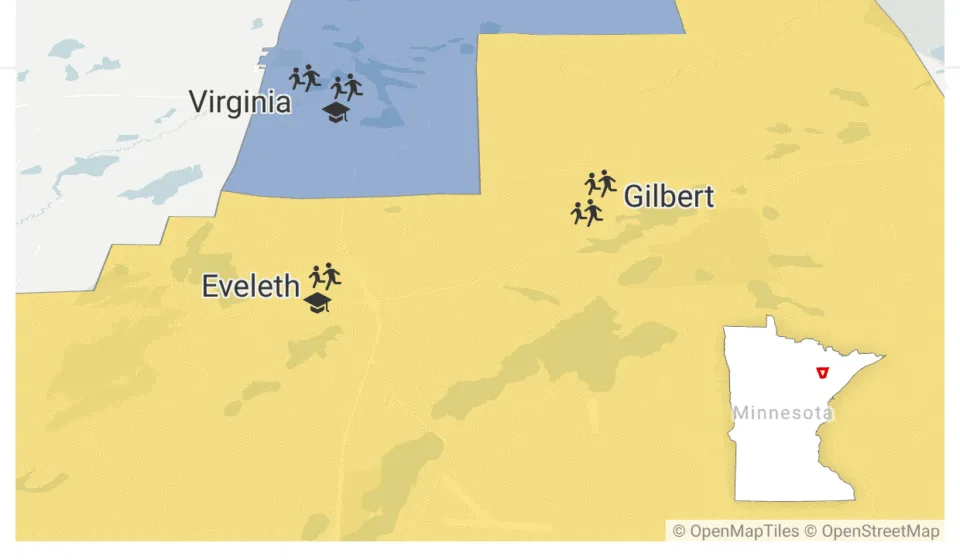
By the 2020s, the "pressure cooker" intensified. Inflationary costs began to outpace state funding, and a shift in demographics led to a sustained decline in enrollment, which directly impacts the per-pupil funding model used in Minnesota. Recent years have seen districts pivot from informal resource sharing to formal, high-stakes consolidation. The merger of the Virginia and Eveleth-Gilbert districts into the modern, high-tech Rock Ridge School District stands as a primary example of this modern approach—an attempt to trade historical buildings for state-of-the-art facilities and expanded curricula.
The Financial "Pressure Cooker"
The complexity of education funding in Minnesota often obscures the reality of the crisis. Revenue has failed to keep pace with the rising costs of infrastructure, labor, and specialized programming. Moreover, state mandates have brought new compliance requirements without a commensurate increase in funding.
"In Greater Minnesota, especially in the northeast, we have fewer people," explains Paul Peltier, director of the Range Association of Municipalities and Schools (RAMS). Because state funding is tied to enrollment, districts eventually reach a point where the math simply doesn’t work. "You need a superintendent, principals, an activities director, custodians, office support staff, and a business manager. Every small district has these needs, regardless of how many students are enrolled."
The economic impact extends beyond the classroom. The Minnesota Rural Education Association (MREA) points out that schools are often the primary economic drivers in rural towns. When a school closes, the loss of staff and the absence of visitors—who would otherwise frequent local businesses during sports games or school events—creates a "death by a thousand paper cuts."

Rock Ridge: A Case Study in Modernization
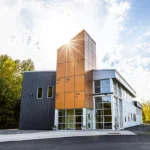
In the heart of the Iron Range, the Rock Ridge High School campus offers a glimpse into the future of rural education. Four years into its existence, the facility is a masterclass in modern, collaborative design. The school boasts a grand piano in the cafeteria, a 3-ton crane in the industrial shop, and a curriculum catalog far broader than what the individual legacy districts of Virginia and Eveleth-Gilbert could have provided independently.
Superintendent Noel Schmidt, who spearheaded the consolidation, views the project as a necessary evolution. "If you’re a rural school, this is what you have to do," he says, gesturing toward the high-tech vocational labs. For Schmidt, the consolidation was an objective success, driven by the need to offer students competitive opportunities in a global economy.
However, the transition was not without trauma. The consolidation involved years of community meetings and, ultimately, the demolition of century-old school buildings. For some, the new, sprawling campus lacks the "soul" of the neighborhood schools it replaced. A parent, who grew up in Gilbert, described the process with visceral frustration, mourning the loss of the local elementary school that had stood for 100 years. "It was cool their kids got to go to the old elementary, too, before it was torn down," his partner noted, highlighting the tension between the functional benefits of a new facility and the emotional loss of community landmarks.
Official Responses and Philosophical Divides
The divide between those who view consolidation as a "no-brainer" and those who view it as an identity-stripping tragedy is profound. John Uhan, chair of the Rock Ridge School Board, believes that sentimentality shouldn’t override the practical needs of students. "We got a very proud history, and people like hanging on to that," Uhan said. "But I like embracing the new."
Conversely, local leaders like Mayor Adam Roen of Eveleth recognize the benefits of the new district while acknowledging the hollowed-out feeling left behind. The Eveleth Community Center now occupies a small addition of the former high school, serving as a makeshift hub for the town. "When you take the school district out, I think you take a piece of that identity away," Roen said. "We can’t forget our history, but we have to move forward."

This philosophical friction is the hallmark of the current era of school governance. Leaders are tasked with the unenviable job of convincing a skeptical public that the "old way" is no longer viable, even when that "old way" is exactly what defines the town.
Implications for the Future
The implications of this trend are significant. If rural districts do not proactively manage their decline through strategic consolidation, they risk being forced into it by external financial failure. "My biggest concern is that rural schools won’t move fast enough," Schmidt warned. "If we wait for an external factor to cause the consolidation, the improvement of education for our rural kids, we’re done for."
However, the fatigue is palpable. State legislators, according to many local leaders, have become desensitized to the pleas of rural districts. There is a sense of abandonment, as if the state has accepted the attrition of small-town school systems as an inevitable byproduct of economic forces.
As Carlton-Wrenshall recently became the latest district to consolidate after a narrow and contentious community vote, it is clear that the path forward will remain rocky. The challenge for the next decade is not merely the logistics of merging budgets and buildings; it is the challenge of helping communities mourn the loss of their past while providing a bridge to a viable future.
For families like Dave Benz’s, the reality is that the playground at Greenhaven may soon be a vacant lot, and the familiar halls their children once walked will become memories. Whether these changes ultimately result in a stronger, more equitable education system for all of Minnesota’s youth remains the central, unresolved question of the era. The future of rural identity is at stake, and for many, the cost of progress is a price they are still learning how to pay.