





































Minnesota’s Political Crossroads: Tumultuous Conventions Reignite Calls for Systemic Reform

WASHINGTON – The dust is barely settled from last weekend’s contentious DFL and GOP state party conventions, yet the reverberations are already shaking the foundations of Minnesota’s century-old political candidate selection process. The events, marked by internal party strife, surprising endorsements, and outright rejections, have propelled a long-simmering debate to the forefront: Should Minnesota abandon its traditional caucus and convention system in favor of a more direct, voter-centric primary election model?
The state’s deeply ingrained method, established in 1922, is a relic of a bygone era, now standing as a distinct outlier in the landscape of American politics. While imbued with tradition and woven tightly into Minnesota’s political fabric, its recent performance has prompted a bipartisan chorus of calls for reform. The proposed changes are significant: scrapping the power of endorsing conventions entirely and moving the state’s primary election, currently scheduled for August 11, to an earlier, potentially more engaging date in June. Such a transformative shift would require the complex approval of both state political parties and the Legislature, but the pressure, undeniably, is mounting.
A Century of Tradition Under Scrutiny: The System’s Genesis and Evolution
Minnesota’s modern system of caucuses and endorsing conventions dates back to 1922, a period when political parties across the nation were grappling with how to best select candidates and engage their grassroots. The intent was noble: to foster a deliberative process where dedicated party members could vet potential leaders, debate platforms, and coalesce around a shared vision before presenting a unified front to the broader electorate. Over the decades, this process became more than just a mechanism; it evolved into a defining characteristic of Minnesota’s political identity, a testament to its strong tradition of civic engagement and party loyalty.
However, this system, once a source of pride, is now increasingly viewed as an anachronism. Minnesota stands as one of only nine states, including California and Michigan, that still utilize state party conventions to formally endorse or nominate candidates. The vast majority of American states have long since transitioned to primary elections, believing them to be a more democratic and representative means of candidate selection.
The current system begins with precinct caucuses, where dedicated party activists gather to discuss issues and elect delegates to higher-level conventions – first congressional district, then statewide. It is at these statewide conventions that the crucial endorsements are made, often after multiple rounds of intense balloting. The process is designed to empower the most engaged members, but critics argue this very design has become its Achilles’ heel.
The Weekend’s Tumult: Moderation Defeated, Primaries Ensured
The recent DFL and GOP state conventions served as stark illustrations of the system’s perceived flaws, leaving a trail of disunity and setting the stage for costly primary battles.
The Republican Convention in Duluth:
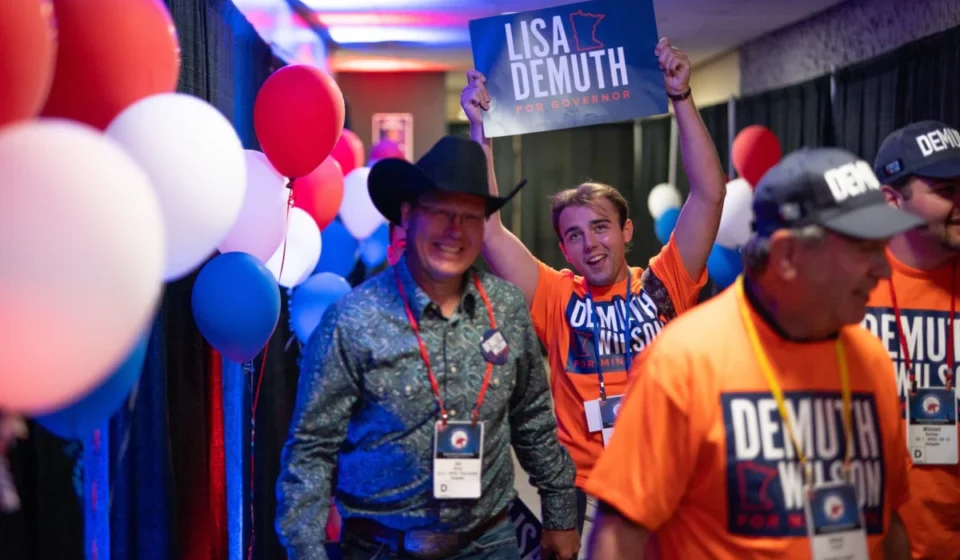
The GOP gathering in Duluth was particularly chaotic, marred by distrust and procedural irregularities. Tensions flared when party officials announced "anomalies" in a round of balloting for the gubernatorial endorsement. Despite the initial confusion, businessman Kendall Qualls, widely seen as running to the right of state House Speaker Lisa Demuth, ultimately secured the party’s endorsement. This outcome immediately signaled a preference for a more conservative candidate within the delegate pool.
Adding to the drama, former sportscaster Michele Tafoya, a high-profile candidate for the U.S. Senate backed by the National Republican Senatorial Committee (NRSC), faced a decisive rejection from delegates. They overwhelmingly threw their support behind former Navy SEAL Adam Schwarze, who garnered more than 60% of the vote. Like Qualls, Schwarze is considered more conservative and aligned with the "MAGA" faction of the party, indicating a clear ideological lean among the convention delegates.
Tafoya had already declared her intention to bypass the endorsement process and continue to the primary, a move common for candidates confident in broader voter appeal. However, in an unprecedented move, the Minnesota Republican Party decided on Monday night to release all candidates from the endorsement process due to the balloting snafu. This decision effectively negated the gubernatorial endorsement, allowing Lisa Demuth, who had previously pledged to abide by the endorsement, to also proceed directly to the primary. MyPillow CEO Mike Lindell, another contender, also confirmed his continued presence in the race, ensuring a crowded and potentially divisive Republican gubernatorial primary.
The Democratic-Farmer-Labor (DFL) Convention in Rochester:
On the DFL side, the convention also saw significant cracks in party unity. Representative Angie Craig, D-2nd District, who was battling for the endorsement for retiring Senator Tina Smith’s seat, made a strategic decision to skip the DFL convention in Rochester altogether. Facing an uphill battle against Lieutenant Governor Peggy Flanagan for delegate support, Craig opted to take her campaign directly to the primary voters. Craig is generally considered the more moderate candidate in that contest, highlighting a familiar pattern where the delegate base leans further left than the general DFL electorate.

Even Senator Amy Klobuchar, a popular figure running for governor, faced unexpected resistance. While she ultimately secured the party’s endorsement, approximately 30% of DFL delegates cast their votes for 26-year-old progressive Kobey Layne. This significant minority vote underscored the sentiment among a segment of the delegate base that even Klobuchar, a mainstream Democrat, was considered "too moderate."
In essence, the outcomes of both conventions devalued the delegates’ picks in one way or another, setting the stage for hard-fought, expensive primary battles across key statewide races.
The Case for Change: A System Under Fire
The tumultuous conventions have intensified the arguments from those advocating for systemic change, citing multiple reasons why the current method is detrimental to the parties and the state.
Electability vs. Activism:
Blois Olson, a respected political analyst and publisher of TheDailyAgenda.com, articulates a central critique: "Party endorsements do not produce the most electable candidates." This sentiment is echoed by many who observe that the caucus-convention system, by its very nature, empowers a relatively small, highly motivated subset of the electorate – party activists.
Jessica Shaten, a DFL convention delegate from South Minneapolis, elaborates on this point, stating, "What the endorsement process has become is a way for extremist candidates to take control of their parties." She argues that the rigorous process of delegate selection, from local caucuses to congressional district conventions, filters for individuals with strong ideological commitments and the time and resources to participate extensively. These delegates, whether on the far right or far left, then have an "outsized influence" on who gets endorsed, often selecting candidates who resonate with the activist base but struggle to appeal to the broader, more moderate general election voters.
Shaten and others contend that the mere 1,200 DFL delegates and 2,000 GOP delegates who attended the statewide conventions are not representative of Minnesota’s more than 3.8 million registered voters. Their proposed solution is straightforward: let all registered voters choose their preferred candidate in a primary election, and then allow the parties to endorse those nominees at a post-primary convention, if they choose. This sequence would prioritize broad voter participation over activist selection.
The Republican Conundrum: A Cycle of Loss?
Hamline University political science professor David Schultz points out a particular irony that should motivate Republicans to change the system: its disproportionate impact on their electability. DFL candidates, such as Governor Tim Walz and former Governor Mark Dayton, have successfully "flouted" party endorsements in the past, winning their primaries and then going on to secure general election victories. This suggests DFL voters are more forgiving of candidates who bypass the convention process.
In stark contrast, GOP candidates who choose not to abide by the endorsement are typically "punished" by Republican primary voters. This often results in the "better candidate" (in terms of general election appeal) being sidelined, or the party expending valuable resources on a primary battle that could have been avoided. Schultz observes, "Since they haven’t won a statewide election in 20 years, there are probably enough people in the Republican Party who are saying, ‘If we keep doing this and we keep losing, maybe we should do something else.’" The party’s consistent struggle in statewide races, he suggests, provides a compelling, pragmatic reason for them to reconsider their long-held traditions.
The August Primary Problem:
Beyond the endorsing conventions, the timing of Minnesota’s primary election in August also draws heavy criticism. Currently set for August 11, it places Minnesota in a minority of states that pick their nominees so late in the year. Thirty-one states hold their primaries before the end of June.
Moving the primary to an earlier date, perhaps in June, would offer several benefits. It would create a longer general election period, allowing candidates more time to introduce themselves to voters and articulate their vision. Crucially, political observers and former officials believe it would boost voter turnout. Secretary of State Steve Simon, when a state House member, testified in 2017 that an August primary often suffers from "summertime blues," as many voters are on vacation or simply disengaged from politics. A June date, he argued, would find more Minnesotans available and attentive to vote, and subsequently, more time to consider their general election options.

Defending Tradition: The ‘Small D’ Democratic Argument
Despite the growing chorus for reform, the traditional system still has its staunch defenders. Jason Franzen, a long-time GOP delegate who has participated in conventions since the 1990s, acknowledges the process is "archaic," but argues it is "very ‘small d’ democratic." For proponents like Franzen, the caucus and convention system represents true grassroots democracy, where dedicated party members actively engage in shaping their party’s direction and choosing its standard-bearers. It fosters a sense of ownership and deep commitment that they believe is absent in a purely primary-driven system. Franzen, a supporter of Kendall Qualls and a candidate for mayor in Delano, nonetheless predicts that calls to end the process "would continue to persist, and perhaps gather strength," and that "if that’s what people in Minnesota want, well, that’s fine."
Frank Long, another delegate and long-time party activist from Watertown Township who supports Adam Schwarze, echoes the sentiment that delegates, who come up through the caucuses, have a better sense of what the party’s core voters want in a candidate. He contrasts this with what he describes as a "small group of people who are recruiting and funding candidates" in a primary system, implying that primaries can be swayed by money and external influence rather than genuine party sentiment. For these traditionalists, the current system ensures ideological purity and loyalty, acting as a crucial filter against candidates perceived as opportunists or insufficiently aligned with the party’s principles.
The Obstacles to Change: Political Lift and Unseen Risks
While the arguments for reform are compelling, enacting such fundamental changes would be a formidable "political lift." The system has been in place for over a century, deeply intertwined with the state’s political culture and party structures.
Legislative Hurdles:
Any move to abolish endorsing conventions or, more concretely, to shift the primary date would require the Minnesota Legislature to pass a new law establishing a revised election calendar. This is not a new idea; similar attempts have been made in the past but have consistently failed to gain traction. One significant obstacle, as highlighted by David Schultz, is the practical challenge for incumbent legislators. If the primary were moved to June, state lawmakers, who are often still in session in mid-May during an election year (and could face special sessions), would have a severely truncated period to campaign for re-election. Moreover, changing the primary date isn’t a simple tweak; it would necessitate moving up "about a dozen other election deadlines" that are interconnected with the current August schedule, adding layers of administrative and logistical complexity.
Internal Party Resistance and "Blowback":
Beyond legislative challenges, any attempt to eliminate the endorsement process would inevitably face significant "blowback" from powerful internal party constituencies, according to Blois Olson. This resistance would likely come from organizations that heavily rely on the current system to field delegates and influence outcomes, such as labor unions on the DFL side and hardline ideological groups within the GOP. These groups benefit from the focused, activist-driven nature of caucuses and conventions, which allow them to mobilize their members and exert disproportionate influence on candidate selection and platform development. Weakening the endorsement process would diminish their leverage, leading to strong opposition.
While such a change would weaken the power of state parties to dictate candidate selection, Olson clarifies that "parties could still have influence." They would simply shift from endorsing specific political candidates to focusing on other vital functions. Minnesota’s political parties could still hold statewide conventions to draft new bylaws, develop party platforms, and formulate campaign strategies, retaining their organizational and ideological roles. However, the loss of the endorsement power, which is seen as a crucial gatekeeping function, would undoubtedly be a bitter pill for many party leaders and dedicated activists to swallow.
The silence from both Minnesota Republican Party Chairman Alex Plechash and Democratic Party Chairman Richard Carlbom, who declined requests to comment for this story, underscores the sensitivity and internal political tightrope involved in discussing such fundamental reforms. Their reticence highlights the deep divisions within their own ranks regarding the future direction of candidate selection.
The Road Ahead: Implications for Minnesota’s Political Landscape
The recent conventions have set the stage for a critical inflection point in Minnesota politics. The calls for reform are no longer whispers but increasingly vocal demands, driven by a desire for greater electability, broader voter engagement, and a system more aligned with modern democratic practices.
Should Minnesota move towards a primary-first system, the implications would be profound:
- Increased Moderation? By allowing a wider pool of voters to select candidates, the system might favor more moderate, broadly appealing candidates over those who cater primarily to the ideological flanks of their respective parties.
- Enhanced Voter Participation: An earlier primary, especially in June, could lead to higher voter turnout, giving a more accurate reflection of the electorate’s preferences and potentially legitimizing the chosen nominees more effectively.
- Shift in Party Dynamics: While parties would retain influence, their role might shift from kingmakers to mobilizers and strategists. This could lead to more robust, open internal debates and a focus on broader outreach rather than internal delegate wrangling.
- Reduced Party Unity (Initially): The abolition of endorsements could, in the short term, lead to more contested primaries, potentially causing intra-party divisions and draining resources before the general election. However, proponents argue that a nominee chosen by a wider electorate would ultimately be stronger.
- A More Representative Democracy: At its core, the debate touches upon the fundamental question of who should ultimately choose a party’s standard-bearers: a dedicated but small group of activists, or the broader voting public?
The pressure from recent events, coupled with the ongoing debate about electability and voter engagement, means that Minnesota’s century-old political selection process is now under its most intense scrutiny in decades. While deeply entrenched in tradition, the momentum for change is undeniable, setting the stage for a potentially transformative shift in how the North Star State selects its future leaders. The outcome of this debate will not only redefine the mechanics of elections but also shape the very character of Minnesota’s political future.