
























































Minnesota Communities Mobilize: Data Centers Emerge as Pivotal Election Issue Across the State

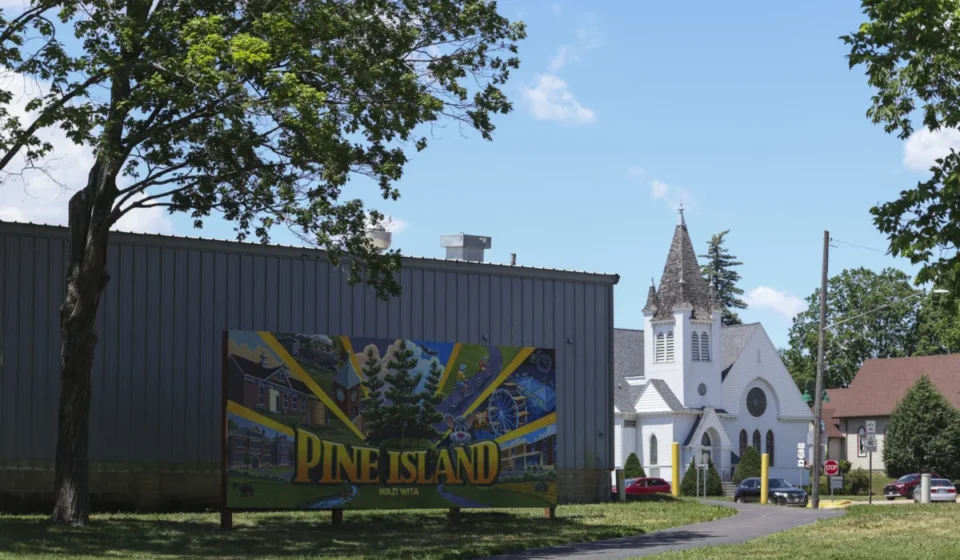
PINE ISLAND, MN – Along a quiet dirt road that traces the edge of a sprawling agricultural field, Aubree Derksen navigates the landscape she fears is on the brink of profound transformation. For Derksen, a resident of Pine Island, the struggle against a proposed hyperscale data center in her rural community feels like a modern-day "David against Goliath." Her formidable adversary: Google, the global technology giant, collaborating with a developer to erect a massive digital infrastructure on land currently characterized by open fields and tranquil skies. From her home, conspicuously adorned with anti-data center signage, Derksen spearheads a passionate local opposition, a fight that has galvanized communities across Minnesota.
This localized battle in Pine Island is far from isolated. Derksen is part of a growing, decentralized, yet increasingly unified grassroots coalition spanning Minnesota. From Farmington to Hermantown, Monticello to Faribault, and beyond, residents are rising in protest against the relentless march of data center developments. They argue that local governments, often swayed by the allure of economic development promises, are failing to adequately address deep-seated community concerns regarding the environmental, health, and resource management risks inherent in these industrial-scale projects. Despite fervent protests and significant public outcry, many proposed developments have navigated local regulatory processes with surprising speed over the past two years, with only judicial intervention in places like Pine Island and Faribault forcing temporary pauses. At the state level, legislative attempts to impose moratoriums or introduce greater transparency around data center proposals met with failure in the last session, a setback Derksen described as "incredibly disappointing."
However, the upcoming campaign season has injected renewed vigor into the movement. With a host of city, county, and state offices on the ballot this fall, activists believe data centers will transcend traditional partisan divides to become a defining election issue. "This is the new single-issue voter," Derksen declared, anticipating that concerns over data centers could eclipse traditional hot-button issues like abortion, LGBTQ+ rights, or immigration, compelling both major parties to address the burgeoning public sentiment.

The Unfolding Conflict: A Chronology of Resistance
The story of Minnesota’s data center resistance is one of escalating awareness and organized action. For many residents, the initial proposals often emerged from behind a veil of secrecy, frequently shrouded by non-disclosure agreements (NDAs) signed by local officials, effectively shielding early discussions from public scrutiny. This lack of transparency, coupled with the sheer scale of the proposed facilities, quickly ignited suspicion and alarm.
In Pine Island, the proposed Google project, codenamed "Project Skyway," would encompass a staggering 482 acres, a scale that promises to fundamentally alter the rural character of the region. Residents like Derksen describe feeling blindsided, discovering the potential for such a massive industrial complex only after initial agreements were already underway. The rapid progression through local planning and zoning boards often left little room for meaningful public input, reinforcing the perception that elected officials were prioritizing corporate interests over community well-being.
The frustration stemming from these local processes propelled activists to seek recourse at the state Capitol. During the last legislative session, a concerted effort was made to introduce bills that would mandate greater transparency, impose temporary moratoriums on new data center construction, or establish stricter environmental and resource impact reviews. These legislative initiatives, however, faced significant headwinds. Industry lobbyists, citing the economic benefits and job creation potential, actively worked against the measures. Competing interests, including powerful labor unions often aligned with large-scale construction projects, also complicated the political landscape. The failure of these bills to pass left activists feeling disenfranchised and underscored the powerful influence wielded by tech giants and their development partners.

Yet, these legislative setbacks did not dampen the resolve of the grassroots movement. Instead, they redirected their efforts, turning their attention towards the ballot box. The realization that state-level policy changes were stalled galvanized activists to focus on local and state elections, viewing them as crucial opportunities to elect representatives more attuned to their concerns. The period leading up to the fall elections has thus become a critical juncture, where the simmering discontent over data centers is boiling over into the political arena, transforming what was once a localized environmental issue into a statewide political force.
Supporting Data: Unpacking the Concerns and Public Sentiment
The opposition to data centers is rooted in a complex array of concerns, supported by growing evidence of their significant environmental and social footprints.
Environmental and Resource Strain:
Hyperscale data centers are notoriously resource-intensive.

- Water Consumption: Their cooling systems require immense quantities of water, often drawing from municipal supplies or local aquifers. This poses a direct threat to local water tables, particularly in agricultural regions where water resources are already strained. Activists highlight the long-term sustainability implications for communities and ecosystems.
- Energy Demand: These facilities operate 24/7, consuming vast amounts of electricity. This massive energy draw places considerable strain on regional power grids and often necessitates reliance on existing, frequently fossil-fuel-dependent, energy sources, undermining state and local clean energy goals. The promise of renewable energy integration often comes with caveats, as the sheer scale of demand can still necessitate supplementary power from traditional sources.
- Noise and Light Pollution: The constant hum of cooling fans and generators, along with pervasive outdoor lighting required for security and operation, fundamentally alters the sensory landscape of rural areas. For residents like Aubree Derksen and Rodney Lanners, who moved to Pine Island for its tranquility and stargazing opportunities, this represents a direct assault on their quality of life.
- Land Use: The sheer physical footprint of a hyperscale data center, often sprawling across hundreds of acres, results in the irreversible conversion of agricultural land, natural habitats, and green spaces. This loss of productive farmland and biodiverse areas is a significant concern for environmentalists and farmers alike.
Economic Promises vs. Reality:
Developers frequently tout data centers as engines of economic growth, promising jobs and substantial property tax revenue. However, Mayor Tom Berg of Lonsdale voices a common skepticism among opponents. He points out that while construction phases do create temporary jobs, the operational workforce for a highly automated data center is relatively small. The long-term property tax revenue, while initially attractive, might not be as stable or beneficial as portrayed. Berg warns of cities becoming "overextended with an empty industrial building" should the industry shift or the facility become obsolete, leaving communities with infrastructure burdens and reduced revenue. This "praying for a boom is just not good fiscal responsibility," he argues, advocating for a more cautious, long-term approach to development.
Transparency and Trust:
The widespread use of non-disclosure agreements (NDAs) by developers has become a flashpoint for public distrust. These agreements, which prevent local officials from openly discussing proposed projects, are seen as undermining democratic processes and eroding public confidence in local government. Mayor Berg, who testified at the Capitol against such practices, emphasized how NDAs stifle public discourse and prevent communities from making informed decisions about projects that will profoundly affect their future.
Public Opinion and Political Alignment:
Recent polling data underscores the bipartisan nature of the data center debate. An Ipsos poll revealed that while Democrats are more acutely concerned about the environmental impacts of data centers, a significant portion of Republicans share these sentiments. While Republicans generally lean towards a free-market approach and are more opposed to government restrictions, the poll found conservatives to be quite split on the issue. Crucially, the poll concluded that "overall support for their construction remains low," suggesting a broad public apprehension regardless of party affiliation.

This bipartisan concern was evident at the recent DFL and GOP state conventions. Within the DFL, two resolutions addressing data centers garnered substantial support: a moratorium proposal received 64% of votes, while a resolution advocating for tighter regulations, more palatable to labor unions, secured 76%. The Republican convention, while less singularly focused, also adopted a resolution calling for a data center "pause." Sarah Mooradian, government relations and policy director at CURE, a Montevideo-based nonprofit tracking data center issues, confirmed these votes as a "pretty good indicator of what’s happening statewide," highlighting the issue’s strong bipartisan resonance.
Official Responses and Strategic Maneuvers
The growing public opposition has begun to elicit varied responses from elected officials and government bodies across Minnesota.
Local Government Action:
Some municipalities have taken proactive steps to address resident concerns. Rosemount, a southeast Twin Cities suburb, provides a notable example. While Meta is actively constructing a data center within its borders, the city has since imposed a moratorium on any new projects beyond the existing one. This demonstrates a recognition of the need for caution and controlled growth. Similarly, Lonsdale, located about 40 miles south of Minneapolis, enacted a one-year moratorium in May. Mayor Tom Berg explained that Lonsdale observed other cities rushing into agreements with developers without adequate regulations, and opted to "take that pause and enact it now, and then start really pushing forward with regulations with community feedback." This pre-emptive approach aims to establish comprehensive guidelines before being overwhelmed by development proposals.

Mayor Berg has been a vocal proponent of transparency, testifying at the Capitol in favor of a bill to ban local officials from signing non-disclosure agreements with developers. He argues that such NDAs, while common, significantly erode public trust and prevent communities from having informed discussions about projects with profound long-term implications.
State-Level Engagement and Electoral Focus:
The failure of data center bills in the last legislative session has shifted the battleground to the upcoming elections. Activists are now strategically targeting local council, mayoral, and state legislative races, understanding that changes in elected leadership can directly influence development policy. In Pine Island, the resignation of former Mayor David Friese, citing work-related changes, has opened up a mayoral race alongside two City Council seats, creating a critical opportunity for opponents of "Project Skyway." Aubree Derksen and her allies are actively working to identify and support candidates who align with their vision for the community.
Similar efforts are underway in other affected cities. Rebecca Gilbertson’s group in Hermantown, where Google is pursuing "Project Loon," is exploring avenues to engage directly at the local government level, ensuring data center issues are front and center for candidates.

State House and Senate races are also considered pivotal. Shifts in party control or even the election of sympathetic individual legislators could revive proposals for moratoriums or stricter regulations in the next session. Activists are closely monitoring battleground districts, such as the Senate district south of the Twin Cities metro held by Republican Bill Lieske, where DFL challenger Mark Legvold is seen as more aligned with data center opponents. In northern Minnesota, the high-stakes swing district of Sen. Grant Hauschild (DFL-Hermantown) and Rep. Natalie Zeleznikar (R-Fredenberg Township) are also under scrutiny. While acknowledging that not every district may yield a candidate fully supportive of moratoriums, activists like Derksen, Johnson, and Gilbertson are committed to identifying and backing candidates willing to at least slow down or critically evaluate data center developments.
Implications: Preserving Community Character and the Future Landscape
For residents like Aubree Derksen and Rodney Lanners, the stakes are deeply personal and profoundly tied to their sense of home and community. Derksen, who moved to Pine Island six years ago for its small-town feel despite its proximity to the rapidly developing Rochester, cherishes the "little things" that define her life there: monitoring native plants, birds, and pollinators in her backyard, the ability to watch the Northern Lights from her patio, and the sight of a bald eagle’s nest near a local cemetery. The prospect of "Project Skyway" less than a mile from her home raises agonizing questions: "If this were to get built, with the noise, with the light, are we still going to be able to hear the birds? We can’t afford to move, so we don’t have an escape plan."
Rodney Lanners, a 74-year-old who has lived in Pine Island for 53 years and in his current home for 26, describes his backyard as "a little bit in heaven." From his vantage point, he observes raptors soaring over fields and songbirds at his feeders, finding solace in the natural rhythm of his surroundings. The proposed data center, visible from his yard, threatens this cherished peace. For Lanners, who would prefer to tend to his garden and workshop projects than attend public meetings, the fight is about preserving the life he has meticulously built and deeply values. He wants a City Council that truly represents his desire to remain in his "final home," untouched by industrial intrusion.

This sentiment resonates across Minnesota. The opposition to data centers is not merely about environmental impact; it’s a profound struggle to preserve the character and landscape of communities. It’s a fight for local autonomy against powerful global corporations, a quest to ensure that economic development does not come at the expense of quality of life, natural resources, and the unique identity of small towns.
The growing strength of this grassroots movement carries significant implications for Minnesota and potentially for the wider tech industry. It signals an evolving public consciousness regarding the hidden costs of the digital age, particularly the environmental and social footprint of the infrastructure that underpins our interconnected world. The emergence of data centers as a "single-issue" voting concern demonstrates a powerful shift in civic engagement, where residents, often from diverse political backgrounds, unite when they perceive a fundamental threat to their homes and way of life.
For the tech industry, these widespread protests suggest that the era of unchallenged expansion may be drawing to a close. Companies like Google and Meta may need to adopt more transparent, community-centric approaches, engaging with residents earlier and more genuinely, and offering solutions that mitigate environmental impacts and respect local character. The current approach, often perceived as top-down and secretive, is clearly backfiring, fostering deep resentment and organized resistance.

As Minnesota heads into its fall elections, the battle over data centers will not only shape local councils and state legislative bodies but will also serve as a crucial test case for how communities can assert their agency against powerful corporate interests. The outcome will determine whether the tranquil fields and starlit skies of rural Minnesota can withstand the relentless march of hyperscale development, or if the "David and Goliath" struggle will once again prove that local voices, when united, can indeed move mountains.