























































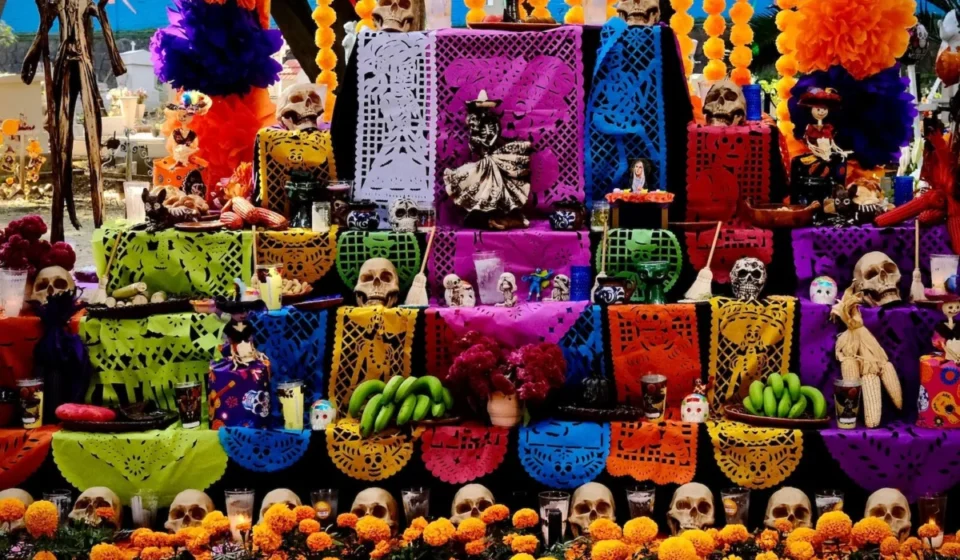

In the landscape of global iconography, few images are as instantly recognizable—or as deeply misunderstood—as the elegant, feathered-hat-wearing skeleton known as La Calavera Catrina. While she now serves as the quintessential mascot of Día de Muertos (Day of the Dead), her origins are not found in ancient ritual, but in the biting ink of early 20th-century political dissent. To understand La Catrina is to understand the soul of Mexico: a country that stares death in the face not with fear, but with a complex, defiant, and deeply artistic embrace.
Main Facts: From Political Critique to Cultural Beacon
La Calavera Catrina began as La Calavera Garbancera, a zinc etching created by the visionary Mexican lithographer José Guadalupe Posada around 1910. The image was a scathing social commentary. "Garbancera" was a derogatory term used to describe Indigenous people who tried to pass as European, shunning their own culture and heritage to adopt the customs and dress of the elite.
Posada’s skeleton, adorned in a flamboyant, wide-brimmed hat, was a mirror held up to the vanity of the Porfiriato era. The message was clear: whether you drape yourself in French-style finery or live in poverty, the grave is the great equalizer. She was a memento mori—a reminder that death is the only certainty in a life of fleeting social climbing.
Today, the figure has undergone a profound metamorphosis. She has been stripped of her original status as a critique of colonial assimilation and transformed into a symbol of national identity, a bridge between the living and the dead, and the primary aesthetic face of one of humanity’s most vibrant traditions.
Chronology: The Evolution of an Icon
The Era of Satire (1910–1920)
José Guadalupe Posada utilized the calavera (skeleton) as a tool for journalism. In a nation where literacy rates were fluctuating and political suppression was rampant, visual satire was a potent weapon. Posada’s skeletal figures were depicted in various social roles—dandies, bullfighters, and aristocrats—to mock the hypocrisy of the ruling class.
The Muralist Elevation (1947)
The most pivotal moment in the Catrina’s history occurred nearly two decades after Posada’s death. Diego Rivera, the titan of Mexican muralism, featured her prominently in his masterpiece, Sueño de una Tarde Dominical en la Alameda Central (Dream of a Sunday Afternoon in Alameda Central Park). By depicting her in full body, dressed in a sophisticated gown and boa, and placing her arm-in-arm with Posada himself, Rivera canonized her. He elevated her from a fleeting newspaper sketch to a monumental icon of Mexican history.
The Modern Resurrection (Late 20th Century–Present)
Following Rivera’s intervention, La Catrina began to seep into the public consciousness as a symbol of pride rather than shame. By the late 20th century, the figure had become inextricably linked with Día de Muertos. Today, she is the star of parades, the subject of high-fashion photography, and a staple of the souvenir trade, representing the synthesis of pre-Hispanic belief and colonial history.
Supporting Data: The Mesoamerican Roots of Mortality
To characterize La Catrina as merely a 20th-century creation would be an oversimplification. Her resonance is rooted in a cultural soil that is thousands of years old. Anthropologists like Dr. Andrés Medina Hernández of the National Autonomous University of Mexico (UNAM) argue that the current celebration is a syncretic evolution of ancient festivals such as Miccailhuitontli and Huey Miccailhuitl.
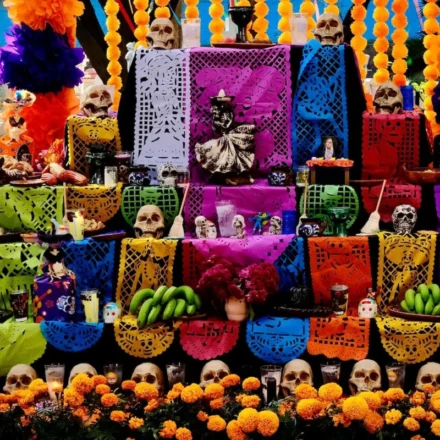
These early rituals were dictated by the agricultural cycle. In the Mesoamerican worldview, the milpa (the traditional farming system of maize, beans, and squash) serves as the primary metaphor for life. The bones of the deceased are viewed not as the end, but as the "seed" from which life emerges, much like a grain of corn planted in the earth. This explains the ubiquity of sugar skulls and bread shaped like bones; they are symbolic nutrients for the cycle of existence.
The imagery associated with La Catrina, particularly as interpreted by Rivera, draws heavily from these ancient depths. The feather boa she wears in the 1947 mural is not merely an accessory; its design—a rattle at one end and a snake head at the other—is a direct reference to Quetzalcóatl, the Feathered Serpent of Mesoamerican mythology. This link connects the satirical skeleton to the profound, ancient understanding of death as a transformative, divine process.
Official Perspectives: The Philosophy of the Posada Art Foundation
Dr. Helia Bonilla, founder of the Posada Art Foundation, maintains that the enduring power of the Catrina lies in her ability to confront the human condition. "La Calavera Catrina is a modern satirical image and symbol reminding us that no matter how much money we might have or our station in life, it is vanity to believe that we are somehow immune to death," Bonilla explains.
For the foundation, which works tirelessly to preserve the legacy of the printmaker, the Catrina is a call to action. "The phrase memento mori comes to mind," says Dr. Bonilla, "reminding us to live fully and perhaps that we should live with respect and kindness for each other; after all, we all die."
The intellectual weight of this figure is also echoed by Dr. Medina Hernández, who suggests that the Catrina serves as a "reactivator" of history. "The elements that accompany La Catrina refer to a thousand-year-old history that is reactivated and enriched every time the Festival of the Dead is celebrated."
Implications: The Geography of the Catrina
The evolution of La Catrina has created a unique cultural geography across Mexico, where different regions have adopted and adapted her image to suit local traditions:
- Mexico City: As the site of the Diego Rivera mural, the capital remains the intellectual heart of the Catrina’s history. Institutions like the Museo Mural Diego Rivera and the Museo de Arte Popular provide the essential context for understanding how the figure transitioned from a sheet of zinc to a national identity.
- San Miguel de Allende: This UNESCO World Heritage site represents the contemporary, globalized face of the tradition. During the La Calaca Festival, the city is transformed into an immersive, living museum of death, where international visitors and locals alike engage in workshops on pan de muerto and ceremonial makeup.
- Aguascalientes: As the birthplace of José Guadalupe Posada, this city offers the most authentic look at the artist’s original, biting political work. The Museo José Guadalupe Posada and the Museo Nacional de la Muerte serve as scholarly anchors, reminding the public that before she was a festive costume, she was a revolutionary critique.
- Capula: Perhaps the most fascinating evolution is found in this town in Michoacán. Here, the Catrina has become a medium for folk art. Local artisans, following in the footsteps of Juan Torres Calderón, have turned the figure into a ceramic tradition. The Feria de la Catrina showcases monumental sculptures, proving that the figure is not a static relic but a living, breathing art form that continues to evolve with each generation of makers.
Conclusion: A Living Legacy
La Calavera Catrina occupies a unique space in the cultural landscape—she is both a ghost of the past and a beacon for the future. She reminds us that the fear of death is a luxury of the ego, and that in the cycle of the milpa, the end is merely the preparation for a new beginning.
As contemporary artists continue to reinvent her, and as the world increasingly looks to Mexico for lessons on how to embrace the inevitability of our own mortality, La Catrina remains steadfast. She is the elegant, skeletal chaperone who reminds us that while we are here, we should dance, we should create, and above all, we should live with the knowledge that we are all, ultimately, united by the same fate. She is not just a symbol of the Day of the Dead; she is the face of human continuity.