




















































Minnesota’s Cannabis Horizon: Inside the Complex Rollout of a Multi-Billion Dollar Industry

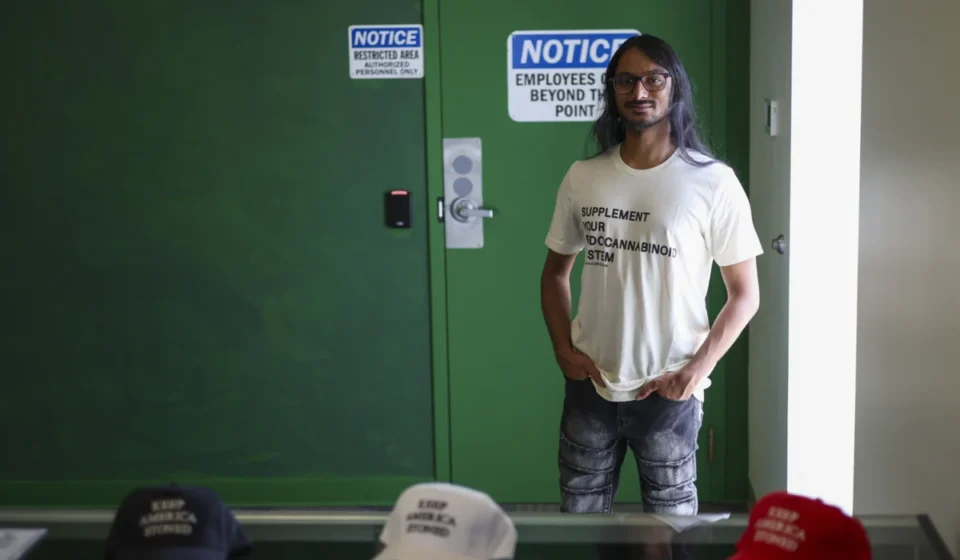
MINNEAPOLIS — For years, the intersection of West 25th Street and South Lyndale Avenue has served as a quiet hub for subculture in Minneapolis. At the Loon Smoke Shop, the air is often thick with the scent of tobacco and flavored vapor as patrons linger late into the night. Soon, however, this neighborhood fixture will represent the vanguard of a massive state-wide shift. The shop’s new dispensary arm is currently finalizing its state licensing and actively recruiting staff "passionate" about the burgeoning marijuana industry.
This scene is a microcosm of a much larger, more turbulent transition occurring across the North Star State. Two years after Governor Tim Walz signed landmark legislation to legalize recreational cannabis, the state is finally moving from the theoretical to the tangible. After a series of administrative bottlenecks, leadership changes, and regulatory hurdles, the first non-tribal cannabis businesses have received the green light to operate, signaling the end of the "tribal-only" era of Minnesota marijuana.
Main Facts: The First Non-Tribal Licenses and the 2024 Outlook
In a milestone for the Minnesota Office of Cannabis Management (OCM), the agency has officially granted final approval to five retailers and cultivators to begin operations. These are the first businesses to clear the state’s rigorous vetting process that are not owned or operated by one of Minnesota’s 11 sovereign tribal nations.
The approved entities represent a mix of cultivation and retail:
- Herb-Quest: Authorized to operate a cultivation center in Pine County.
- Concentrate Labs (Roots and Resin Farm): Granted a license for a cultivation site in Chisago County.
- The Smoking Tree: A retail dispensary set to open in Albert Lea.
- Loon Lab Extracts and Research: Licensed for retail in Isanti.
- Fairwater Farm: Licensed for retail in Plainview.
According to Eric Taubel, the interim director of the OCM, this is merely the beginning of a rapid expansion. Taubel anticipates that up to 150 non-tribal marijuana businesses could be operational by the end of 2024. For an administration that has faced sharp criticism over the slow pace of the rollout, these approvals represent a defensive pivot. Taubel now asserts that the "onus is on the applicant," suggesting that the state’s regulatory machinery is finally synchronized and that any further delays lie with the business owners’ ability to meet local requirements.
Chronology: From Legislation to the "Checkerboard" Implementation
The journey to legal sales in Minnesota has been anything but linear. When the DFL-controlled Legislature passed the legalization bill in 2023, the public expectation—bolstered by official retail targets—was that stores would be ubiquitous by early 2025 at the latest.
May 2023: Governor Walz signs the cannabis legalization bill into law, making Minnesota the 23rd state to legalize recreational use. The law immediately allows for the possession and home growth of cannabis but creates a complex framework for commercial sales.
August 2023: While the state works on its regulatory framework, tribal nations utilize their inherent sovereignty to leapfrog the state process. The Red Lake Nation opens the state’s first legal recreational dispensary, followed shortly by the White Earth Nation.
Late 2023 – Early 2024: The Office of Cannabis Management suffers a series of leadership crises. A botched initial hire for the director position leads to a formal review by the Office of the Legislative Auditor. Interim director Charlene Briner is eventually replaced by Eric Taubel, another interim head, creating a sense of administrative instability.
May 2024: The state finalizes its first "regulatory compact" with the White Earth Nation. This landmark agreement allows tribal nations to operate dispensaries off-reservation, leading to new tribal-run stores in St. Cloud and Moorhead.
June – July 2024: The OCM holds its first major licensing lotteries. In June, 249 social equity applicants are selected. In July, a second lottery for general applicants sees 75 winners chosen from a pool of 569.
July 2025: The first five non-tribal licenses are finalized, setting the stage for the first "mainstream" retail openings in cities like Albert Lea.
Supporting Data: The Mechanics of the Lottery and Taxation
The Minnesota model is distinct from other states like Colorado or California, which often allowed existing medical marijuana incumbents to dominate the early recreational market. Minnesota opted for a "social equity" first approach, designed to ensure that those most impacted by the previous prohibition could profit from the new industry.
The Lottery System
The OCM utilized a lottery to manage the high volume of interest. The June lottery focused exclusively on social equity applicants—a category that includes military veterans, individuals with previous low-level marijuana convictions (victims of the "War on Drugs"), and residents from high-poverty or high-enforcement areas.

However, winning the lottery is only the first step of a multi-stage "checkerboard" process. Winners must still:
- Clear Criminal Background Checks: The state remains wary of "white-collar" criminal involvement.
- Secure Local Approval: While municipalities cannot outright ban cannabis businesses, they can impose strict zoning laws regarding proximity to schools, parks, and residential areas.
- Finalize Labor Agreements: Applicants must enter into "labor peace agreements," which protect employee rights to organize in exchange for a commitment to avoid strikes or boycotts.
The Fiscal Reality
One of the most significant shifts in the 2025 legislative session was the adjustment of the cannabis tax. Originally set at 10%, lawmakers increased the excise tax to 15% during a high-stakes special session. When combined with state and local sales taxes, Minnesota consumers can expect to pay upwards of 20% to 22% in total levies on every purchase.
By comparison, Connecticut maintains a low 3% excise tax, while Washington state sits at the top of the national scale at 37%. Minnesota’s 15% rate is what Taubel calls "middle of the road," though industry consultants warn it could drive price-sensitive consumers back to the illicit market.
Official Responses: A "Difficult" Implementation
Governor Tim Walz has been candid about the challenges of standing up a new state agency and industry simultaneously. When asked which of the myriad laws passed during the 2023 session was the most difficult to implement, he did not hesitate: "Legal weed."
Walz defended the delays by pointing to the lack of a universal blueprint. "There really was not a model of how to do it," Walz stated, noting that many of the 22 states that preceded Minnesota struggled with their own rollouts. Despite the criticism of his leadership appointments, Walz praised Eric Taubel’s recent performance, though he stopped short of naming him the permanent director of the OCM.
Taubel, for his part, is focused on the transition from regulation to operation. He emphasizes that the state’s approach to tribal nations is a point of pride. "Minnesota is a national leader in its approach to cannabis and tribal nations," Taubel said, highlighting the "inherent sovereignty" recognized by the Walz-Flanagan administration.
Leili Fatehi, a partner at the Minneapolis-based consulting firm Blunt Strategies, provides a more nuanced industry perspective. She notes that while the tribal headstart was unexpected for some, it has provided a vital supply chain. "I don’t think it was anticipated that the tribal program and operations would start so far ahead," Fatehi said, adding that many early non-tribal retailers will likely stock products grown by tribal cultivators to fill their shelves initially.
Implications: Market Competition and Social Equity
As Minnesota prepares for the "150-store surge" by the end of the year, several long-term implications are coming into focus.
1. The Tribal-State Synergy
The early entry of tribal nations has created a unique market dynamic. Because tribes were able to establish cultivation and retail infrastructure a full year ahead of the general public, they currently hold a near-monopoly on the "Minnesota-grown" brand. For non-tribal retailers like The Smoking Tree in Albert Lea, the challenge will be competing with established tribal brands or finding ways to partner with them for wholesale supply.
2. The Tax Burden and the "Black Market"
The 5% tax hike remains a point of contention. Fatehi and other industry advocates worry that the cumulative 20%+ tax will make legal products significantly more expensive than those sold through illegal channels. If the legal market cannot compete on price, the state’s goals of eliminating the illicit market and ensuring product safety may be undermined.
3. The Social Equity Experiment
Minnesota’s decision to prioritize social equity applicants over established medical providers is a bold social experiment. The goal is to build a diverse, homegrown industry rather than one dominated by "Big Weed" multi-state operators. However, these smaller entrepreneurs often lack the capital to survive long regulatory delays or high tax environments. The success of the next 150 businesses will determine whether Minnesota’s equity-first model is a sustainable path for other states to follow.
4. Local Governance Hurdles
The "formality" of local approval remains a potential sticking point. While Jacob Schlichter of The Smoking Tree expects his July 28 meeting with the Albert Lea City Council to be a routine step, other applicants in more conservative or cautious municipalities may face zoning battles that could delay their openings well into 2025.
As the Loon Smoke Shop on Lyndale Avenue prepares to transition into a licensed dispensary, it serves as a reminder that the "wait" for legal weed in Minnesota is nearly over. The "checkerboard" of regulations is being navigated, the lotteries are drawn, and the first seeds of a non-tribal industry have finally taken root in Minnesota soil. The coming months will reveal if this slow-burn rollout results in the stable, equitable market the state’s leaders have promised.