



























































WASHINGTON, D.C. – The debate over the future of American healthcare is carving a deep ideological chasm within the Democratic Party, a division starkly evident in the competitive congressional and senatorial races unfolding across Minnesota. From the pragmatic pursuit of a "public option" to the ambitious vision of "Medicare for All," candidates are grappling with how best to address the nation’s escalating medical costs and pervasive coverage gaps, revealing a fundamental disagreement on the government’s role in health provision.
At a recent town hall in New Richland, Jake Johnson, a Democrat vying to represent southern Minnesota’s 1st Congressional District, delicately sidestepped a direct endorsement of "Medicare for All." Johnson, a self-identified moderate challenging Republican incumbent Rep. Brad Finstad, articulated sympathy for constituents burdened by healthcare costs. His proposed solution: "a strong public option to the health insurers we have now." This stance aligns him with a centrist approach, advocating for a federal government-offered healthcare plan that would compete directly with private insurers, theoretically driving down costs and expanding access without dismantling the existing system.
However, this moderate proposal, aimed at alleviating the financial strain on consumers and reducing the ranks of the uninsured, finds itself increasingly at odds with the ascendant progressive wing of the Democratic Party. Bolstered by impressive primary victories nationwide and a strong presence in Minnesota’s Democratic-Farmer-Labor (DFL) endorsement process, progressive activists and Democratic socialists dismiss the public option as an insufficient measure. They argue such reforms merely "nibble around the edges" of a systemic problem, perpetuating a healthcare landscape where private insurers and pharmaceutical companies allegedly profit excessively from illness and suffering. This ideological clash is not merely a local phenomenon but a microcosm of a broader national struggle within the party, redefining its core tenets and strategic direction as an election year heats up.
The Evolution of a Divide: From ACA to Medicare for All Revival
The current healthcare debate within the Democratic Party is not new, but rather an evolution of discussions that have shaped American politics for decades. The Affordable Care Act (ACA), signed into law by President Barack Obama, represented a landmark expansion of healthcare access, establishing state-based marketplaces like MNsure where individuals could purchase coverage, often with subsidies, and prohibiting denial of coverage based on pre-existing conditions. Crucially, the initial vision for the ACA included a public option – a government-run insurance plan designed to compete with private offerings. However, intense lobbying from powerful health insurance and pharmaceutical industries, coupled with resistance from some centrist Democrats, ultimately led to its exclusion from the final legislation. This historical episode continues to color the current debate, with many progressives viewing the public option as a compromise that already failed to deliver comprehensive reform.
The concept of a national, government-run healthcare system, often modeled after Medicare, has been promoted by figures like Sen. Bernie Sanders (I-Vt.) for over a decade, but it has gained significant traction in recent years. Progressive activism, fueled by persistent concerns over affordability, rising deductibles, and the perceived failures of the market-based system, has revived the "Medicare for All" movement. This vision seeks to replace the nation’s complex patchwork of private insurers and government programs like Medicaid and the existing Medicare with a single, comprehensive government-administered system that guarantees healthcare as a human right for every U.S. resident.
The urgency of this debate has been further intensified by recent political developments. The Trump administration’s efforts to repeal the ACA, coupled with cuts to Medicaid and the GOP Congress’s failure to extend enhanced ACA subsidies (which, in Minnesota alone, helped approximately 90,000 residents afford health insurance), have underscored the fragility of the current system for many Americans. These actions, say proponents of more radical reform, demonstrate the need for a fundamental restructuring of healthcare delivery, rather than incremental adjustments.
Supporting Data: District Demographics and Candidate Stances
The political calculus influencing a Democratic candidate’s position on healthcare reform is often deeply intertwined with the electoral landscape of their district. This is clearly illustrated by comparing the approaches of candidates in Minnesota’s neighboring 1st and 2nd Congressional Districts.
In the 1st District, where Jake Johnson is running, former President Donald Trump secured a robust 55% of the vote in 2024, indicating a generally conservative electorate. Johnson’s embrace of a public option, rather than the more progressive Medicare for All, can be seen as a strategic move to appeal to a broader, more moderate base in a challenging district. His position aims to demonstrate a commitment to addressing healthcare affordability without alienating voters who might be wary of proposals perceived as "socialized medicine."
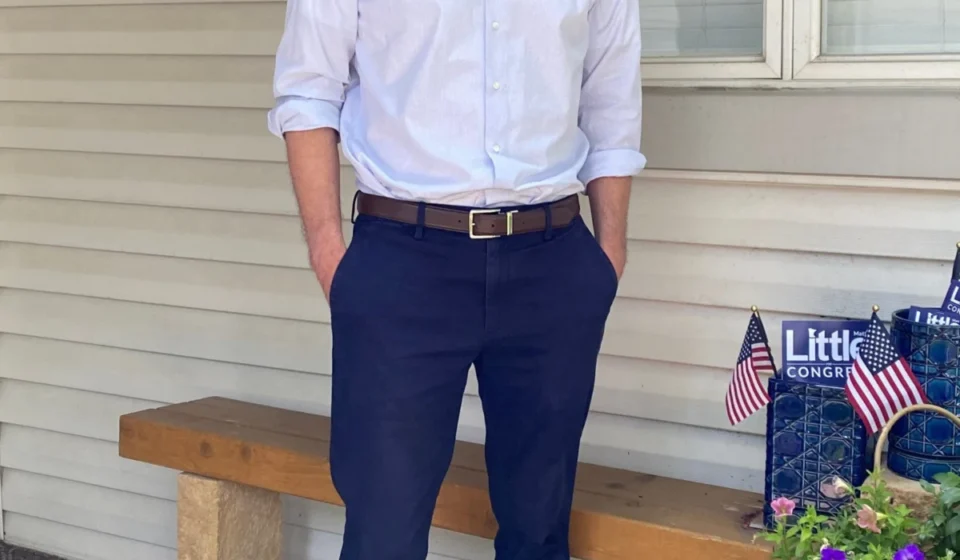
Conversely, the neighboring 2nd Congressional District presents a stark contrast. Here, former Vice President Kamala Harris won with 52% of the vote, suggesting a more liberal-leaning constituency. This electoral environment empowers candidates like Matt Little, the DFL-endorsed contender for the 2nd District seat, to vigorously champion "Medicare for All." Little, a former state senator and mayor of Lakeville, grounds his advocacy in deeply personal experience. He recounts the struggles his mother faced in accessing specialized care during a severe illness, emphasizing, "And we were lucky to have insurance." This anecdote underscores the systemic challenges even those with coverage face, reinforcing his belief that only a universal, single-payer system can truly guarantee equitable access.
Little is a vocal supporter of the "Medicare for All Act," a comprehensive piece of legislation sponsored in the U.S. House by Rep. Pramila Jayapal (D-Wash.) and in the U.S. Senate by Sen. Bernie Sanders. This bill envisions a system where every U.S. resident receives comprehensive healthcare coverage as a human right, completely eliminating premiums, deductibles, and copayments. While private insurers would be permitted to offer supplemental plans, their dominant role in providing primary healthcare coverage would largely end. Proponents of this legislation argue that the elimination of out-of-pocket costs and premiums would largely offset any higher federal income taxes for most working Americans and businesses, which would be the primary funding mechanism for the plan. They also point to potential savings from reduced administrative overhead and enhanced bargaining power for prescription drug costs.
Little, who identifies as a progressive, believes the political climate is finally "ripe" for establishing a single-payer system akin to those in many other industrialized nations. He critiques the public option, viewing it as "just another handout to private insurance companies" and dismissing other Democratic reforms as mere "nibbling around the edges" of a profound national problem. He points to the failures of the current system, exacerbated by past political actions, as evidence of a "defining moment" for the country’s healthcare future.
The public option, while less radical, is not without its own set of criticisms from the progressive left. Proponents of Medicare for All, including Little, often argue that a public option could inadvertently segment the market, drawing older, sicker, and costlier patients into the government plan while leaving private insurers with healthier, younger, and more profitable individuals. This, they contend, would allow private insurers to continue to thrive, pay out fewer claims, and maintain high profits, undermining the very goal of systemic reform.

Official Responses and Organizational Stances
The internal Democratic debate extends beyond Johnson and Little, encompassing a diverse array of candidates and established political figures across Minnesota.
In the competitive race for the 2nd Congressional District, currently held by Rep. Angie Craig (who is running for U.S. Senate), other Democratic candidates also present varied approaches. State Rep. Kaela Berg, another progressive vying for the seat, demonstrates a more flexible stance than Little. While she acknowledges the energizing power of "Medicare for All," Berg emphasizes the immediate need for expanded coverage. "It’s great to say Medicare for All and energize people," Berg stated, "But we need to have (more) coverage now, whatever that looks like… while we continue to fight for Medicare for All." Berg’s pragmatism may reflect her background as a flight attendant and union activist. Organized labor itself is divided on Medicare for All; while some unions, such as the United Auto Workers and the Association of Flight Attendants, support it, others are strongly opposed, viewing employer-provided healthcare benefits as a crucial bargaining chip that they are reluctant to relinquish.
State Sen. Matt Klein, the third Democrat in the 2nd District race, brings a physician’s perspective as an internist at the Mayo Clinic. He firmly believes in the necessity of "universal healthcare" and pledges to "support whatever bill advances that" if elected. However, like Johnson, Klein stops short of endorsing Medicare for All, preferring the implementation of a public option. This position aligns with powerful medical organizations; the American Medical Association (AMA) is a staunch opponent of Medicare for All, arguing it would restrict patient choice and physician autonomy. Similarly, the American Hospital Association and other significant medical groups express strong opposition to a government-run, single-payer system, citing concerns about reimbursement rates, bureaucratic control, and potential impacts on innovation.
Despite this institutional opposition, a significant bloc of Democrats in Congress openly supports Medicare for All. Over 100 U.S. House Democrats, including Minnesota’s Rep. Ilhan Omar (D-5th District) and Rep. Betty McCollum (D-4th District), are co-sponsors of Jayapal’s Medicare for All bill. In the Senate, Minnesota’s Sen. Tina Smith has co-sponsored Sanders’ version of the legislation. This demonstrates the growing influence of the progressive wing and the increasing mainstream acceptance of the concept within a segment of the party. However, other physician-legislators, like Rep. Kelly Morrison (D-3rd District), have not co-sponsored Medicare for All legislation, underscoring the nuanced and often pragmatic positions even within the medical community on this issue.
A Defining Issue in the U.S. Senate Race
The divide extends to Minnesota’s high-stakes U.S. Senate race, where Rep. Angie Craig and Lt. Gov. Peggy Flanagan are vying for the seat currently held by the retiring Sen. Tina Smith. Both candidates acknowledge the systemic failures of the current healthcare system but propose different pathways to universal coverage.
Lt. Gov. Peggy Flanagan is an outspoken proponent of Medicare for All. "This is not working," Flanagan declared, assessing the nation’s healthcare system. "It is broken and I think people are ready (for Medicare for All)." Flanagan argues against a gradualist approach, asserting that starting with a public option in hopes of eventually achieving Medicare for All is a flawed strategy. "You should not start at the bottom because you are going to get even less," she contended, advocating for an ambitious, clear demand for comprehensive reform from the outset, even acknowledging that such an overhaul requires Democratic control of the White House and both chambers of Congress.
In contrast, Rep. Angie Craig, just last week, introduced the "Medicare-X Choice Act," her legislative proposal for a public option. This bill would create a government-run insurance plan within the existing Affordable Care Act exchanges, aiming to introduce competition into the market. Craig believes this public option would "give the insurance companies some competition," ultimately leading to lower premiums and improved coverage for all Americans. Beyond the public option, Craig also advocates for other incremental reforms, including legislation to hold health insurance companies accountable for above-average denial rates and measures aimed at reducing prescription drug costs. These proposals reflect a strategy of targeted interventions to make the current system more equitable and affordable, rather than a complete overhaul.
Implications: The Future of Healthcare Reform
The persistent and widening fissure within the Democratic Party over healthcare reform carries significant implications for the future of American healthcare. With Democrats internally split between the ambitious, transformative vision of Medicare for All and the more incremental, market-oriented approach of a public option, the path to any substantial reform remains fraught with challenges.
From a legislative standpoint, the immediate establishment of a single-payer system in the United States appears highly unlikely without a complete Democratic trifecta—control of the White House, the U.S. House, and the U.S. Senate—and even then, internal disagreements would necessitate careful negotiation and potential compromises. The political capital required to overcome the fierce opposition from powerful industry lobbies (insurers, pharmaceutical companies, hospitals) and a united Republican front would be immense. Republicans typically decry Medicare for All as "socialized medicine," warning of bureaucratic inefficiencies, long wait times, and a degradation of care quality, often pointing to other national health systems as cautionary tales.
However, a Democratic takeover of one or both chambers of Congress, coupled with a Democratic presidency, could still unleash a torrent of healthcare legislation. Even if Medicare for All remains out of reach, a renewed push for a public option could gain momentum, potentially leading to its long-sought inclusion in the ACA exchanges. Other reforms, such as increased regulation of insurance companies, aggressive negotiation of prescription drug prices, and expansions of existing programs like Medicaid, would likely be on the table. The debate itself, however, would remain vigorous, reflecting the fundamental tension within the party regarding the optimal balance between market forces and government intervention in healthcare.
For voters, this debate translates into crucial choices at the ballot box. Their votes will not only determine who represents them but also shape the direction of healthcare policy for years to come. Do they prioritize a complete transformation of the system, believing it’s the only way to ensure universal access and eliminate financial barriers? Or do they favor a more cautious approach, building upon existing structures to enhance competition and affordability? The outcomes of races in Minnesota and across the country will serve as a bellwether for the Democratic Party’s ideological compass and its capacity to coalesce around a unified vision for arguably the most pressing domestic issue facing the nation. The "defining moment" Matt Little speaks of is not just about policy—it’s about the very identity and future trajectory of the Democratic Party itself.