
















































Bridging the Gap: Innovative Pilot Program Tackles Rural Lung Cancer Screening Disparities in Minnesota

This article was originally published by The Daily Yonder.
In the quiet corridors of rural Minnesota clinics, a quiet revolution in preventative medicine is taking root. A new research initiative, spearheaded by the Masonic Cancer Center at the University of Minnesota, is challenging the status quo of oncology care. By shifting the responsibility of lung cancer screening from the patient to the entire clinic staff, researchers hope to dismantle the barriers that have historically left rural populations vulnerable to late-stage diagnoses.
The Urgency of Early Detection
Lung cancer remains a formidable public health challenge. While medical advancements have vastly improved survival rates, the effectiveness of these treatments is tethered to a single, critical factor: time.
"Anybody with lungs can get lung cancer," explains Dr. Abbie Begnaud, a pulmonologist and associate professor at the University of Minnesota Medical School. "When found early, lung cancer survival rates can reach 80% to 90%. The problem is that less than 20% of eligible Minnesotans are actually screened for lung cancer."
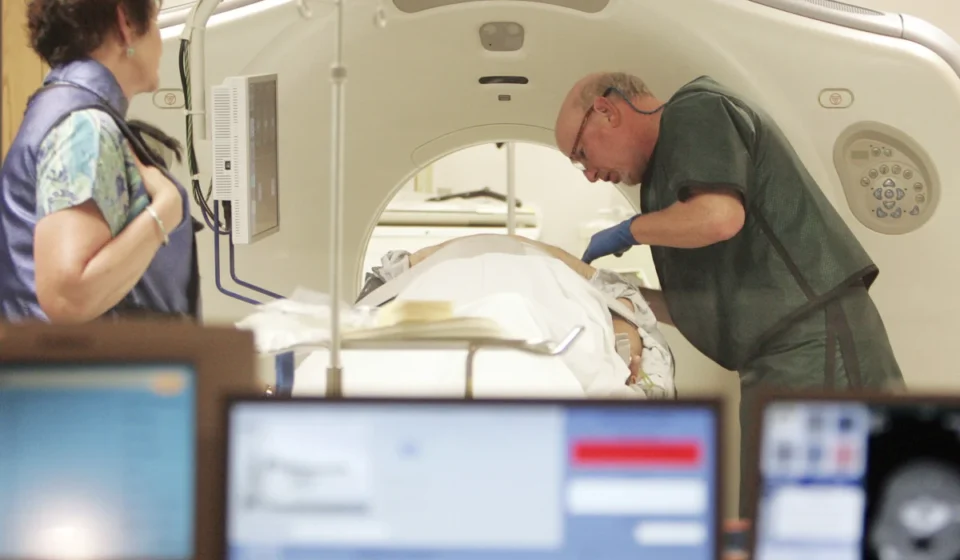
The medical consensus is clear: low-dose computed tomography (LDCT) scans are the gold standard for early detection among high-risk populations. However, in rural landscapes, a prescription for a scan is often where the healthcare journey stalls. Without systemic support, the burden of navigating complex scheduling, travel, and personal anxiety falls entirely on the patient—a system that is currently failing thousands of Minnesotans.
A "Whole-of-Office" Approach: The Pilot Program
To combat these persistent disparities, Dr. Begnaud and the Minnesota Cancer Clinical Trials Network (MNCCTN) launched a pilot program across six primary care clinics. The core philosophy of this project is a "whole-of-office" approach, which fundamentally alters the workflow of a standard doctor’s visit.
Rather than relying on a single physician to remember to bring up screening, the program involves the entire clinic team. Medical assistants, nurses, and administrative staff are trained to identify eligible patients—typically those over age 50 with a history of heavy smoking—at the moment they check in. The staff helps verify eligibility and, crucially, assists in scheduling the scan before the patient even leaves the building.
This shift removes the friction of "self-referral," where patients are handed a brochure and told to call for an appointment—a task easily neglected amidst the demands of daily life. The pilot demonstrated a 30% increase in screening orders, providing a proof-of-concept that is now being scaled for statewide trials.
The Anatomy of Rural Health Disparities
To understand why this intervention is so vital, one must look at the data. The American Lung Association and the U.S. Surgeon General have identified deep-seated disparities between urban and rural health outcomes. As of 2024, approximately 15.4% of rural adults smoke, compared to 10.1% of their urban counterparts.
These statistics are not merely abstract numbers; they represent a convergence of environmental, economic, and social factors. Rural smokers tend to consume more cigarettes daily, and they face significantly higher hurdles when attempting to quit. According to the U.S. Surgeon General’s 2024 report, rural adults in the Midwest and Southeast are 40% more likely to smoke than those in the Northeast or West. Furthermore, rural communities often suffer from "care deserts," where the distance to the nearest imaging center makes regular screenings a logistical and financial burden.
The Psychology of Stigma
Beyond the physical and geographical barriers lies a profound psychological hurdle: the stigma surrounding tobacco use. Decades of anti-smoking public service announcements, while successful in driving down smoking rates, have inadvertently cast a shadow of shame over those who remain smokers.
"People who have smoked or continue to smoke are certainly aware that it’s bad for their health," Dr. Begnaud notes. "They know that everyone else is thinking about it. I think they internalize these messages of blame. It’s really important to get people to be open to screening to try to decouple the kind of shame or blame that goes along with smoking."
This internalized stigma often manifests as avoidance. Patients may feel judged by their healthcare providers or fear that seeking medical attention for their lungs will result in a lecture rather than a life-saving screening. The pilot program aims to replace this culture of judgment with one of proactive, non-punitive care.
Chronology of the Initiative
- Decades of Data (1990s–2020): Public health campaigns focus on smoking cessation, successfully reducing national rates but inadvertently fostering social stigma among current and former smokers.
- Early 2023: Research teams at the Masonic Cancer Center identify the "rural-urban divide" in screening rates as a critical point of failure in Minnesota’s oncology outcomes.
- Mid-2023: The pilot program is launched in six rural primary care clinics, focusing on staff-led identification and scheduling.
- 2024: Results from the pilot show a 30% increase in screening orders, confirming the feasibility of the model.
- 2025 and Beyond: Plans are formalized to expand the project into a larger statewide trial, incorporating more clinics and refining the workflow for long-term sustainability.
Official Perspectives and Implications
The implications of this research extend far beyond the borders of Minnesota. As the healthcare industry grapples with how to deliver equitable care to underserved populations, the University of Minnesota’s approach offers a scalable model for other states.
Dr. Begnaud emphasizes that while the data from the pilot is encouraging, the mission is far from complete. "In the clinics that we’ve worked in, the entire clinic teams were excited to learn more about it and excited to work on this project," she says. "But because it was a small pilot, we didn’t get enough data to say that ‘This absolutely helps to increase the screening rates,’ but we did get enough data to say this is something that might work, and we need to test on a larger scale."
For the medical community, the goal is to shift the narrative from "individual responsibility" to "systemic support." By integrating cancer screening into the standard flow of rural primary care, clinics can ensure that high-risk individuals receive the care they need, regardless of their zip code or history.
The Human Cost: A Call to Action
Ultimately, the drive for this research is personal for those on the front lines. Every statistic in the Surgeon General’s report translates to a patient in an exam room. For Dr. Begnaud, the motivation is the "what-if" scenario that she sees too often in her clinical practice.
"Every time I see somebody who comes to me who should have been screened and wasn’t, and now they have a stage 3 or a stage 4 lung cancer, it motivates me to get up and work harder tomorrow," she says. "Because there’s still a lot of work to do."
As the state moves forward with larger trials, the focus will remain on refining these processes to be as low-friction as possible. The success of this program could redefine the standard of care for rural health, proving that with the right organizational structure, even the most entrenched health disparities can be addressed.
By prioritizing early detection and treating patients with the dignity they deserve—free from the weight of societal judgment—Minnesota is paving the way for a healthier future. The data suggests that when healthcare systems take the lead, patients are more than willing to follow, turning the tide on a disease that has claimed too many lives in the rural heartland.