





















































This story was originally reported by Kate Sosin of The 19th. It has been expanded and adapted to provide a comprehensive look at the intersection of extreme sport, gender identity, and the pursuit of radical inclusion.
For Juniper Simonis, the memory of 2012 is etched in the sensory details of a warm summer evening in Ithaca, New York. As she pedaled her bicycle through the city streets, the folk melodies of Mariee Siou filtering through her headphones, she carried a digital lifeline in her pocket: an email confirming that the Ithaca League of Women Rollers had voted to allow her to join their ranks.
"As somebody who played sports and was queer, but those were two very separate parts of my life, the promise and the opportunity to integrate those was very hopeful for me," Simonis recalls. For a transgender athlete, that email was more than a roster spot; it was an affirmation of belonging. Yet, years later, Simonis notes with sobering clarity that while the sport offered her a community, it was not a utopia. She has faced physical assault on the track for being transgender, a stark reminder that even in spaces designed for liberation, the echoes of broader societal discrimination remain.
The Evolution of a Sport: From Endurance to Empowerment
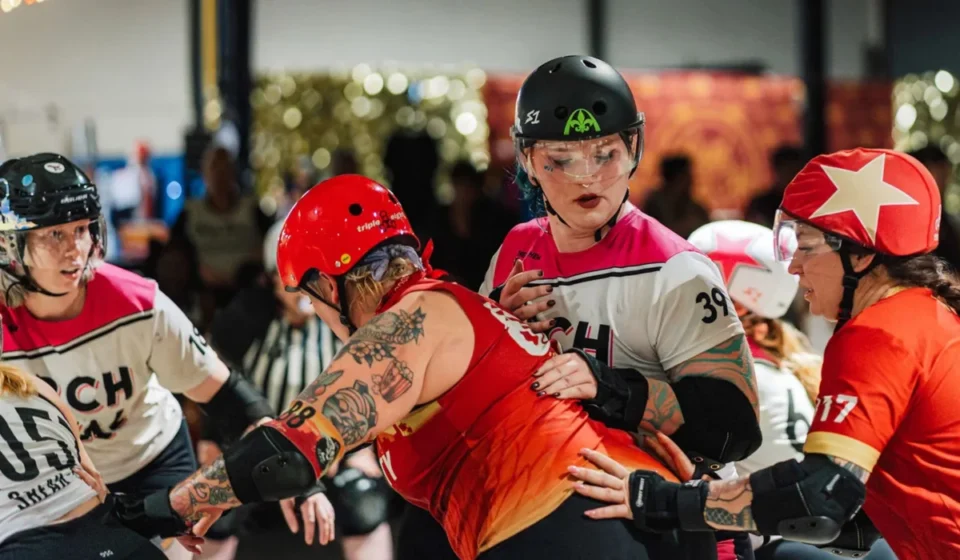
Roller derby, a high-contact sport characterized by aggressive speed and signature punk-rock monikers, has spent the better part of two decades positioning itself as a defiant alternative to traditional athletic structures. While mainstream sports have become battlegrounds for the inclusion of transgender athletes, roller derby has quietly—and sometimes loudly—written its own playbook.
The roots of the sport date back to the 1930s, when promoter Leo Seltzer capitalized on the popularity of roller skating endurance races. According to the Smithsonian, these early iterations were technically co-ed, though the gender pay gap was stark, and the "sport" was often more spectacle than competition. It wasn’t until the early 2000s, with the resurgence of the sport in Austin, Texas, that modern roller derby found its footing as a feminist, queer-centric cultural phenomenon.
"It was like, I get to wear this badass outfit that’s also kind of sexy," says Rachel "Rotten" Johnston, a veteran skater and director for the Angel City League. "It was post-riot grrrl coming into the 2000s, a direct rebuttal of the pop culture that was happening."
This counter-culture ethos became the sport’s hallmark. In a landscape where most sports were designed by men and retrofitted for women, roller derby was built by women, for women. It prioritized grit over traditional aesthetics, replacing the polished uniformity of professional sports with a chaotic, high-energy environment that celebrated diverse bodies and gender non-conformity.
A Chronology of Inclusion
The path to the current policy landscape was not linear; it was a process of trial, error, and grassroots advocacy.
- 2001–2010: The Formative Years: As the Women’s Flat Track Derby Association (WFTDA) began to organize hundreds of leagues across the globe, the sport focused on creating "women’s spaces" away from the influence of cisgender men. At the time, the term "cisgender" was not yet in common parlance, and policies regarding trans participation were loosely modeled on Olympic standards, often requiring hormone replacement therapy (HRT) for a set period.
- 2010–2014: The "Case-by-Case" Era: During this period, the implementation of inclusion policies was inconsistent. Many leagues operated on an informal basis, often deferring to self-identification or, in some cases, legal documentation like a driver’s license. Penelope Nederlander, known on the track as Fifi Nomenon, recalls how easily she was accepted by the LA Derby Dolls in 2010 simply by verifying her gender marker. For many, this was a transformative experience—a rare moment of being seen and respected without a bureaucratic fight.
- 2015: The Watershed Policy: Recognizing the need for consistency, the WFTDA formally updated its gender policy. The new framework welcomed any individual of a marginalized gender, regardless of their transition status or appearance. This was a seismic shift that paved the way for nonbinary and gender-nonconforming skaters to participate without fear of exclusion.
Supporting Data and the "LeBron James" of the Track
Nicole Williams, known as "Bonnie Thunders," is widely regarded as the most decorated skater in the history of the sport. Having spent 20 years on the track, she has witnessed the demographic shift firsthand. Williams, who identifies as part of a community that has evolved from a "cis-centric" mindset to one of radical inclusion, argues that excluding trans women is fundamentally incompatible with the sport’s values.
"When I see ‘protect women’s spaces,’ that feels so repressive," Williams says. "I don’t want to discount that women’s spaces are important. They are, but I don’t really identify with that in the way that I used to."

Data regarding the success of this model is largely qualitative but consistent across leagues: teams that have integrated trans athletes report that the "fairness" concerns often cited in mainstream political debates do not manifest in the same way on the flat track. The inherent volatility and physical contact of roller derby—where collisions, falls, and injuries are standard occurrences—create a different context for "safety" and "advantage" than, for example, a swimming race or a track-and-field event.
The Reality of Persistent Inequality
Despite its progressive policies, roller derby is not immune to the biases of the world around it. Donita Green, or "Blaxyl Rose," highlights that being a trans skater is often compounded by the challenges of being a Black skater.
"I’ve seen firsthand how much worse some of these microaggressions and problems happen when you are a dark-skinned Black skater," Green explains. "You add knowledge of trans identity, and it tends to be even worse. We talk often about ‘skating while Black.’ It just happens."
Referees, coaches, and teammates are human, and the internal cultures of individual leagues can sometimes clash with the broad, inclusive mandates of the WFTDA. The "punk rock" history of the sport, while liberating, can also harbor a "tough love" mentality that sometimes masks toxic or exclusionary behaviors directed at marginalized members.
Implications: The Ethics of Competition
The refusal of the roller derby community to pursue Olympic recognition provides a fascinating case study in institutional values. For years, the WFTDA held the potential to go mainstream, yet they hesitated. The reasoning was twofold: first, the administrative friction with USA Roller Sports, but more importantly, a refusal to comply with international governing bodies that might impose rigid, exclusionary gender policies on their athletes.
For the derby community, legitimacy was not worth the cost of their soul.
Penelope Nederlander argues for a more nuanced discourse—one that allows for the acknowledgement of biological differences without weaponizing them to exclude. "I want to arrive at the same conclusion, but with honesty about it," she says. "In roller derby, there doesn’t seem to be an important difference. We really don’t have any complaints about trans skaters. So that’s awesome."
Conclusion: A Model for Others?
As the debate over transgender participation in sports continues to reach a fever pitch in state legislatures and school boards, the experience of roller derby offers a unique, if imperfect, blueprint. It is a sport that prioritizes the humanity of its participants over the rigid categorization of their bodies.
Rachel "Rotten" Johnston summarizes the prevailing sentiment within the community when she addresses the fear of injury or unfairness. "I think that people who are concerned about people getting hurt are missing the fact that we’re playing a full contact sport," she notes. "You’re going to get hurt no matter what. Life isn’t fair, and sports most certainly are not fair."
Ultimately, the story of roller derby is a story about the courage to define one’s own rules. While the sport continues to grapple with its own internal issues regarding race and harassment, its commitment to inclusion remains a beacon. It suggests that when a community chooses to lead with trust rather than suspicion, the result is not the destruction of sport, but its expansion. For skaters like Juniper Simonis and Drew Flowers, the track remains a place where they are not just tolerated, but celebrated—a rare, hard-won victory in an increasingly polarized world.