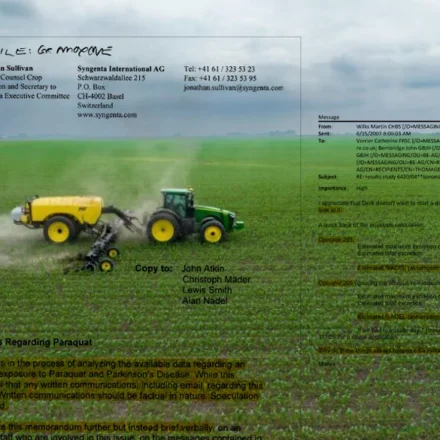


















































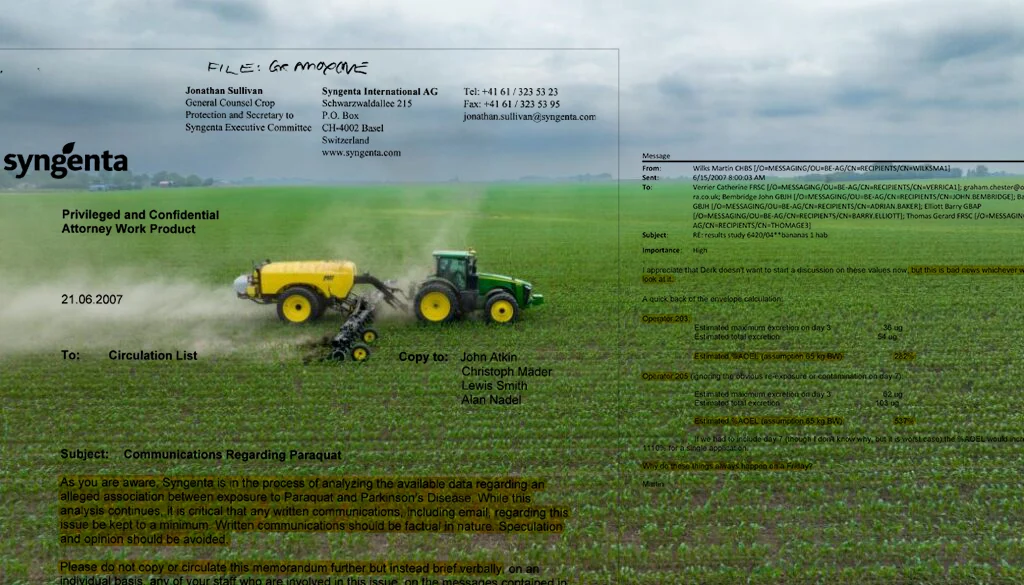



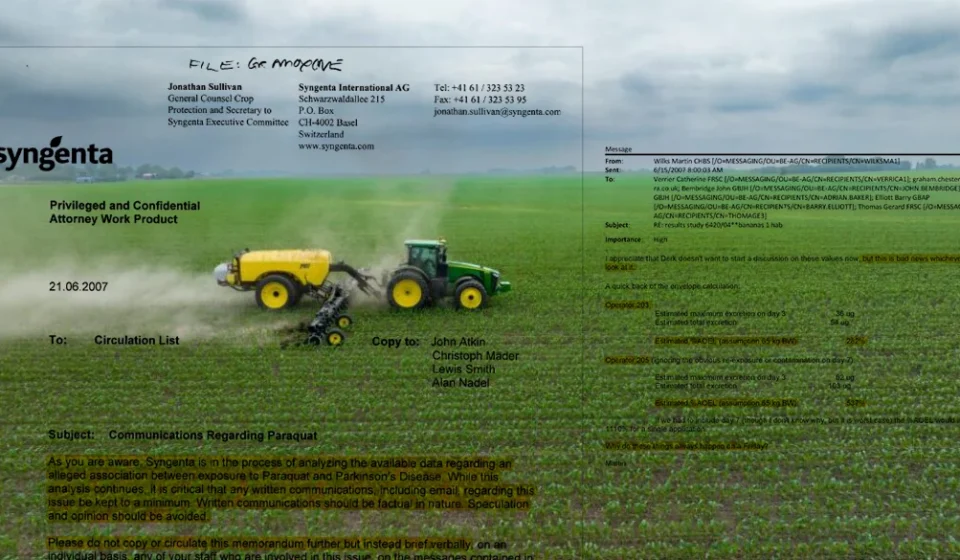

For over four decades, the international community has been sounding the alarm on paraquat, a potent and controversial herbicide. While nations from Sweden to China have moved to ban the chemical—citing mounting evidence of its links to irreversible neurological damage, specifically Parkinson’s disease—the United States has remained a persistent outlier. New evidence, pulled from a cache of approximately 3,700 pages of internal corporate documents, reveals that the continued prevalence of paraquat in the U.S. is not merely a result of regulatory oversight, but the product of a sophisticated, decades-long strategy by manufacturer Syngenta to protect its "blockbuster" product.
These records, which have surfaced through massive litigation in Pennsylvania and beyond, paint a disturbing picture: a company that allegedly prioritized the preservation of its market share over the disclosure of critical health data to federal regulators.
The Global Consensus vs. The U.S. Market
The global rejection of paraquat began in 1983 when Sweden became the first country to outlaw the substance. As scientific research solidified the association between paraquat exposure and Parkinson’s disease—an incurable, progressive neurodegenerative disorder—other nations followed suit. Even China, the primary manufacturer of the chemical and the home of Syngenta’s parent organization, halted its use a decade ago following internal safety studies that yielded alarming results regarding its toxicity.

In the United States, however, the story has been starkly different. While states like Vermont have enacted bans and California regulators have pushed for the discontinuation of the product, the U.S. Environmental Protection Agency (EPA) has continued to greenlight the chemical for use on millions of acres. Between 2000 and 2018—a period during which dozens of countries were purging the chemical from their agricultural systems—paraquat use in the U.S. nearly tripled.
A Chronology of Concealment and Strategy
The newly revealed documents provide a window into the tactical maneuvers Syngenta employed to sustain this market. The strategy appears to have been built on two pillars: the aggressive promotion of industry-funded science and the calculated omission of unfavorable internal data.
2001–2003: Setting the Defensive Strategy
As independent research began to highlight a potential causal link between pesticides and Parkinson’s in the early 2000s, Syngenta moved to solidify its defense. Internal documents from 2001 explicitly stated that the company’s objective was to "steer the focus of serious research away from paraquat and on to other agents." By 2003, the company had formalized a goal to "raise the level of proactive regulatory defense of paraquat globally."

2006–2016: The "Invaluable" Science
A central component of this effort was the commissioning and shaping of scientific studies. Company emails demonstrate a desire to "brush aside 10 years of research by others and replace it with our own." Syngenta sought "impeccable data" that would be "dead solid airtight" and credible enough to withstand the scrutiny of both the scientific community and the legal system.
In 2011, for instance, Syngenta scientists discussed collaborating with outside researchers to produce a "PD [Parkinson’s Disease] Risk Factors Paper." The internal correspondence emphasized that because the paper needed to appear independent, "we cannot be seen to try to influence" the author. They even suggested that communication should be conducted "verbally" to avoid leaving a paper trail. This culminated in a 2016 study, which internal insiders hailed as "invaluable in supporting our work."
2015–2025: The China Disconnect
Perhaps most damning is the company’s reaction to the Chinese government’s independent safety assessments. When China conducted its own studies on dermal and inhalation toxicity—studies that ultimately led to a ban in 2016—Syngenta viewed the "stealth nature" of the research as an "alarming" development because it eliminated the company’s ability to influence the outcome. Executives advised against requesting the data from the Chinese government, as possessing such reports might have legally obligated them to disclose the findings to the U.S. EPA.

The Withheld Evidence: Surfactants and Absorption
Under the Federal Insecticide, Fungicide, and Rodenticide Act (FIFRA), manufacturers are legally required to submit "factual information regarding unreasonable adverse effects" to the EPA. However, the litigation reveals that Syngenta failed to disclose significant data regarding how paraquat behaves in real-world scenarios.
One of the most significant omissions concerns the use of surfactants. Farm workers frequently mix surfactants with paraquat to help the herbicide penetrate plant tissues. Since the 1970s, Syngenta had evidence that these mixtures significantly increased the rate of absorption into the bloodstream through the skin and gut. While the company labels recommended the use of surfactants, internal studies—some of which were conducted on animals—suggested that this combination exacerbated the chemical’s toxicity. These findings were not shared with the EPA, despite the clear implications for the safety of applicators.
Official Responses and Regulatory Failures
The EPA’s stance remains a point of intense contention. The agency has consistently maintained that there is "no clear link" between regular paraquat use and Parkinson’s disease. When confronted with the newly unsealed court documents, an EPA spokesperson noted that the agency "cannot speculate on how this additional information would impact EPA’s assessment," but insisted that any failure to submit relevant data is a direct violation of federal law.

Syngenta, for its part, denies any wrongdoing. In a statement, the company asserted that it has "never knowingly failed to provide regulators with relevant and required information" and that the data it did not submit was deemed irrelevant to U.S. regulatory standards. They maintain that their decision to cease global production earlier this year was based on market factors, not an admission of liability regarding the health risks of their product.
The Broader Implications: A Systemic Crisis
The paraquat saga has become a lightning rod for critics who argue that the American regulatory system is fundamentally broken. Legal experts like Wendy Wagner of the University of Texas argue that the EPA’s over-reliance on industry-provided data creates "a lot of holes in our regulatory system."
The implications are profound. Because the EPA is the preemptive authority for pesticide labeling, and because it has historically accepted the company’s "completed" database as sufficient, the burden of proof has effectively been placed on the victims. As Dr. Tracey Woodruff of Stanford University noted, "When the pesticide companies know from their own studies that their pesticides are harmful and don’t tell the public or regulators, then they are knowingly contributing to people getting sick and dying."

Furthermore, the recent Supreme Court ruling reinforcing the EPA’s role as the preemptive authority on health warnings may make it even harder for states to act independently, leaving millions of Americans reliant on an agency that critics claim is more interested in protecting corporate interests than public health.
Conclusion
The story of paraquat is not just a story about a chemical; it is a case study in corporate power, scientific influence, and regulatory fragility. With over 10,000 lawsuits currently moving through the U.S. court system, the human cost of the herbicide is being brought to light. However, as long as the regulatory process remains heavily dependent on the voluntary transparency of the companies it is meant to oversee, the question remains: how many other "blockbuster" chemicals are currently hiding in plain sight, supported by the same tactics of silence and strategic science?
The "Paraquat Papers" serve as a stark reminder that in the absence of rigorous, independent oversight, public health often becomes the invisible casualty of the pursuit of profit. While Syngenta may have ceased production, the legacy of their decades-long campaign continues to impact the lives of thousands, leaving a nation to grapple with the consequences of a system that allowed the truth to be buried for far too long.