




















































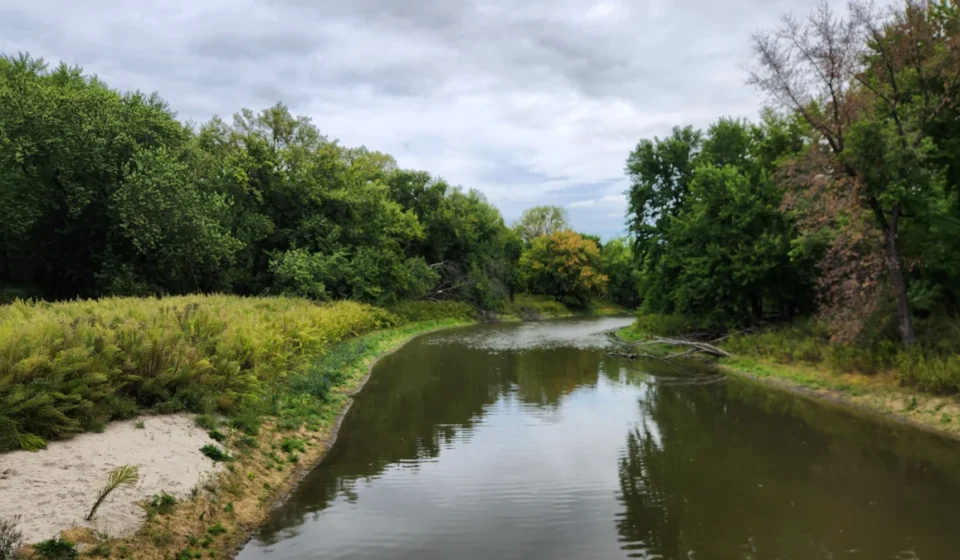

In 1992, Minnesota Governor Arne Carlson stood before the public and set an ambitious, high-stakes goal: to drastically improve the water quality of the Minnesota River. At the time, the waterway was already gaining a reputation as one of the most polluted rivers in the nation. Three decades later, that goal remains as elusive as it is vital.
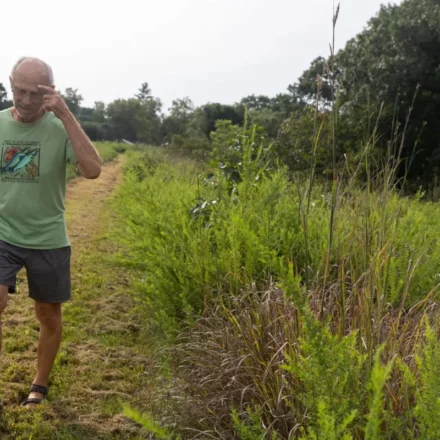
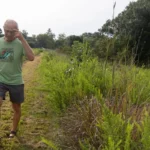
Today, a 31-year-old environmental advocate named Tom Crawford—who was not yet born when Governor Carlson made his 1992 pledge—sits across from 84-year-old David Minge, a former U.S. Congressman and judge. Despite the half-century age gap, they are bound by a shared mission. They are key figures in the Minnesota River Collaborative (MRC), a loose but formidable coalition of approximately 50 experts, including engineers, attorneys, and retired agency officials, all committed to holding the state accountable for the health of a river that has long been treated as a drainpipe for industrial-scale agriculture.
The Evolution of a Grassroots Movement
The Minnesota River Collaborative is not a traditional nonprofit; it is a specialized think tank of concerned citizens with a deep reservoir of legal and technical expertise. The group maintains a consistent rhythm of advocacy, meeting weekly in virtual sessions and holding monthly consultations with the Minnesota Department of Natural Resources (DNR).
The group traces its roots to the persistent efforts of organizations like the Friends of the Minnesota Valley and the Izaak Walton League. According to Minge, the collaborative’s strength lies in its intellectual diversity. "We have four or five active and retired lawyers," Minge notes. "Engineers have taken a real leadership role—there are six or seven of them—and we have three or four agency retirees."
This expertise allows the MRC to move beyond the typical, surface-level environmental rhetoric. Rather than focusing solely on conventional “best management practices”—such as installing ditch buffers or planting grassed waterways—the MRC operates at a "high level." They scrutinize the engineering reports and economic justifications behind complex drainage projects, tracking them with a forensic attention to detail that state agencies often lack the resources to provide.
Chronology of a Systemic Failure
To understand the current crisis, one must look at the transformation of the Minnesota River Basin over the last 150 years. What was once a landscape defined by wetlands and prairie—a natural sponge designed to hold and filter rainfall—has been fundamentally re-engineered.
- Pre-Settlement: The natural hydrology of the basin allowed water to infiltrate the soil slowly, recharging aquifers and sustaining stable river levels.
- The Age of Drainage (1900s–1980s): Massive efforts were undertaken to drain wetlands for agriculture. The installation of vast networks of underground tile drainage became the industry standard, effectively turning the landscape into a high-speed conduit for water.
- 1992: Governor Arne Carlson announces the initiative to restore the Minnesota River.
- 2000s–2010s: Climate change begins to accelerate the problem. More frequent and intense rainfall events, combined with modernized, high-capacity drainage, create a “fire hose” effect.
- Present Day: The river remains a primary source of nitrogen and phosphorus pollution in the Upper Mississippi River, fueling the massive "dead zone" in the Gulf of Mexico.
Data and the “Fire Hose” Effect
The physical reality of the Minnesota River is dictated by its altered hydrology. When heavy rains fall on tiled, drained fields, the water does not linger in the landscape. Instead, it rushes into the river system with unnatural velocity. This creates a destructive feedback loop: the high volume and speed of the water scour the riverbanks, causing massive erosion.
"The more water that flows into the river, the more erosive the river becomes," explains Crawford. "Those soft, sandy banks of the Minnesota River get chewed up and sent down into the Gulf."
The scale of this issue is largely invisible. Crawford notes that there are an estimated 100,000 miles of private, underground drainage tiles that are completely unmapped, unregulated, and unaccounted for. "There’s no requirement that these people notify anybody," he says.
To combat this opacity, Crawford maintains a detailed spreadsheet that tracks the status of 17 major drainage projects across 11 counties. This document, which records everything from engineering reports to work timelines, has become a vital resource for transparency in a state where oversight is often fragmented.
Official Responses and Regulatory Gridlock
The MRC’s influence has been felt in the halls of state government, though success is often measured in inches rather than miles. "We’ve moved the needle within the DNR," Crawford claims. However, the legal framework surrounding water quality remains a battlefield.

A significant point of contention is whether drainage outlets should be legally classified as "point sources" of pollution. If they were, they would be subject to federal Clean Water Act regulations. Currently, the Minnesota Pollution Control Agency (MPCA) has maintained that it lacks the authority to regulate agricultural drainage systems in this manner.
A recent court case highlighted this frustration. In August, a Ramsey County District judge sided with the MPCA, agreeing that the agency does not have the authority to regulate these systems. The Minnesota Center for Environmental Advocacy (MCEA), which is involved in the legal challenge, is currently appealing that decision. Minge is pragmatic about the road ahead: "I expect that’s going to end up in court by the end of the year."
The collaborative also pushes for "redetermination of benefits"—a process where counties must update the economic and environmental assessment of drainage projects. By bringing in experts like Steven Taff, a former University of Minnesota agricultural economist, the group has been able to expose cases where the projected economic benefits of a ditch project were grossly overstated.
The Path Forward: A Minnesota River Commission?
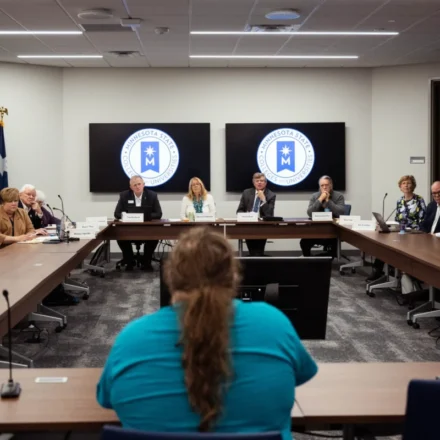
As the collaborative looks toward the future, the primary goal is to establish a more robust governance structure. The group is currently advocating for the creation of a permanent Minnesota River Commission. Such a body would provide the centralized oversight that is currently missing in the state’s fragmented approach to water management.
However, the political landscape is fraught with obstacles. A recent state task force, which was intended to address water stewardship, ended on a note of frustration. Members representing environmental interests described "stalling tactics" from a minority of participants, which prevented the panel from addressing the most critical issues related to mining and industrial agriculture. A request to extend the task force’s mandate was ultimately denied.
Despite these setbacks, the MRC continues to build its case. They have found success in localized interventions, such as helping Lyon County secure grants for water storage areas that mitigate the damage caused by upstream drainage.
"It feels like there’s more diligence or willingness to enforce environmental rights," Crawford says. "We’re always trying to push the idea with the Board of Water and Soil Resources and the Drainage Work Group… as far as how we legislate and handle our water on the landscape."
Implications for the Future
The battle for the Minnesota River is not merely a local environmental dispute; it is a microcosm of the global struggle to balance industrial food production with ecological survival. If the Minnesota River Collaborative succeeds in its mission to bring transparency and accountability to the drainage of the basin, it could provide a blueprint for other agricultural regions facing similar degradation.
However, the implications of failure are severe. As climate patterns continue to shift toward more extreme weather, the current system of "drain-and-discharge" will only accelerate the erosion of the riverbanks and the export of nutrients to the Gulf.
The work of men like David Minge and Tom Crawford serves as a bridge between generations. One brings the experience of a lifetime in public service and law, the other brings the modern, data-driven urgency of a generation that will inherit the consequences of today’s decisions. Their collaborative is a testament to the idea that, even in the face of massive, systemic, and entrenched interests, informed and organized citizens can still force the machinery of government to look—if only for a moment—at the river they have left behind.