




































When the COVID-19 pandemic shuttered schools in 2020, the education system underwent a forced, collective migration to the digital frontier. Teachers, students, and administrators scrambled to navigate a landscape of Zoom links and virtual breakout rooms, all while grappling with a profound, aching hunger for human connection. It was a crisis of isolation.
Today, Minnesota’s schools are facing a new, perhaps more insidious crisis. Thousands of federal agents are patrolling the perimeters of daily life—targeting bus stops, day care centers, and school zones in a sweeping immigration enforcement operation. In response, school districts across the state have been forced to revive remote learning, not as a public health measure, but as an emergency safety protocol. Unlike the pandemic-era mandates, which were uniform and state-sanctioned, these current measures are fragmented, improvised, and deeply unequal.
For educators on the front lines, this is a pedagogical emergency now entering its ninth week. The result is a classroom experience that changes by the hour, where the divide between who can safely attend school and who cannot is deepening an already widening chasm of educational inequity.
The Geography of Fear: Who is Present?
The impact of the federal surge is not distributed equally. In St. Paul, the contrast between two classrooms illustrates the splintering of the student experience.
John Horton, an 18-year veteran at Barack and Michelle Obama Montessori, oversees a diverse classroom of first, second, and third graders. Remarkably, his attendance remains intact. "All 28 of my kids have been in school, every day," Horton reports. For his families, the school serves as a sanctuary; they have moved mountains to ensure their children remain physically present, clinging to the routine and predictability that are essential for childhood development.
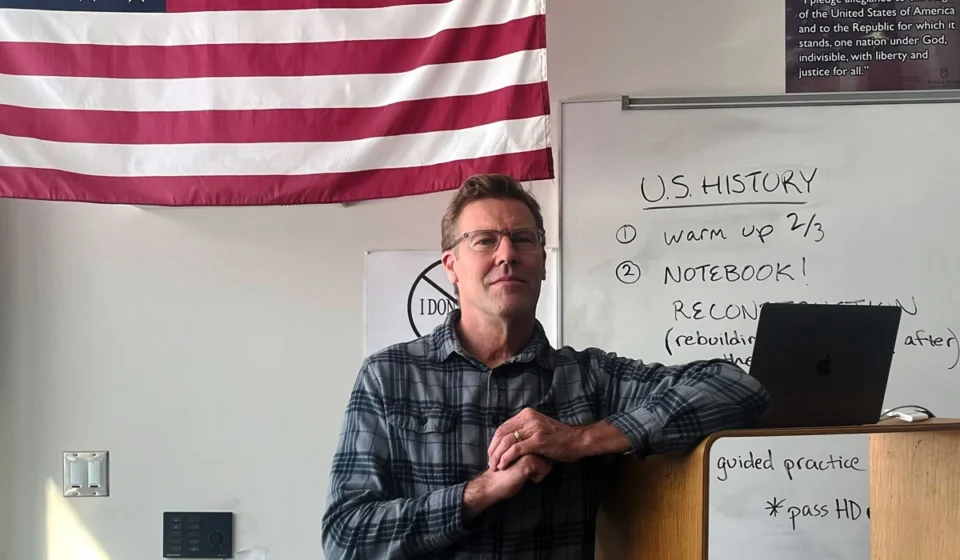
Across the city at Como High School, the narrative is starkly different. Eric Erickson, a 31-year veteran educator, describes a reality where absenteeism is dictated by race and ethnicity. In his senior-level University of Minnesota College in the Schools government course, attendance is a robust 95%. However, in his co-taught U.S. history classes, attendance has plummeted to 30%. The English-learner classes, which are often the most vulnerable to immigration enforcement, are seeing attendance rates of less than 50%.
"The students who are not here tend to be students with brown and black skin," Erickson observes. "In many ways, this division makes this version of virtual learning feel a lot more like the battles we thought we had overcome in the Civil Rights Movement."
Chronology of a Crisis
The current atmosphere of uncertainty follows a rapid escalation of federal presence in the Twin Cities.
- January 2026: Reports of increased federal agent activity around school zones and transit hubs begin to circulate. The climate of fear intensifies following a high-profile, fatal incident involving federal agents, which served as a catalyst for widespread anxiety among immigrant families.
- Mid-January 2026: Student-led protests erupt across St. Paul. On January 14, thousands of students from public, private, and charter schools converge on the State Capitol to demand human rights protections and the cessation of enforcement activities near educational sites.
- Late January 2026: As absenteeism hits record highs in specific districts, schools begin reassigning staff to manage dedicated virtual learning programs. These are not the well-resourced platforms of the pandemic; they are rapid-response structures designed to keep students engaged while they remain in hiding.
- February 2026: A coalition of Minnesota school districts and the local teachers union files a lawsuit against the federal government, arguing that the targeting of schools and transit points is a violation of the civil rights of students and an unlawful disruption of public education.
The Erosion of Educational Opportunity
The pedagogical implications of this "shadow schooling" are severe. While teachers are working tirelessly to push lessons, videos, and documents to students in their homes, the consensus is that there is no substitute for the in-person classroom.
"They are not able to listen to their peers and process what’s happening," Erickson notes. "They are living in isolation with their family and social media as connectors, as opposed to the support of peer-to-peer and caring adult interaction."
The loss of live instruction means that students who are already marginalized are falling further behind. For the English-learner cohort, the loss of consistent, face-to-face language immersion is particularly devastating. Teachers like Erickson, who pride themselves on fostering critical thinking, are finding it difficult to facilitate the nuanced, objective discussions that define a quality civics education when their students are experiencing, firsthand, the very real-world impacts of federal overreach.

Official Responses and Legal Pushback
The school districts, often caught between their obligation to provide a safe learning environment and their duty to uphold educational access, have increasingly turned to the courts. The lawsuit filed by Minnesota districts and the teachers union marks a significant escalation in the conflict between local education authorities and the federal executive branch.
Legal experts suggest that the targeting of "sensitive locations"—a designation historically protected by federal policy—is being tested by the current administration. The districts argue that the presence of armed federal agents at school bus stops constitutes a "chilling effect" that effectively denies children their right to an education, a core component of the state’s constitutional obligations.
Meanwhile, school administrators are attempting to walk a fine line. Many have implemented "safe corridor" programs, utilizing community volunteers to monitor transit routes. While these efforts provide a layer of security, they underscore the gravity of a situation where parents no longer trust the journey between home and the schoolhouse.
The Emotional Toll: Co-regulation in a Time of Trauma
Beyond the academic data points lies a profound mental health crisis affecting both students and staff. Teachers are tasked with the impossible: providing a sense of normalcy and joy while navigating their own grief and fear.
John Horton describes the weight of his role as a "co-regulator." He must model calm and compassion for children who have witnessed agents entering their homes or have seen their parents paralyzed by stress. "It’s almost like you’re teaching as you’re feeling," Horton says. "Sometimes as an adult and a parent, you just have to put aside your own preferences for the good of the group."
For many educators, the emotional toll is surfacing in the classroom. "Seeing the harm to our students and families has caused me to choke up more than once," Erickson admits. He notes that the injustice of having 30% of his students unable to access his classroom is a "cruel and sad" reality that tests the limits of professional objectivity.
Implications for the Future
The current crisis in Minnesota highlights a fundamental fragility in the American education system: its reliance on the assumption of a safe, neutral public space. When that space is compromised, the democratic function of the school—as a site of integration, critical inquiry, and equal opportunity—begins to fracture.
The long-term implications are sobering. If this period of "shadow schooling" continues, the state faces a significant increase in achievement gaps, a decline in mental health outcomes for youth, and a potential exodus of talented, burned-out educators who feel they can no longer protect their students from the reach of the state.
However, amidst the despair, there are glimmers of resistance and resilience. The students themselves, through art, protest, and mutual aid, are defining their own role in this crisis. Horton’s students, who have started a classroom food shelf and are collecting funds for refugee resettlement, demonstrate that the spirit of the schoolhouse—one of community and shared humanity—remains intact, even if the building itself is no longer accessible to all.
As the ninth week of this emergency draws to a close, Minnesota stands at a crossroads. The battle being fought in the courtrooms and the corridors of the Capitol is, at its heart, a battle for the soul of public education. The question remains whether the system will be allowed to serve as a sanctuary for all children, regardless of their background, or if the current enforcement paradigm will permanently redefine the limits of the classroom.