























































The Fraud Frontier: How Healthcare Integrity Became the Defining Battleground of the 2026 Midterms

As the 2026 midterm elections approach, the traditional battle over healthcare—usually defined by arguments over premium costs, coverage expansion, and the sustainability of the Affordable Care Act (ACA)—has undergone a radical, tactical pivot. While voters remain deeply concerned about the rising price of care, Republican campaigns have successfully infused the debate with a new, potent narrative: the fight against systemic fraud in government health programs.
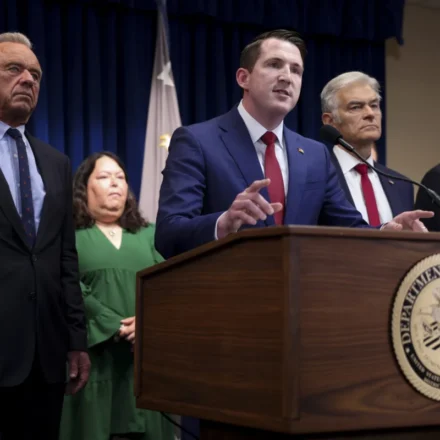
The administration of President Donald Trump has placed this "fraud-fighting" initiative at the center of its domestic agenda. By framing investigations, payment suspensions, and mass disenrollments as necessary actions to protect taxpayer dollars, the White House has created a high-stakes political environment that forces Democrats onto the defensive. However, the aggressive strategy has ignited a firestorm of criticism, with opponents arguing that the administration is leveraging unsubstantiated claims to dismantle safety-net programs and penalize states governed by the opposition.
The Strategic Shift in Campaign Messaging
For years, the Republican party faced significant political headwinds regarding healthcare. Defending cuts to Medicaid and the Affordable Care Act historically alienated swing voters who view these programs as vital lifelines. By shifting the focus to "waste, fraud, and abuse," GOP candidates have found a way to rebrand these fiscal austerity measures as a moral crusade.
"Going after fraud gives Republicans a healthcare message when they would otherwise just be defending cuts to Medicaid and the Affordable Care Act," explains Larry Levitt, executive vice president for health policy at KFF, a leading health information nonprofit. According to Levitt, this rhetorical pivot effectively "blunts" the Democratic advantage on healthcare, providing a rallying cry that resonates with the GOP base and, occasionally, the broader electorate.
Polling data confirms the resonance of this strategy. A mid-September KFF poll revealed that 44% of all voters—and 54% of Republican voters—deem fraud in government programs an "extremely important" issue for candidates. Among rural Republican voters, the topic ranks as the single most critical talking point.
A Chronology of Escalating Tensions
The administration’s anti-fraud campaign did not begin in a vacuum, but its current intensity is unprecedented.
- Early 2026: Government watchdogs, including the Government Accountability Office (GAO), released reports warning that the sheer volume of Medicare payments created structural risks for fraud. Simultaneously, investigators proved the vulnerability of the ACA marketplace by successfully securing subsidized insurance for fake enrollees.
- March 2026: CMS Administrator Dr. Mehmet Oz publicly attacked New York’s Medicaid program, alleging that millions of residents were receiving fraudulent home-care services.
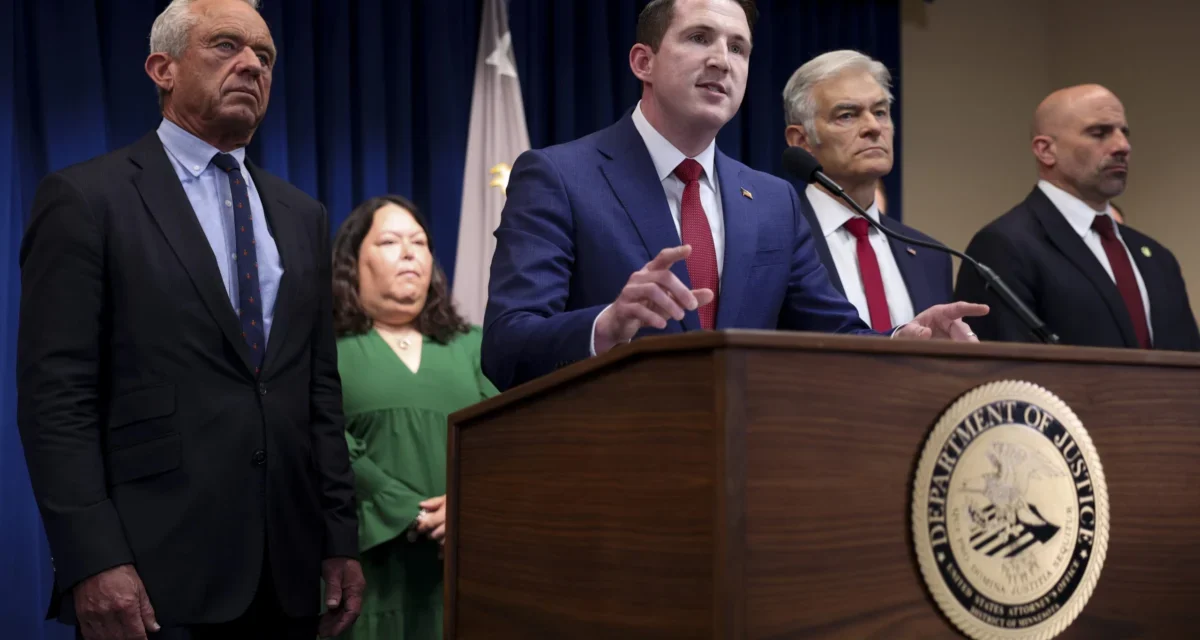
- May–June 2026: The administration accelerated audits of state Medicaid fraud units. In a highly publicized move, billions in federal Medicaid payments were withheld from states like Minnesota and California, citing "lax oversight."
- Summer 2026: The White House launched a crackdown on ACA marketplace enrollments, eventually canceling coverage for 760,000 individuals labeled as "phantom consumers."
- October 2026: President Trump formally called on Congress to implement mandatory prison terms for healthcare fraud, aiming to remove probation as a sentencing option for those defrauding Medicare and Medicaid.
Supporting Data and the "Phantom Enrollee" Debate
The administration’s most drastic measure—the cancellation of 760,000 ACA policies—rests on the claim that these were fraudulent applications. Dr. Mehmet Oz has been the public face of this effort, asserting that the lack of usage (no prescriptions filled, no doctor visits) and the absence of Social Security numbers on certain applications serve as definitive proof of wrongdoing.
"About 35% of current people on the Obamacare system had never used the program," Oz stated during a press event. "They haven’t bought a prescription medication. They haven’t seen a doctor. That just is not possible. So, we know there is fraud."
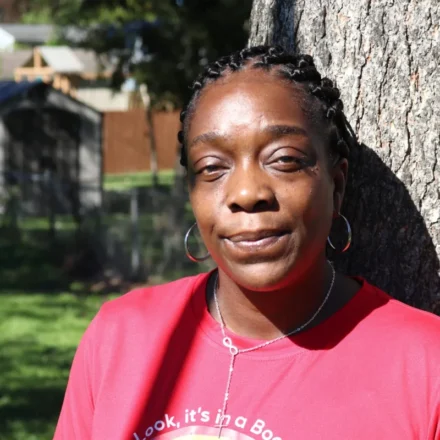
However, health policy experts warn that these metrics are fundamentally flawed. They point out that healthy, younger demographics are statistically less likely to access medical services, and that the absence of a Social Security number is common in legitimate cases, such as newborns being added to parental coverage. Critics argue that these "fraudulent" numbers likely include legitimate, vulnerable Americans who are now being stripped of their coverage during a period of economic uncertainty.
The Discrepancy in Administration Policy
While the White House portrays its mission as an uncompromising purge of bad actors, critics highlight a series of contradictions that suggest the motivation may be political rather than purely administrative.
Most notably, the Department of Health and Human Services (HHS) recently recertified hundreds of insurance brokers previously suspended by the Biden administration for suspected fraud. Furthermore, the administration laid off roughly 200 CMS employees tasked with regional oversight of the ACA marketplace, a move that experts say weakens the government’s ability to detect actual fraud.
Perhaps the most contentious issue involves President Trump’s use of the pardon power. While the administration calls for mandatory prison sentences for low-level fraud, the President has previously pardoned high-level healthcare executives convicted of massive schemes. These pardons—including those for nursing home operators and corporate executives involved in multimillion-dollar tax and Medicaid fraud—have drawn sharp rebukes from organizations like the National Health Care Anti-Fraud Association, which accuses the administration of double standards.
Blue State Allegations and Political Consequences
The administration’s focus on "program integrity" has manifested as a targeted investigation into "blue states." In New York, for example, the administration initially claimed that three-quarters of the state’s Medicaid population had received questionable services. CMS later admitted this was a "glaring error" caused by a fundamental misunderstanding of state billing codes.
Despite the error, the administration continued its scrutiny, suspending millions in funding for the state’s Medicaid fraud unit. Similar tensions have flared in California and Minnesota, where state officials have been forced to go to court to challenge the withholding of federal funds.
These technical disputes have been rapidly elevated into political theater. In Minnesota, Republican gubernatorial candidate Lisa Demuth has utilized the federal investigation to attack Senator Amy Klobuchar, accusing her of failing to stop state-level fraud. Conversely, Democratic leaders like New York Attorney General Letitia James argue that these funding cuts are intended to cripple the oversight mechanisms that catch actual criminals.
Implications for the Future of Healthcare
The long-term implications of this "fraud-fighting" era are profound. The combination of GOP-led legislative changes and administrative actions is projected to increase the number of uninsured Americans by 16 million by 2034, according to the Congressional Budget Office.
The expiration of enhanced ACA premium subsidies at the end of 2025 has already caused enrollment to decline by millions, placing a greater financial burden on the middle class. While Republicans argue these measures are essential to fiscal responsibility, advocacy groups like Families USA contend that the fraud narrative is a thin veil for ideological cuts.
"Fighting fraud shouldn’t result in people losing coverage," says Anthony Wright, executive director of Families USA. "It’s really a way to distract and reframe the cuts in a different way, to say it’s part of an anti-fraud effort."
As the November election approaches, the electorate is caught between two competing realities. One side views the government health system as a bloated, leaky bucket that must be tightened at all costs to preserve taxpayer trust. The other sees a targeted effort to dismantle the social safety net, using the specter of "fraud" to justify a reduction in essential services.
Whether the administration’s focus on fraud will ultimately secure a electoral victory for the GOP or trigger a backlash among voters who lose their coverage remains the defining uncertainty of this election cycle. One thing, however, is clear: the discourse surrounding healthcare in America has moved beyond the simple question of "how to pay for it" and into a volatile, high-stakes battle over who truly deserves to be covered.