


















































The Uncertain Horizon: Napheesa Collier, Cheryl Reeve, and the Minnesota Lynx at a Crossroads

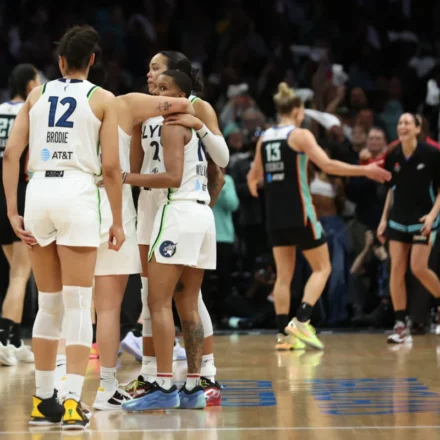
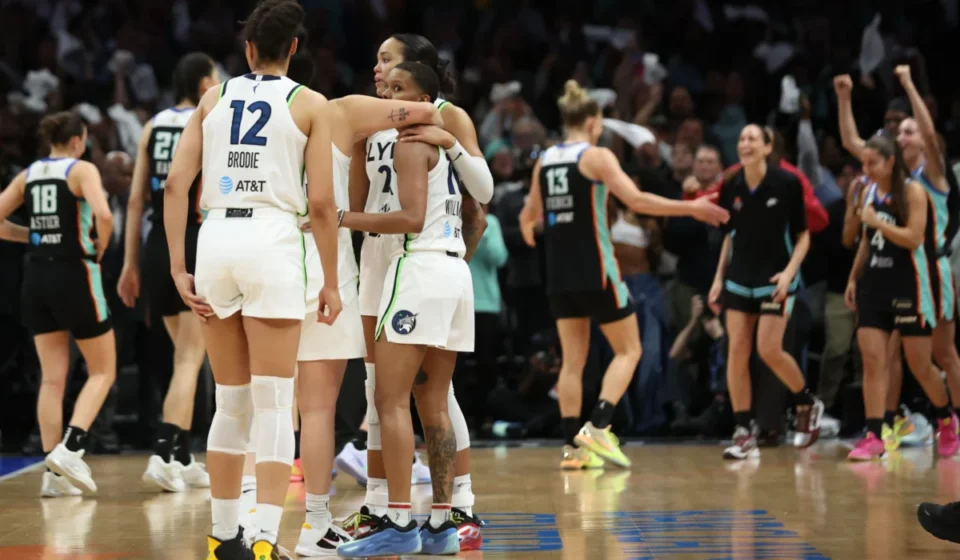
In the quiet, clinical surroundings of the Mayo Clinic Square practice facility, the atmosphere was a stark contrast to the high-octane environment of the WNBA playoffs. Just forty-eight hours removed from a shocking, rapid-fire elimination at the hands of the New York Liberty, the Minnesota Lynx held their end-of-season media availability. At the center of the room sat Napheesa Collier—the franchise’s undisputed leader, a WNBA Players Association vice president, and, as of this week, the most significant question mark in the league’s offseason landscape.
Unlike a year ago, when Collier arrived with a multipage manifesto in hand, ready to hold league leadership accountable regarding collective bargaining negotiations, this year she arrived empty-handed and exhausted. Her presence signaled not a call to arms, but a moment of profound reflection. With the 2026 season officially in the rearview mirror, the conversation in Minnesota has shifted from championship aspirations to a far more existential question: What does the future hold for the face of the Lynx franchise?
A Season of Contrasts: From Top Seed to Early Exit
The 2026 season for the Minnesota Lynx was defined by a duality that ultimately proved their undoing. Under the guidance of head coach and president of basketball operations Cheryl Reeve—who secured her record-breaking fifth WNBA Coach of the Year award—the team operated with a level of precision that led them to a 33-11 record and the No. 1 seed in the playoffs.
However, the dominance felt during the regular season began to erode as the calendar turned toward the postseason. The Lynx, long praised for their grit and defensive identity, began to struggle against the league’s more physical, taller lineups. Data reveals a troubling trend: in the first 19 games of the season, the Lynx held opponents under 40% shooting from the field in more than half of their contests. In the final 25 games, they hit that defensive benchmark only twice.
The rot, as some players described it, felt gradual but inevitable. Guard Courtney Williams admitted that while she couldn’t pinpoint a single moment of collapse, the internal sense of stability began to waver during a 99-86 loss to the Liberty on July 3. That loss served as a harbinger of the postseason mismatch that would eventually eliminate them.
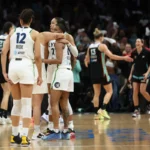
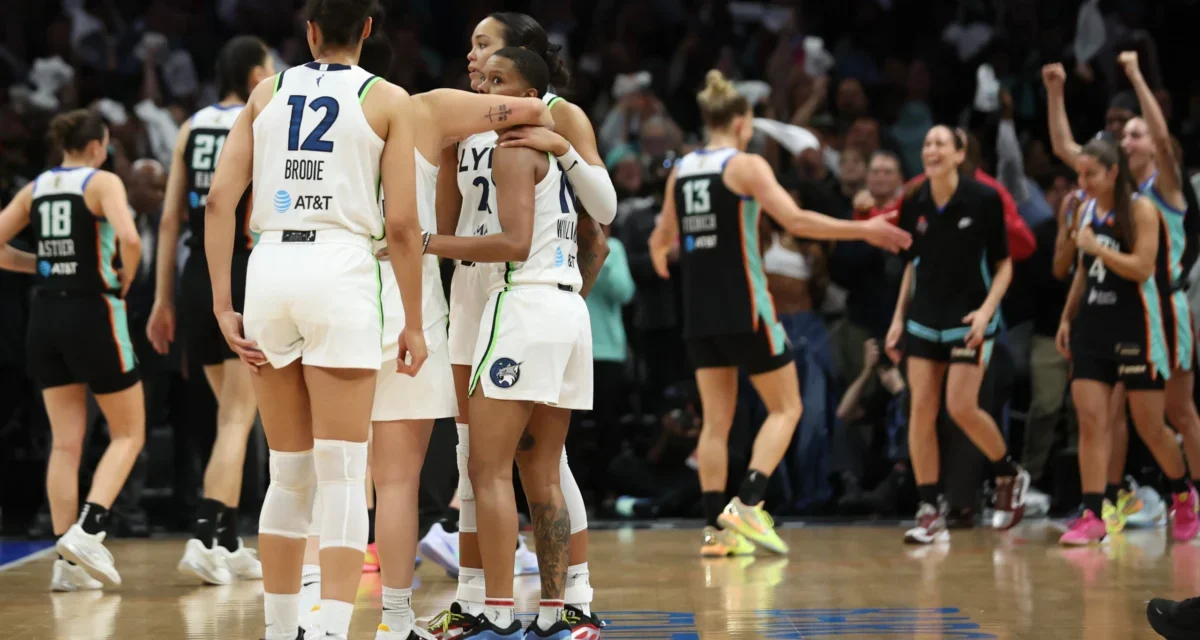
The first-round sweep by the New York Liberty was historic in its lopsided nature. Since the WNBA transitioned to a 1-8 seeding format in 2022, no top seed had ever been eliminated by an eighth seed in the opening round. The Liberty, anchored by the versatile 6-4 Breanna Stewart and 6-6 Jonquel Jones, exploited Minnesota’s lack of interior size, systematically dismantling the Lynx’s pick-and-roll game. By the time the final buzzer sounded in Game 2, the Lynx had suffered back-to-back postseason losses by margins of 15 or more points—a first in the history of the franchise.
The Collier Conundrum: A Decision More Than Basketball
The looming question of Napheesa Collier’s future is complicated by the nature of her current contract. Following a series of catastrophic ankle injuries that required extensive surgery, Collier returned to the Lynx on a one-year deal. While some fans and pundits viewed this as a temporary arrangement, it was a pragmatic move that offered protection to both the player and the organization.
Now, with the season over, the speculation regarding her next move has reached a fever pitch. During her media session, Collier was candid about her lack of clarity. "Honestly, I haven’t even thought about that," she told reporters. "We lost less than 48 hours ago, and we didn’t expect to be here at all, so I really haven’t had any time to decompress."

Despite her insistence that she loves the organization and her teammates, social media was quick to interpret her measured tone as a sign of an impending departure. Cheryl Reeve, however, has adopted a surprisingly hands-off, empathetic approach to the situation.
"Phee knows exactly what exists here," Reeve stated. "She knows the care, the love, all the things that have been poured into her. This is a Phee decision, and it’s probably more than basketball. Sometimes you stay, and sometimes you go, because maybe there’s something—I don’t say better, but maybe better for her. And that’s something I respect."
Reeve’s stance is that of a veteran coach who understands the autonomy of a player who has given eight years of service to a single city. There is nothing left for the organization to "sell" to Collier; she has lived the life of a Minnesota star, through rehabilitations and championship runs. The decision, as Reeve noted, is entirely in her hands.
Adapting to a Changing Game: The Need for Size and Skill
Beyond the personnel drama, the Lynx are facing a tactical reckoning. The league is trending toward length and versatility, and the current iteration of the Lynx—while highly skilled—is simply undersized.
Collier, standing at 6-1, often found herself tasked with guarding the league’s most dominant power forwards. In the series against the Liberty, she was visibly hampered by both her lingering ankle issues and the sheer physical mismatch against Stewart, who outscored her 55-26 over the two games.
When asked about her future evolution, Collier hinted at a potential shift in her role. Away from the glare of the cameras, she expressed a desire to refine her perimeter game and three-point shooting, potentially signaling a move toward the small forward position. When posed with the question of whether she would be open to playing that spot to help the team win a fifth championship, she was resolute: "I would go wherever a coach wants to put me. So, yes."
This willingness to adapt is exactly what the Lynx need, but it is only one piece of a much larger puzzle. The roster requires a infusion of size that does not sacrifice the team’s floor-spacing capabilities.
The Road to 2027: Building the Next Core
For Reeve and the front office, the upcoming offseason is arguably the most critical in the modern history of the franchise. They currently hold the rights to several pieces that could bolster the frontcourt, including Dorka Juhász and the promising, yet injury-plagued, Emma Čechová. However, counting on players coming off significant injuries is a gamble, not a strategy.

"The things that we need, they don’t grow on trees," Reeve admitted. "They’re not plentiful, and nobody else wants them, either. We’re not the only team that would like to have size that shoots 3s, and can pass, defend, and rebound. That’s what I’m looking for."
The challenge is further compounded by the salary cap. With long-term financial obligations to core veterans like Courtney Williams and Kayla McBride, the Lynx do not have the luxury of overspending. They must find an "underappreciated veteran"—a player who can provide immediate impact on a team-friendly deal, much like Alanna Smith did during the 2024-25 season.
The locker room, for its part, remains supportive of the front office’s challenge. "I ain’t the G.M., bossman," Courtney Williams joked when asked what the team needed to improve. "Let them do their job, and I do mine. But it’s something. We need something."
Implications: A Legacy at Risk
The implications of this offseason are profound. If Napheesa Collier chooses to test free agency, the Lynx risk losing not just their best player, but the cultural anchor of their team. If she stays, the team must find a way to retool around her to ensure they are not simply running it back with a roster that has already shown its ceiling against top-tier competition.
The 2026 season was a triumph of culture and coaching, but the postseason exit served as a blunt reminder of the league’s evolving standard. The Lynx are no longer the hunters; they are the standard-bearers for a specific, undersized brand of basketball that is currently being challenged by the length and athleticism of teams like New York.
As the snow begins to settle over Minneapolis, the silence in the Mayo Clinic Square facility is temporary. The work of the front office—scouting, salary cap maneuvering, and delicate player relations—is just beginning. For Napheesa Collier, the time to decompress is short; for the Lynx, the time to decide their future is already ticking away. The only certainty in the WNBA is that nothing stays the same for long, and for a franchise chasing a fifth title, the path forward will require as much courage as it does basketball acumen.