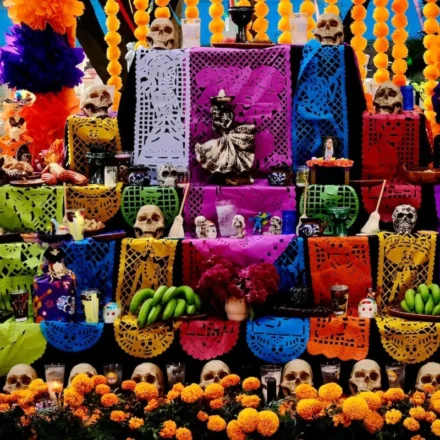





































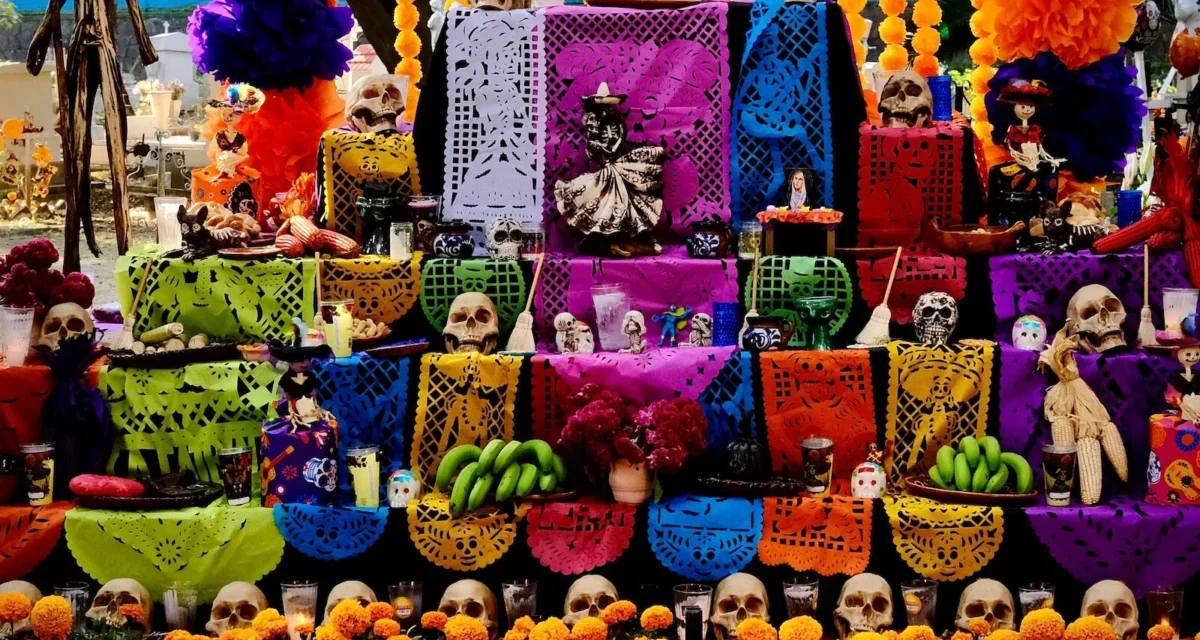





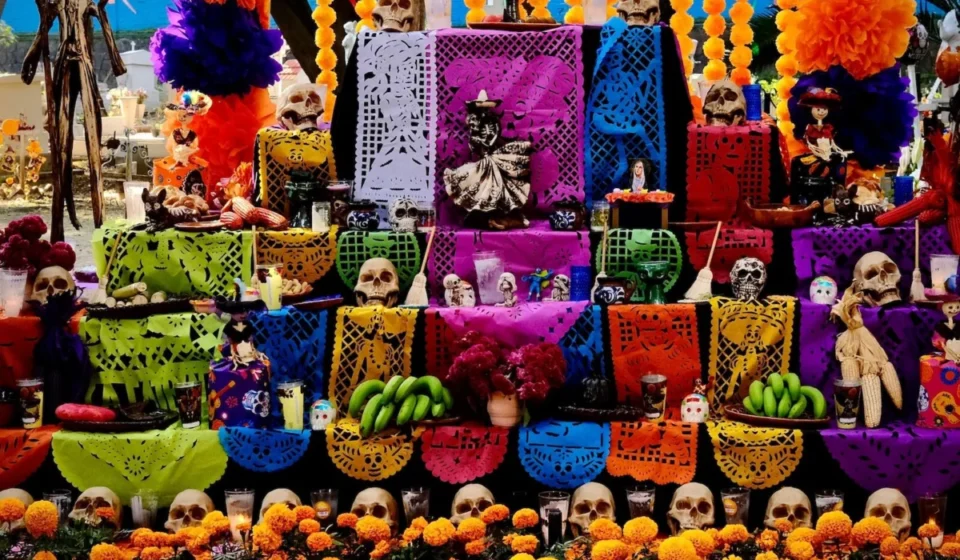

For over a century, the hollowed gaze of La Calavera Catrina has peered out from the pages of history, the walls of grand murals, and the faces of millions celebrating Día de Muertos. What began as a sharp, biting critique of societal vanity in the early 20th century has transformed into an enduring icon of Mexican identity. To understand La Catrina is to understand the complex dialogue between the living and the dead, a cultural philosophy that treats mortality not as an end, but as a vibrant, essential cycle of life.
The Genesis of a Skeleton: Satire and the Lithographer’s Vision
In the tumultuous social landscape of early 1900s Mexico, the lithographer José Guadalupe Posada sought to hold a mirror up to his compatriots. His creation, La Calavera Garbancera, was a skeletal woman adorned with an extravagant, feathered hat—a direct jab at the garbanceros, those of Indigenous descent who attempted to distance themselves from their heritage by adopting European fashions and pretensions.
Posada’s intent was purely satirical. By stripping the "dandy" of her skin, he revealed the fundamental truth of human existence: underneath the layers of expensive clothing and social status, we are all the same.
"La Calavera Catrina is a modern satirical image and symbol reminding us that no matter how much money we might have or our station in life, it is vanity to believe that we are somehow immune to death," explains Dr. Helia Bonilla, founder of the Posada Art Foundation. "The phrase memento mori comes to mind, reminding us to live fully and perhaps that we should live with respect and kindness for each other; after all, we all die."
Chronology: From Newspaper Print to National Icon
The evolution of La Catrina can be charted through several distinct historical epochs, each adding a layer of meaning to her skeletal frame:
- 1910–1913 (The Posada Era): Posada publishes his broadsheets. The skeletal figures are used as social commentary on political corruption and the hypocrisy of the burgeoning middle class.
- 1947 (The Muralist Transformation): Diego Rivera immortalizes the figure in his mural Sueño de una Tarde Dominical en la Alameda Central. By placing her in a grand park setting alongside himself and Frida Kahlo, Rivera elevates the "Garbancera" from a cheap, ephemeral broadsheet print to the status of high art.
- Mid-20th Century to Present: The figure is fully assimilated into the Día de Muertos tradition. She transitions from a political caricature to the "Grand Dame" of the Day of the Dead, becoming a symbol of national pride rather than a tool for mockery.
The Roots of Día de Muertos: A Mesoamerican Legacy
To truly grasp the significance of La Catrina, one must look beyond the 20th century to the ancient foundations of Mesoamerican culture. Dr. Andrés Medina Hernández, an anthropologist at the National Autonomous University of Mexico (UNAM), notes that the rituals surrounding death have always been tethered to the agricultural cycle.
"Indeed, the Festival of the Dead is a celebration of the harvest, but it is also an occasion for bringing the family together," says Dr. Medina Hernández. Ancient festivals like Miccailhuitontli and Huey Miccailhuitl were centered on the milpa—the traditional polyculture farming system. In this worldview, death is the fertilizer of life.
"The fundamental reference point is the bones, which are considered the seed from which life emerges, exactly like maize itself," he adds. This explains the ubiquity of sugar skulls and bone-shaped breads (pan de muerto); they are literal representations of the belief that life is a cycle of regeneration.
Supporting Data: Rivera’s Synthesis of Myth and History
Diego Rivera’s 1947 mural was the catalyst that changed the trajectory of the figure forever. When Rivera "clothed" the skeleton in his masterpiece, he did more than just give her a body; he imbued her with a mythological weight that resonates with the Aztec past.
Dr. Bonilla highlights the intentionality behind Rivera’s design: "Around her shoulders is a feather boa, but it has a rattle on one end and the head of a snake on the other." This, she argues, is a direct nod to Quetzalcóatl, the Feathered Serpent deity. By incorporating the rattlesnake—a creature feared for its lethal bite—into the very attire of the Catrina, Rivera explicitly tethered the figure to the realm of the dead and the power of ancient gods.
The blood and fangs depicted in the mural’s version of La Catrina served to finalize her transition from a satirical "skeleton in a hat" to a complex, multi-dimensional symbol of Mexico’s layered cultural identity.
Official Perspectives and Cultural Implications
The cultural persistence of La Catrina raises an interesting question: why has this specific image survived when so many other satirical icons of the era have faded?
The answer lies in her adaptability. As Dr. Medina Hernández notes, "La Catrina expresses the vitality and continuity of people, as well as the central role that the milpa occupies in the lives of Mesoamerican communities." She is no longer just a critique of the elite; she is a canvas. Contemporary artists, street performers, and families preparing their altars each year continue to reinvent her.
The implication is clear: the modern Catrina is a bridge. She connects the political irony of the colonial period, the artistic revolution of the 1940s, and the spiritual depth of ancient Indigenous rituals. She allows modern Mexicans to engage with the reality of their own mortality in a way that is festive, colorful, and profoundly human.
Pilgrimage Sites: Where the Legacy Lives
For those seeking to understand the transformation of La Catrina, Mexico offers several essential touchpoints:
The Heart of Muralism: Mexico City
The Museo Mural Diego Rivera, situated near the Alameda Central, is the definitive site for viewing the transition of the character. The mural provides the necessary context of how Rivera positioned the Catrina as the centerpiece of Mexican historical memory. Nearby, the Museo de Arte Popular offers a broader look at the iconography of death, while the Museo Nacional de Antropología provides the necessary archaeological backdrop of Mesoamerican beliefs.
Contemporary Celebrations: San Miguel de Allende
In the UNESCO World Heritage city of San Miguel de Allende, the La Calaca Festival serves as a modern laboratory for the Catrina tradition. The Desfile de Muertos y Catrinas (Parade of the Dead and Catrinas) is a spectacle where the public is invited to participate in the living history of the icon, with workshops offered by local experts on everything from the intricacies of sugar skull decoration to traditional makeup application.
The Source of Satire: Aguascalientes
For the purist, a trip to Aguascalientes—the birthplace of Posada—is mandatory. The Museo José Guadalupe Posada houses the original plates and engravings that started the phenomenon. It is here that the transition from biting political pamphlet to cultural icon feels most stark, as visitors see the humble, monochromatic origins of the figure that now commands world-wide attention.
The Artisan Tradition: Capula
In the town of Capula, Michoacán, the Catrina has become an industry and a high art form. The town’s ceramic tradition, pioneered by artists like Juan Torres Calderón, has turned the Catrina into a sculptural staple. During the Feria de la Catrina, the streets are lined with monumental figures, showcasing how an image once meant to mock the "pretentious" has become the pride of a community’s creative spirit.
Conclusion: A Living Tradition
La Catrina is perhaps the most successful "survivor" in the history of art. She has successfully navigated the shift from the printing press to the mural, from the political pamphlet to the global festival. By embracing the duality of death—its inevitability and its role as the seed of life—she has become a permanent resident in the Mexican consciousness.
As we look at the Catrina today, we aren’t just looking at a skeleton in a hat. We are looking at a thousand-year-old history that is reactivated every November. She is a reminder that in the grand cycle of the milpa, in the harvest of our lives, and in the quiet dignity of our altars, we are all, in the end, united by the very vanity and beauty that she represents.