























































The Silent Tide: How Industrial Agriculture is Turning the Corn Belt’s Groundwater into a Public Health Crisis

This investigative report examines the escalating struggle with nitrate contamination in the American Midwest, where the pursuit of agricultural productivity is clashing with the fundamental human right to clean, safe drinking water.
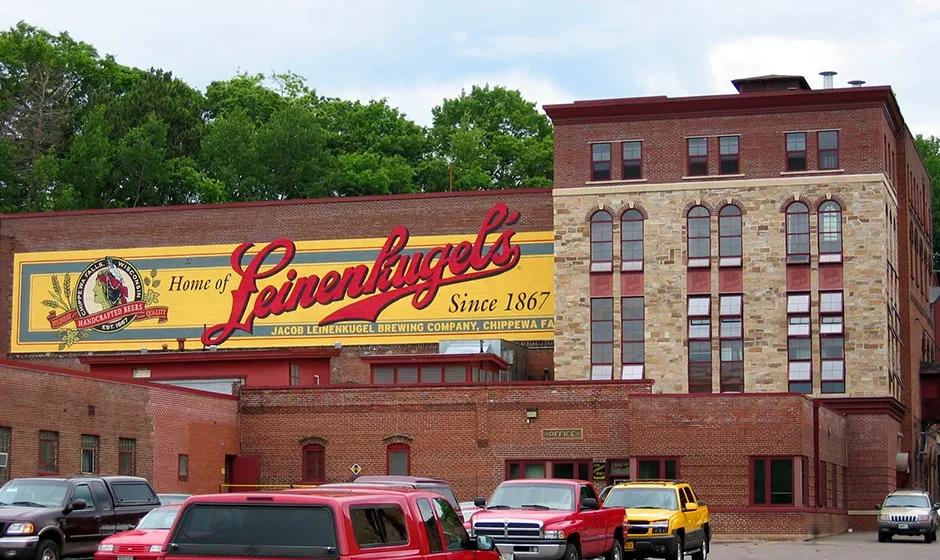
In the small Wisconsin city of Chippewa Falls, a legacy of pristine water is inextricably linked to the region’s identity. It was here that Jacob Leinenkugel first discovered the high-quality spring waters that would serve as the lifeblood of his famous brewery. For generations, the city’s devotion to clean water was not merely a matter of pride, but a civic mandate. However, that legacy is now being tested by a silent, invisible, and persistent threat: nitrate contamination.
In 1997, when municipal utility managers detected rising concentrations of nitrates in the city’s water supply, they did not hesitate. Recognizing the potential danger to their 16,000 customers, officials invested heavily in advanced filtration equipment and drilled deeper wells into protected aquifers. Today, the city spends $200,000 annually to ensure its water remains below the 10 parts per million (ppm) limit mandated by federal law.
Yet, this success story masks a harrowing reality. Chippewa Falls represents a small island of safety in a sea of contamination. While city residents enjoy regulated, filtered water, the vast majority of Chippewa County’s 67,000 residents rely on private wells tapping into aquifers that have been steadily poisoned by decades of industrial agricultural runoff.
The Anatomy of a Hazardous Pollutant
The crisis unfolding in Chippewa Falls is a microcosm of a much larger national struggle. The American Corn Belt—a region spanning several states, including Wisconsin, Iowa, and Minnesota—has become the epicenter of a massive, unregulated deluge of nutrient waste. Every year, billions of pounds of chemical fertilizer and tens of millions of tons of livestock manure are spread across the landscape.
When the nitrogen in these materials is exposed to oxygen, it transforms into nitrates—a highly soluble compound that does not stay in the soil. It leaches through the earth, infiltrating both surface water and the underground aquifers that millions of Americans rely on for their daily survival.
Nitrates are far from benign. Historically, they were identified as the cause of "blue baby syndrome," a life-threatening condition in infants that inhibits the blood’s ability to carry oxygen. Today, however, the scope of the danger has expanded. Emerging epidemiological research increasingly links chronic nitrate exposure to a variety of cancers, including colorectal, breast, bladder, brain, and ovarian cancers. Despite this, the chemical has largely avoided the stringent regulatory oversight that governs other environmental toxins.
A Chronology of Neglect
The regulatory failure surrounding nitrate contamination is a story of inaction spanning more than six decades.
- 1962: The U.S. Public Health Service establishes the 10 ppm limit for nitrates in drinking water, specifically to prevent infantile methemoglobinemia.
- 1975: This 10 ppm threshold is adopted as an interim standard under the Safe Drinking Water Act.
- 1992: The Environmental Protection Agency (EPA) formalizes the 10 ppm standard. It remains the federal limit today, despite massive changes in agricultural technology and scientific understanding.
- 2010s–2020s: Mounting evidence from independent studies suggests that even levels as low as 5 ppm are associated with increased risks of birth defects and chronic disease.
- 2020s–Present: Recent attempts by the Obama and Biden administrations to initiate a formal review of the 1962 standard have been repeatedly stalled or halted, most notably during the Trump administration, leaving the outdated 64-year-old standard in place.
Throughout this period, agricultural runoff has surged. In Wisconsin alone, farmers in 2019 applied five times more nitrogen fertilizer than they did in 1960. As dairy and hog operations have grown into industrial-scale facilities, the volume of manure being applied to the land has outpaced the soil’s ability to absorb it, leading to a massive increase in groundwater loading.
Supporting Data: The Scale of the Crisis
The statistics paint a grim picture of a national health crisis hiding in plain sight. According to a recent analysis by the Environmental Working Group (EWG):
- Widespread Contamination: Approximately 18 percent of the U.S. population—roughly 62.1 million people—consume water from community systems that test at or above 3 ppm of nitrate.
- Infrastructure Deficit: Of the more than 50,000 water treatment utilities across the United States, 85 percent possess no capacity to treat or remove nitrates.
- The Private Well Gap: In Wisconsin, nearly one in ten private wells tested by state authorities over the last two decades has exceeded the 10 ppm safety limit. Because private wells are not subject to the same testing requirements as municipal water, the true number of impacted residents is likely significantly higher.
- Cancer Risk: Research published in the journal Public Health indicates that nitrate concentrations well below the federal legal limit are associated with a 61 to 73 percent higher risk of cancer mortality.
Matthew Boos, the supervisor of the Chippewa Falls water treatment plant, sees this divide firsthand. While he manages the city’s safe supply, his own home outside the city limits relies on a private well. "It was 10 [ppm] when I got there," Boos remarked. "Now it’s 20." He has been forced to install a reverse osmosis filtration system to protect his family. His parents, living nearby, were only able to secure safe water after receiving a state grant to drill a deeper, more expensive well.
Official Responses and the Governance Gap
The official response to this crisis has been largely defined by a reliance on "voluntary measures." Government agencies have historically attempted to persuade farmers to adopt best practices for runoff control. However, these efforts have failed to stem the tide.
Tyler Lobdell, a staff attorney with Food & Water Watch, argues that the current approach is fundamentally flawed. "The Corn Belt is an especially acute example of what’s happening around the country," Lobdell explains. "It’s almost entirely attributable to industrial agricultural practices. We’re not regulating the sources, despite it being very obvious that we have a growing problem."
By choosing to leave regulation in the hands of the industry, the government has essentially allowed industrial agriculture to treat public aquifers as a waste-disposal mechanism. This is compounded by the "city-county disconnect" seen in places like Chippewa County. While the county provides "refill stations" where residents can collect clean water, this is a reactive, stop-gap measure that does little to address the systemic poisoning of the groundwater itself.
Implications for the Future
The implications of this contamination are profound, affecting everything from public health expenditures to the viability of rural communities.
For the individual, the cost is personal. It is the cost of buying bottled water, installing expensive home filtration systems, or bearing the increased medical expenses of treating chronic diseases linked to environmental toxins. For the state, the cost is a growing burden on healthcare systems and the potential loss of public trust in the safety of natural resources.
Chippewa Falls remains an outlier, not because its residents are more protected by law, but because the city has chosen to bear the financial burden of treatment. With 1,200 farms supporting a $300 million agricultural economy in the region, the political pressure to maintain the status quo is immense. Yet, as the science becomes clearer and the levels of nitrates continue to rise, the tension between agricultural output and public health is reaching a breaking point.
As the nation looks toward the future of its water security, the situation in the Corn Belt serves as a warning. Without a shift from voluntary measures to mandatory, science-based regulation of agricultural runoff, the "pure water" that once defined the heartland will continue to disappear—replaced by a chemical legacy that will take generations to remediate.