
























































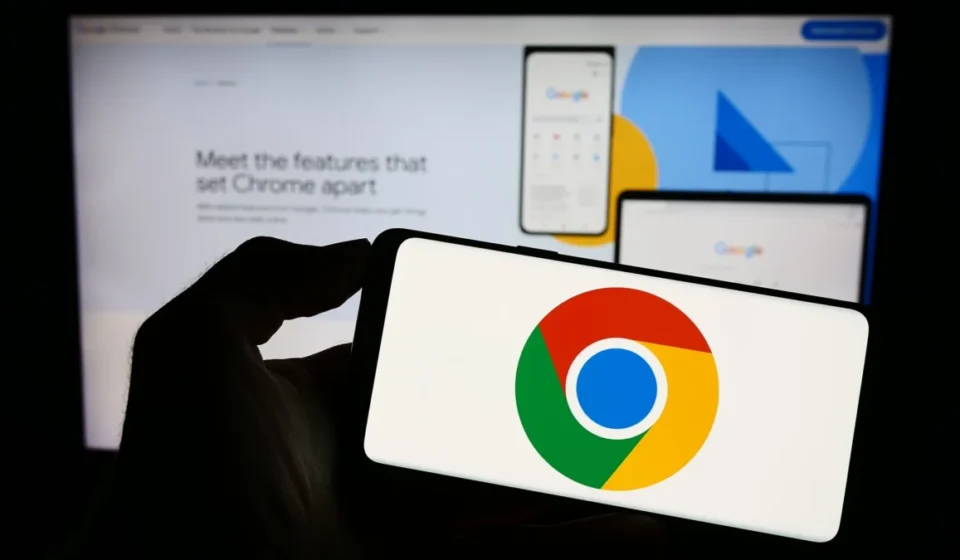

In a major shift for the global cybersecurity landscape, Google has announced a significant acceleration in its maintenance cycle for the Chrome browser. Following the successful deployment of advanced artificial intelligence tools to identify and remediate vulnerabilities, the company revealed that it has patched over 1,000 security flaws in its two most recent releases. This milestone marks the beginning of an aggressive new cadence: moving forward, Google will release security updates for Chrome on a weekly basis, with the potential to scale to twice-weekly releases should the threat landscape demand it.
The AI Breakthrough: Uncovering the "Hidden" Vulnerabilities
The technological centerpiece of this announcement is the integration of proprietary AI-driven analysis tools into Chrome’s development pipeline. In its latest technical blog post, Google revealed that versions 149 and 150 of the browser collectively saw 1,072 vulnerabilities addressed. To put this into perspective, this single effort resolved more security bugs than the previous 23 combined update cycles.
For years, software security has relied on a combination of manual code auditing, community-sourced bug reports, and automated static analysis tools. However, as codebases grow in complexity—Chrome comprises millions of lines of code—human oversight alone is no longer sufficient to catch every edge case or subtle logic error. Google’s AI models, trained on patterns of common security regressions and historical vulnerability data, proved capable of identifying flaws that had escaped traditional detection methods for over a decade.
Perhaps most illustrative of the power of this new approach was the discovery of a critical vulnerability that had persisted in the browser’s codebase for 13 years. Despite numerous audits and updates, this flaw remained hidden, highlighting the limitations of conventional software security practices. The AI identified the issue by cross-referencing behavioral patterns that developers, constrained by human cognitive bias, had overlooked.
Chronology: The Evolution of Chrome’s Security Posture
The transition to a weekly patch cycle did not happen overnight. To understand the significance of this move, one must look at the historical trajectory of Chrome’s release schedule.
- 2008–2010: The Foundation: Chrome launched with a revolutionary "evergreen" model, setting the standard for automatic, silent updates. This moved the browser away from the "version-based" upgrades of the era.
- 2020–2022: Tightening the Cycle: As Chrome became the primary interface for the modern web, Google shortened its release cadence to four weeks to minimize the "window of vulnerability"—the time between a patch being released and the majority of users installing it.
- 2023–2024: The AI Integration Phase: Google began pilot testing generative AI and machine learning models to assist in fuzzing (a technique for discovering coding errors by inputting massive amounts of random data).
- 2025–2026: The AI Scaling: The deployment of these tools in versions 149 and 150 demonstrated the efficacy of AI in finding "long-tail" bugs, leading to the current decision to move to a weekly security release schedule.
Supporting Data: By the Numbers
The scale of this security undertaking is unprecedented in the browser market. When analyzing the impact of AI-assisted patching, several key data points emerge:
- The Volume Metric: 1,072 patches in two releases represent a 2,000% increase in the velocity of vulnerability remediation compared to the average of the preceding 23 updates.
- The Time Metric: The reduction of the update cycle to seven days aims to reduce the "mean time to remediate" (MTTR), a critical KPI for cybersecurity professionals.
- The Legacy Metric: The discovery of a 13-year-old vulnerability proves that "mature" codebases are not necessarily "secure" codebases. The longer a piece of software exists, the more likely it is to harbor hidden technical debt that only advanced computational analysis can uncover.
These figures serve as a warning to the industry: relying on traditional manual testing is no longer sufficient. As software complexity continues to rise, the gap between vulnerability discovery and exploitation must be bridged by automated, AI-augmented defensive systems.
Official Responses and Strategic Rationale
Google’s decision to move toward weekly security patches is not merely a technical adjustment; it is a defensive strategy. In its official communication, the Google Chrome security team emphasized that the "speed of the web" requires a corresponding speed in defense.
"Our goal is to ensure that users are protected before an exploit can be weaponized in the wild," a Google spokesperson noted. "By moving to a weekly cadence, we are reducing the window of opportunity for bad actors to reverse-engineer our patches and target users who haven’t updated yet."
Industry analysts have praised the move, noting that while it puts additional pressure on IT departments to manage frequent updates, it is a necessary evolution. "The browser is now the operating system of the web," says cybersecurity analyst Marcus Thorne. "If the browser is compromised, everything is compromised. Google is essentially treating Chrome with the same urgency as kernel-level security."
Implications for the Tech Ecosystem
The shift to weekly updates carries significant implications for various stakeholders in the digital ecosystem:
For IT Departments and Enterprise Admins
For corporate environments, this change poses a challenge. Managing weekly updates across thousands of workstations requires robust deployment infrastructure. Organizations that rely on legacy systems or strictly controlled environments may find the new pace difficult to maintain, potentially forcing a move toward more cloud-native management tools.
For Cybersecurity Researchers
The role of the "white-hat" hacker is also shifting. With Google’s internal AI catching thousands of bugs, the "low-hanging fruit" for bug bounty hunters is rapidly disappearing. Researchers will now be forced to look for deeper, more sophisticated exploits, which may actually raise the overall security bar for the entire Chromium project.
For Competing Browsers
Google’s move sets a new industry standard. If Chrome is updated weekly, users may begin to perceive other browsers as "less secure" if they remain on a slower patch cycle. This creates a competitive pressure that will likely force other major browser vendors (such as Mozilla’s Firefox and Apple’s Safari) to evaluate their own security release pipelines.
For the End User
For the average consumer, this is a net positive. The transition to a "silent" and "weekly" update model means that security improvements are applied without user intervention or downtime. It minimizes the risk of drive-by downloads and browser-based exploits, effectively making the daily browsing experience safer without adding friction.
Looking Ahead: The Future of Defensive AI
The move to weekly updates is likely only the beginning. Google has explicitly stated that if the threat environment becomes more aggressive, it is prepared to increase the cadence to twice-weekly. This suggests that the company views security as a continuous, dynamic process rather than a static product.
As we look toward the future, the implications of this development are clear: we are entering an era of "Algorithmic Defense." In this new paradigm, security is no longer a battle of human wits alone, but a battle of machine-learning models. The side that can train its AI to find vulnerabilities faster—and deploy patches more efficiently—will hold the upper hand in the ongoing war for the integrity of the internet.
Google’s commitment to this weekly cycle is a bold admission: the internet has become too dangerous, and the code too complex, to rely on anything less than the full force of artificial intelligence to keep it secure. As the industry watches, the question remains whether this move will be enough to neutralize the ever-evolving tactics of global cyber-criminal syndicates, or if it will simply mark the beginning of an even faster, more intense cycle of digital escalation.