























































The Silent Revolution: Why the AI World’s Most Ambitious Startups Are Playing in the Dark

This week, while moderating a panel on "world models" at the All In conference, I found myself navigating a paradox. The room was filled with the brightest minds in artificial intelligence, all discussing a technology that promises to redefine how machines interact with physical reality. Yet, despite the massive capital inflows and the star-studded rosters of the companies leading the charge, the actual roadmap for commercialization remains shrouded in a deliberate, almost paranoid, veil of secrecy.
The field is currently dominated by two titans: Yann LeCun’s AMI Labs and Fei-Fei Li’s World Labs. Both have garnered significant industry buzz and astronomical funding rounds. However, when measured against the traditional metrics of product-market fit and revenue generation, they rank remarkably low. In an industry defined by "move fast and break things," these companies seem to have adopted a different mantra: "Build in the dark, and don’t let anyone know what you’re making until it’s too late to stop you."
The Promise of Spatial Intelligence
At their core, world models represent the next frontier of AI. We have mastered Large Language Models (LLMs) that can process text, code, and images. Now, the industry is pivoting toward "spatial intelligence"—the ability for an AI to understand, predict, and simulate the physical world.
The potential applications are staggering. If successful, world models could automate everything from the fluid movement of humanoid robotics in unstructured environments to the creation of hyper-realistic, interactive 3D video game engines and the next generation of highly intuitive self-driving vehicle systems. By moving beyond mere pattern recognition and into the realm of physical causality, these companies are essentially trying to build a digital twin of reality.
The Chronology of the Silence
The current climate of secrecy is not accidental; it is a strategic choice born of the unique funding environment of the mid-2020s.
- 2024–2025: The Emergence of the "World Model" Thesis: Following the rapid saturation of the LLM market, venture capital shifted its gaze toward companies promising to bridge the gap between AI and the physical world.
- Early 2026: AMI Labs and World Labs formally entered the public consciousness, backed by massive funding rounds that removed the immediate pressure to monetize.
- September 2026 (The Present): As these companies mature, the "research and building phase" has hit a critical juncture. While prototypes exist, public disclosures remain non-existent.
- The Conference Circuit: Recent industry events, including the All In conference, have become the theater for this tension. When researchers and executives are pressed on product timelines, the answers are consistently evasive.
The Wall of Silence: Official Responses
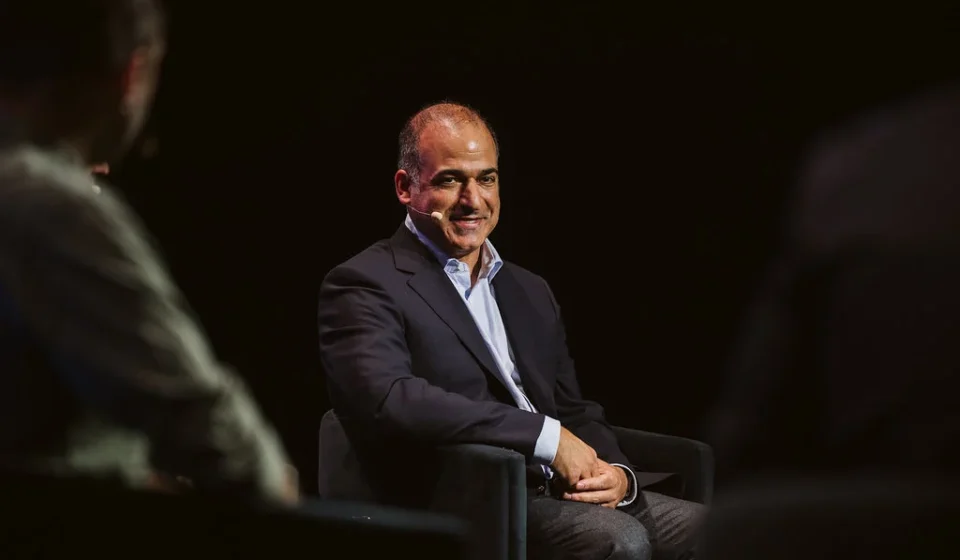
The industry’s collective reticence was on full display during my recent panel. I sat across from Michael Rabbat, a co-founder of AMI Labs and the company’s VP of World Models. When I pressed him on the specifics of AMI’s current projects, the atmosphere in the room tightened.
Rabbat’s response was a masterclass in deflection: "We’ll talk about it when we’re ready to talk about it." In a follow-up exchange via email, he doubled down on the company’s non-committal stance, noting, "We’re still in a research and building phase, so we’re not talking publicly about any product plans or timeline."
This caginess is pervasive. Even World Labs, which boasts "Marble"—arguably the most fully developed product currently visible in the space—keeps its cards close to its chest. While Marble has shown impressive demos ranging from media creation and CGI rendering to the construction of explorable game environments, these feel more like proof-of-concept showcases than full-fledged commercial products. Even the utility-based use cases in robotics feel secondary to the primary goal of demonstrating technical capability.
The "Dark Forest" of AI Competition
The secrecy extends beyond the companies themselves, creating a ripple effect through their supply chains. I spoke with Alex de Vigan, the CEO of Physicl, a company that specializes in providing the massive datasets required to train world models.
De Vigan occupies a unique position in the ecosystem; he knows the data his company provides is being used to build the future of AI, but he is fundamentally in the dark about the ultimate end-product. "I wish they would tell us more," de Vigan told me on the sidelines of the conference. "We could build more useful data if we knew what they were working on."
This opacity is driven by the "Dark Forest" hypothesis—a concept familiar to fans of Cixin Liu’s science fiction. In this analogy, the AI market is a dark forest filled with hunters. If you reveal your position—or your specific product strategy—by making a move, you risk attracting the attention of rivals.
If AMI Labs were to announce, for instance, that they had successfully built a general-purpose humanoid robot or a disruptive Hollywood rendering engine, they would immediately invite a swarm of competitors. They would no longer just be competing against other boutique world-modeling startups; they would be entering the crosshairs of the "neolabs" and the established giants like OpenAI and Anthropic.
The current funding environment makes this competition a particularly dangerous prospect. Because capital is currently easy to come by, your competitors have the resources to pivot quickly. If you reveal your path to market, you aren’t just letting the world know what you’re doing—you’re providing a blueprint for well-funded rivals to replicate, iterate upon, and potentially outperform you.
The Versatility Problem
The mystery is compounded by the sheer breadth of the technology. A world model is, by definition, a versatile tool.
Consider the disparate paths AMI Labs has explored:
- Manufacturing and Robotics: Utilizing spatial awareness to streamline factory floors.
- Biomedicine: Using simulations to model molecular interactions.
- AI Software for Doctors: The Nabia partnership, which aims to provide diagnostic and operational support in clinical settings.
It is highly unlikely that any single startup can successfully execute on all of these fronts simultaneously. However, because they are not yet pressured to pick a "winner," they are keeping all doors open. There is a strategic advantage to this lack of focus. By remaining a "generalist" lab, they avoid being categorized, which keeps the market—and their competitors—guessing.
The Implications: A High-Stakes Game
What are the implications for the future of the AI industry?
First, we are seeing the emergence of a "stealth-first" culture that contradicts the early days of the generative AI boom, where labs were racing to release products to the public to gain user feedback and mindshare. Today, the intellectual property is considered so valuable—and the competitive landscape so precarious—that the risks of public exposure far outweigh the benefits of early-adopter feedback.
Second, the supply chain for AI is becoming increasingly fragmented. Data suppliers like Physicl are operating in a vacuum, which may lead to inefficiencies. If the builders don’t communicate with the suppliers, the quality of the raw materials—the data—may not reach its full potential, potentially slowing down the very breakthroughs these companies are aiming for.
Finally, the lack of transparency is creating a bubble of speculation. Without clear milestones or commercial metrics, the valuation of these companies is based entirely on the promise of their technology. If the "research and building phase" continues for years without a breakout commercial application, we may see a cooling of investor sentiment.
For now, the silence remains the loudest part of the conversation. The leaders of the world model movement are betting that the first one to truly master the physical world will win the entire board. Until then, they are content to operate in the shadows, waiting for the perfect moment to step into the light. In this high-stakes game of industrial hide-and-seek, the only thing we know for certain is that when they finally do speak, the landscape of the tech industry will be irrevocably changed.