





















































Stabilization at the Helm: Eric Taubel Appointed Permanent Director of Minnesota’s Office of Cannabis Management

ST. PAUL, MN – Governor Tim Walz has officially moved to solidify the leadership of Minnesota’s burgeoning cannabis industry, announcing on Wednesday that Eric Taubel will serve as the permanent Executive Director of the Office of Cannabis Management (OCM). Taubel, who has served as the interim director since January and previously acted as the agency’s general counsel, is being tasked with navigating the state through the final, critical stages of launching a multi-billion-dollar legal market.
The appointment comes at a juncture where the state’s regulatory framework is transitioning from theoretical planning to operational reality. For Governor Walz, the move represents a commitment to stability following a "rocky" initial rollout that saw the agency’s first leadership choice resign amid controversy nearly two years ago.
I. Main Facts: A Pivot Toward Regulatory Maturity
The transition of Eric Taubel from interim to permanent director marks a significant milestone in the implementation of Minnesota’s adult-use cannabis law, which was signed into effect in May 2023. Taubel’s tenure as interim director was characterized by a "heads-down" approach focused on technical compliance, legislative cleanup, and the establishment of a licensing lottery system.
The Mandate for Taubel
Governor Walz’s decision to elevate Taubel is widely viewed as a vote of confidence in the agency’s current trajectory. In a public statement, Walz praised Taubel for his ability to align the office’s operations with the core priorities of the legislation: social equity, consumer safety, and the inclusion of tribal nations.
"I think he’s done a fantastic job," Walz remarked during a recent interview, acknowledging the complexities of standing up a state agency from scratch. "Over the past eight months, [Taubel] has ensured that the priorities that drove cannabis legalization in Minnesota are reflected in Minnesota’s emerging market."
The Regulatory Landscape
Under Taubel’s leadership, the OCM is currently managing a dual-track rollout:
- Social Equity Licensing: A prioritized lottery system designed to give those most impacted by previous prohibition a head start in the market.
- General Licensing: The broader market launch expected to reach full maturity in 2025.
Taubel has set an ambitious goal for the remainder of the year, predicting that the state will grant final license status to between 100 and 150 cannabis retailers by the end of the 2024 calendar year.
II. Chronology: From Legislative Birth to Executive Stability
The path to Taubel’s appointment has been anything but linear. To understand the significance of this leadership choice, one must look at the timeline of Minnesota’s cannabis experiment.
2023: The Legislative Breakthrough and Initial Setback
In May 2023, Minnesota became the 23rd state to legalize recreational marijuana for adults. The law (HF 100) created the Office of Cannabis Management to oversee the industry. However, the agency faced an immediate crisis when the first appointed director, Erin DuPree, resigned just one day after her appointment following reports regarding her previous business practices and the sale of products that exceeded state THC limits.
Following this vacuum, the state relied on temporary leadership while the OCM functioned largely as a skeleton crew of legal and policy experts.
Early 2024: The Taubel Interim Era
Eric Taubel, then serving as General Counsel, stepped into the interim director role in January 2024. His primary task was to "clean up" the original legislation. Working with lawmakers like State Senator Scott Dibble, the OCM successfully pushed for legislative amendments in the 2024 session to streamline the licensing process and clarify the "social equity" definitions.
Summer 2024: The First Green Shoots
By mid-2024, the OCM began issuing the first rounds of approvals. While tribal nations—operating under their own sovereign authority—had already opened dispensaries (such as the Red Lake Nation and White Earth Nation), the OCM focused on vetting the first wave of non-tribal entrepreneurs.
August 2024: Permanent Appointment
On Wednesday, the transition became official. With the infrastructure for the social equity lottery in place and the first batch of "pre-approved" licenses moving toward finalization, Walz opted for continuity over an outside search.
III. Supporting Data: The Mechanics of the Market
The scale of the task facing Taubel is reflected in the sheer volume of interest and the complexity of the licensing tiers. Minnesota’s market is not a "one-size-fits-all" model; it includes various categories designed to prevent corporate monopolies and encourage local craft production.
Licensing Tiers and Expectations
The OCM is responsible for overseeing several distinct license types, including:
- Microbusinesses: Allowing for small-scale cultivation, processing, and on-site retail.
- Mezzobusinesses: A mid-tier license for larger operations.
- Cultivators and Manufacturers: Focusing on the supply chain.
- Retailers: Stand-alone dispensaries.
Taubel’s projection of 100 to 150 retailers by year-end is a critical benchmark for the state’s economic projections. This number includes social equity applicants who have navigated the "vetted lottery" system—a mechanism designed to ensure that applicants have the financial and operational capacity to actually open their doors, rather than simply holding a license to sell to the highest bidder.
The Tribal Lead
While the OCM manages state-licensed entities, Minnesota’s 11 tribal nations have been the pioneers. The White Earth Nation recently reached an agreement with the state to open dispensaries off-reservation in St. Cloud and Moorhead, leveraging a unique compacting process. This highlights a "two-track" system where tribal sovereignty and state regulation must coexist.
IV. Official Responses: Shifting the Burden of Proof
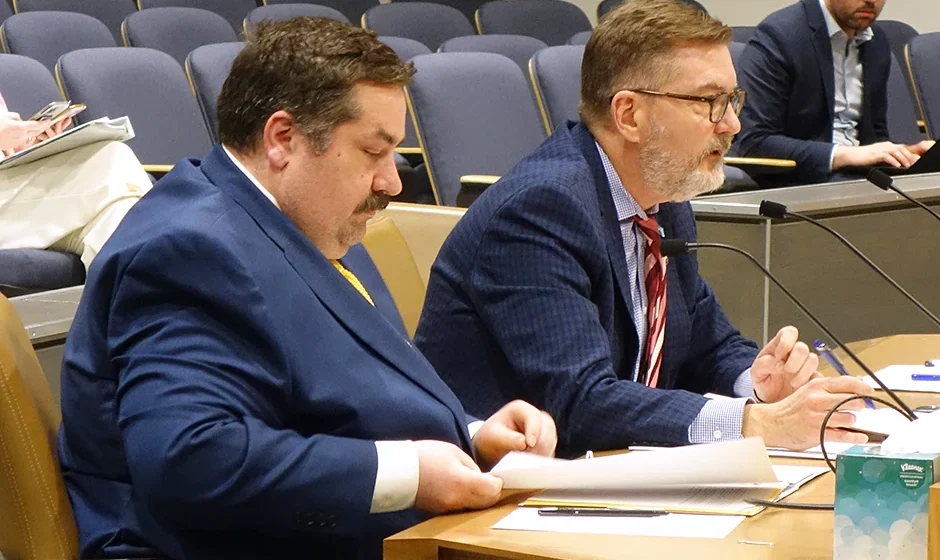
A notable shift in the OCM’s rhetoric has occurred under Taubel’s leadership. During recent testimony and interviews, Taubel has moved away from the defensive stance often taken by new regulatory agencies and toward a position of strict enforcement and accountability.
The "Onus" on Applicants
In a blunt assessment of the current progress, Taubel emphasized that the state’s regulatory framework is now fully functional, and delays in business openings often lie with the entrepreneurs themselves.
"We’ve transitioned to the point where the onus is on the applicant and a prospective business owner," Taubel stated. He argued that if an applicant cannot navigate the current regulatory hurdles, it is a reflection of their business readiness rather than a failure of state bureaucracy. This "tough love" approach signals that the OCM will not lower the bar for entry to speed up the market launch.
Gubernatorial Support
Governor Walz has echoed this sentiment, suggesting that the "rocky" start is firmly in the rearview mirror. By making Taubel the permanent director, Walz is signaling to the legislature and the public that the "startup" phase of the OCM is over and the "operational" phase has begun.
V. Implications: Local Control and the "Albert Lea" Precedent
Despite the state’s progress, Taubel’s permanent tenure begins as a significant legal and jurisdictional conflict emerges: the tension between state authorization and local government "veto" power.
The Albert Lea Conflict
In July 2024, the OCM granted final approval to five businesses to begin operations. Among them was "The Smoking Tree" in Albert Lea. However, in a move that shocked state regulators, the Albert Lea City Council denied the business a local registration license.
This creates a high-stakes legal dilemma. Minnesota’s cannabis law was written to limit the ability of cities to "opt-out" of the cannabis market entirely. While cities can impose "reasonable" time, place, and manner restrictions, they are generally prohibited from banning dispensaries if they meet state requirements.
The implications are two-fold:
- Legal Challenges: The Albert Lea decision is likely to trigger litigation that will define the limits of local control in Minnesota. Taubel’s office will be at the center of this storm, defending the primacy of state licenses.
- Municipal Competition: While some cities resist, others are embracing the market. Thirteen Minnesota cities are currently exploring "municipal cannabis stores"—a model similar to municipal liquor stores where the city itself owns and operates the dispensary.
Social Equity vs. Market Speed
Taubel also faces the ongoing challenge of balancing social equity goals with the pressure to generate tax revenue. Critics argue that the prioritization of social equity applicants has slowed the overall rollout compared to states like Missouri, which launched much faster. Taubel’s permanent appointment suggests the Walz administration remains committed to the slower, equity-focused path, even if it means a more gradual ramp-up of the 10% retail cannabis tax.
Conclusion: A Legacy of Compliance
By choosing a former General Counsel to lead the OCM, Governor Walz has prioritized legal defensibility and regulatory precision over political flash. Eric Taubel’s permanent appointment marks the end of the OCM’s "identity crisis." The question moving forward is no longer who will lead the agency, but whether the agency can successfully defend its authority against local resistance while meeting Taubel’s own ambitious year-end licensing targets.
As Minnesota prepares for a "Green Christmas" with the first wave of state-licensed shops expected to open in late 2024, the "onus," as Taubel says, is now on the industry to prove it is ready for the responsibility.