










































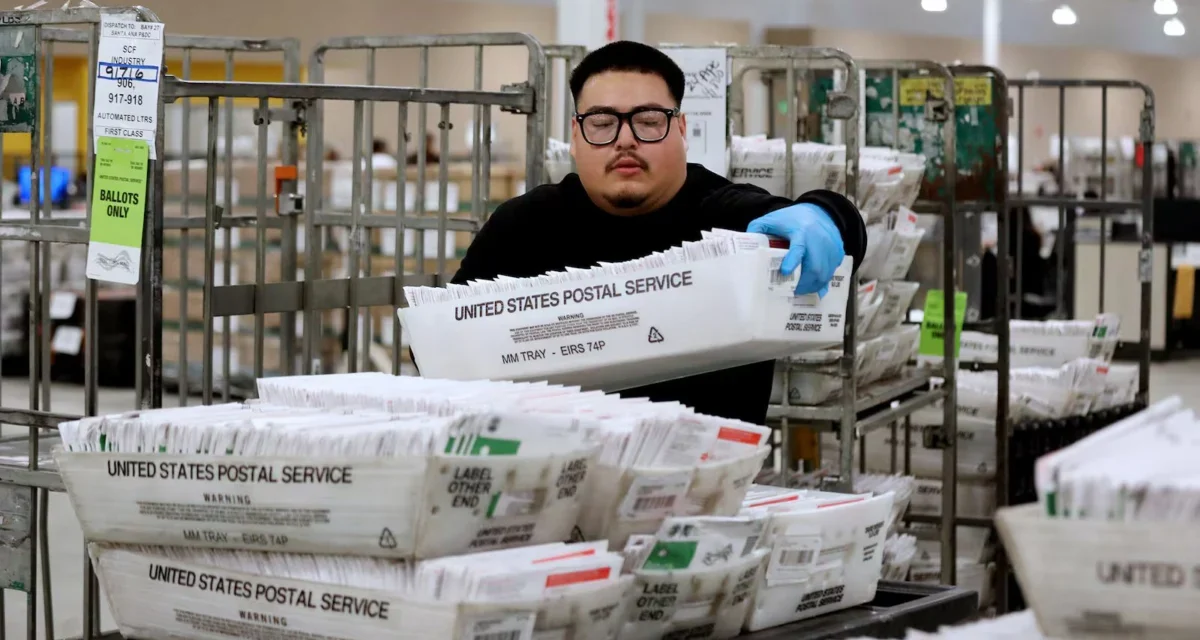





WASHINGTON D.C. – September 21, 2026 – In a significant ruling that brought a collective sigh of relief to election administrators nationwide, the U.S. Supreme Court on Monday delivered a decisive blow to the Trump administration’s attempts to impose sweeping new restrictions on mail-in ballots for the upcoming November elections. The high court’s decision effectively clears the path for millions of Americans to cast their votes by mail, preserving established voting procedures that have been a cornerstone of electoral participation in many states for decades.
The ruling, which ended months of intense legal and political wrangling, was met with widespread approval from state and local election officials, who had vociferously warned of the logistical chaos and voter disenfranchisement that the proposed changes would have unleashed just weeks before Election Day. While the availability and processes for mail-in voting continue to vary significantly from state to state, the Supreme Court’s intervention ensures that the fundamental mechanisms voters are accustomed to will remain intact for the 2026 midterm cycle.
"It’s a relief and it’s palpable," stated Marybeth Kuznik, the experienced elections director for Pennsylvania’s Fayette County, articulating the sentiment shared by countless colleagues across the nation. "I honestly don’t know how we could have complied with (the Postal Service’s proposed restrictions) at this point in the election cycle." Her words underscore the profound administrative challenges that the eleventh-hour regulatory overhaul would have presented to already strained local election offices.
Despite this judicial affirmation, the preceding months of legal battles and persistent rhetoric from the Trump administration questioning the integrity of mail-in voting have cast a long shadow, fostering widespread public apprehension. Election officials are now confronted with the urgent task of not only administering a complex election but also actively working to reassure a wary electorate that the system is secure and reliable. The lingering effects of the protracted dispute have undoubtedly sown seeds of doubt among voters, making clear communication and transparency paramount in the crucial weeks ahead.
The Heart of the Matter: A Contentious Battle Over Ballot Access
The Supreme Court’s ruling stems from a contentious period marked by the Trump administration’s aggressive push to tighten regulations around mail-in voting, primarily through proposed changes to U.S. Postal Service (USPS) operations and ballot handling procedures. These efforts, initiated under the guise of enhancing election security and combating potential fraud, were widely perceived by critics as an attempt to suppress voter turnout, particularly in states with high rates of mail-in voting.
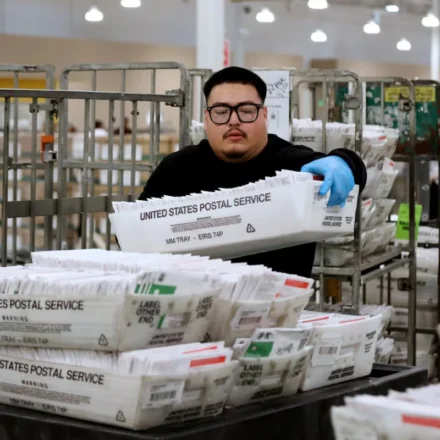
The administration had sought to implement new rules that would have drastically altered how mail ballots are processed and delivered, including stricter deadlines and revised handling protocols. Election officials, however, argued that these changes were impractical, financially burdensome, and virtually impossible to implement effectively with the election rapidly approaching. The consensus among administrators, regardless of political affiliation, was that such a dramatic shift so close to Election Day would inevitably lead to widespread confusion, delayed ballot processing, and potentially the disenfranchisement of eligible voters.
The legal challenge against these proposed rules highlighted a fundamental tension between federal executive authority and state-level election administration. While the federal government plays a role in regulating the USPS, the responsibility for conducting elections largely rests with individual states and local jurisdictions. The administration’s directives were seen by many as an overreach, threatening to disrupt the intricate logistical frameworks that states had carefully developed over years to facilitate secure and accessible voting.
A Chronology of Uncertainty and Legal Skirmishes
The journey to the Supreme Court’s definitive ruling was a winding path fraught with uncertainty, beginning months prior to the final decision.
Early Summer 2026: Concerns about mail-in voting began to escalate as the Trump administration publicly voiced skepticism about its security. President Trump frequently took to social media and public addresses to denounce mail-in voting as susceptible to fraud, despite evidence to the contrary and his own history of voting by mail. This rhetoric laid the groundwork for the subsequent policy proposals.
Late Summer 2026: The administration, through the U.S. Postal Service, began to outline potential new rules regarding the handling and delivery of election mail. These proposals included recommendations for states to send ballots earlier, and for voters to return them significantly in advance of Election Day, implicitly suggesting that current timelines were inadequate. While framed as operational improvements, these recommendations were viewed by many election administrators as thinly veiled mandates that would require massive, immediate overhauls to state election laws and logistical operations.
September 2026: As the November election loomed less than two months away, the proposed changes solidified into concrete directives. The urgency of the situation prompted a broad coalition of stakeholders to challenge the administration’s moves. Legal challenges were mounted by various groups, including civil rights organizations, Democratic state attorneys general, and notably, a bipartisan consortium of election officials.
More than 80 election officials, including Fayette County’s Marybeth Kuznik, signed onto an influential amicus brief presented to the Supreme Court. This brief meticulously detailed the insurmountable logistical hurdles that the new requirements would pose. They argued that there simply wasn’t enough time to re-educate voters, reconfigure ballot printing and mailing schedules, or adapt processing centers to entirely new protocols. Their collective voice emphasized the practical realities on the ground, cutting through the political rhetoric to highlight the administrative impossibility of the proposed changes.
Concurrently, several Republican secretaries of state, including officials from key states like Kentucky, Georgia, and Kansas, took the extraordinary step of urging the Supreme Court to freeze the administration’s plans. Their intervention underscored the non-partisan nature of election administration challenges; regardless of political affiliation, the practical implications of last-minute rule changes were universally recognized as disastrous for electoral integrity and efficiency. These Republican officials, often tasked with upholding the integrity of elections in their states, prioritized stable and predictable election processes over partisan maneuvering, highlighting the profound chaos the proposed rules would create.
Monday, September 15, 2026: The Supreme Court issued its ruling, effectively blocking the Trump administration’s new rules. While the full reasoning of the court was detailed in various opinions, Justice Brett Kavanaugh’s concurring opinion proved particularly illuminating and perhaps decisive. Kavanaugh, while acknowledging that the rules might withstand legal scrutiny under different circumstances, explicitly stated that applying them to the 2026 elections would be "arbitrary and capricious." His rationale rested squarely on the practical impossibility for "state and local election officials [to] have sufficient time to reasonably implement the rule," validating the concerns raised by election administrators across the country. This emphasis on administrative feasibility rather than the legal merits of the rules themselves offered a critical lifeline to states grappling with the impending election.
Supporting Data: A Nation Grappling with Declining Trust
The protracted battle over mail-in voting unfolded against a backdrop of alarming trends in public confidence regarding the nation’s electoral system. This decline in trust, exacerbated by continuous challenges to election processes, presents a significant hurdle for election officials working to assure voters.
A new poll released concurrently with the Supreme Court ruling, conducted by the University of California, San Diego, revealed a precipitous drop in public confidence. The survey found that a mere 55% of respondents trusted that their vote would be counted fairly in the upcoming election. This represents a stark decrease from just two years prior, in 2024, when 71% of Americans expressed similar confidence. Even more concerning, the poll indicated that only 49% of Americans expected the upcoming 2026 election to be free and fair.
These findings are consistent with other recent surveys. A Pew Research Center survey conducted earlier in August 2026 reported that 55% of respondents believed the upcoming election would be free and fair – an historic low for a question Pew has asked over the past six years. This persistent erosion of trust is not merely an abstract concern; it has tangible implications for voter participation, the legitimacy of election outcomes, and the overall health of democratic institutions.
The constant barrage of rhetoric questioning the validity of mail-in ballots, coupled with the dramatic legal challenges, appears to have contributed significantly to this decline in confidence. Voters, exposed to conflicting narratives and last-minute legal uncertainties, understandably become wary. This makes the job of election administrators—who are fundamentally committed to non-partisan, accurate, and accessible elections—all the more challenging. They must now actively combat misinformation and rebuild trust, even as the political discourse continues to be charged.
Official Responses: Reassurance and Resilience in the Face of Adversity
With the Supreme Court’s ruling providing clarity, election officials are now fully focused on the critical task of communicating stability and security to voters. Their primary message is simple: the established mail-in voting processes are safe, reliable, and remain unchanged for the 2026 election.
Tammy Patrick, chief program officer at the Election Center – a national nonprofit association dedicated to election administrators – emphasized the ongoing need for clear communication. Patrick, who herself filed an expert declaration in the Supreme Court cases challenging the Postal Service rules, highlighted the existing voter confusion. "It has already caused all sorts of voter confusion, and even though the rule is not in place for this election, that’s not to say that there won’t be some voters that think that it is," she noted. "So it’s going to be incumbent on all of us to make sure that we just keep up the mantra that nothing has changed as a result of the rule." This proactive messaging is crucial to counteract the lingering effects of the administration’s rhetoric and the recent legal uncertainty.
Election officials are deploying various strategies to instill confidence. Many are redoubling efforts in voter education campaigns, utilizing local media, social media, and community outreach to explain the unchanged procedures and underscore the security measures in place. They are also leveraging the trust they have built within their communities to serve as credible sources of information, directly countering the often-misleading narratives propagated at the national level.
In Arizona’s Pinal County, Recorder Dana Lewis, a Republican, epitomizes the dedication of local administrators. Lewis, who humorously described wearing six-inch heels to pivot on a dime in this topsy-turvy election season, has invested heavily in robust security measures for her county’s drop box system. These measures include 24/7 video monitoring and GPS-locked ballot boxes, designed to offer voters undeniable assurance about the safety and integrity of their ballots. Her efforts are particularly relevant in Arizona, where approximately three-quarters of voters cast mail ballots in 2024, according to federal data, demonstrating the state’s reliance on this method. "Trust the system," Lewis urged, encapsulating the plea from election officials nationwide.
The bipartisan nature of the opposition to the proposed rules was a significant factor in the Supreme Court’s decision and continues to be a strength in the reassurance efforts. When Republican secretaries of state and local officials speak out against changes that would harm election administration, it lends credibility to the message that these are issues of practical governance, not partisan advantage. This unity among election professionals is vital for rebuilding a fractured public trust.
Implications: Navigating a Shifting Electoral Landscape
The Supreme Court’s decision, while a victory for election administrators and voter access, does not signal an end to the broader debate surrounding election integrity and the future of voting in America. Its implications extend far beyond the immediate 2026 election cycle.
Long-Term Battle for Voter Trust: The most significant implication is the ongoing challenge of restoring and maintaining public confidence in the electoral process. The damage caused by sustained rhetoric questioning election legitimacy is deep-seated and will require consistent, transparent efforts from all stakeholders to mend. Future elections are likely to be scrutinized even more intensely, demanding higher levels of transparency and accountability from election officials.
Future of Federal vs. State Control: The ruling subtly reinforced the principle of state autonomy in election administration. While federal laws and constitutional principles provide a framework, the day-to-day mechanics of voting remain largely within the purview of state and local governments. This could set a precedent for future attempts by federal entities to impose last-minute changes on state-run election systems. The court’s emphasis on the practical capacity of local officials to implement changes serves as a powerful reminder of the limits of federal overreach in this domain.
The Role of the Postal Service: The crisis also highlighted the critical, yet often overlooked, role of the U.S. Postal Service in democratic processes. Any future efforts to restrict mail-in voting are likely to involve the USPS, making its operational stability and independence a recurring point of concern. Adequate funding and protection from political interference for the Postal Service are essential for secure and efficient elections, especially as mail-in voting continues to be a popular and necessary option for many.
Ongoing Debates on Election Integrity vs. Voter Access: The underlying tensions between perceived election integrity concerns and ensuring broad voter access will persist. While mail-in voting has been proven secure by numerous studies and real-world applications, its portrayal as inherently insecure by some political factions means that debates over its use, security protocols, and expansion will continue in legislative bodies and public discourse. This necessitates robust data, clear explanations of security measures, and a commitment from election officials to transparency.
The Need for Consistent, Predictable Election Rules: The chaotic lead-up to the 2026 election underscores the vital importance of consistent and predictable election rules. Last-minute changes, whether imposed by courts, legislatures, or executive actions, inevitably lead to confusion, administrative burdens, and decreased voter confidence. Moving forward, there will likely be increased calls for states to establish clear, stable, and well-communicated election laws far in advance of election cycles, allowing administrators and voters alike to prepare adequately.
The Supreme Court’s decision is a crucial affirmation of the established processes that allow millions of Americans to participate in their democracy. However, it also serves as a potent reminder of the fragility of public trust and the constant vigilance required to safeguard the integrity and accessibility of the nation’s elections. Election officials, having weathered this storm, now face the ongoing challenge of not just running elections, but also rebuilding faith in the very foundation of American democracy.
This article was originally published by Votebeat, a nonprofit news organization covering local election administration and voting access. Dion Nissenbaum is Votebeat’s senior national reporter and is based in Houston. Contact Dion at [email protected]. Votebeat is a nonprofit news organization covering local election integrity and voting access. Sign up for their newsletters here.