






















































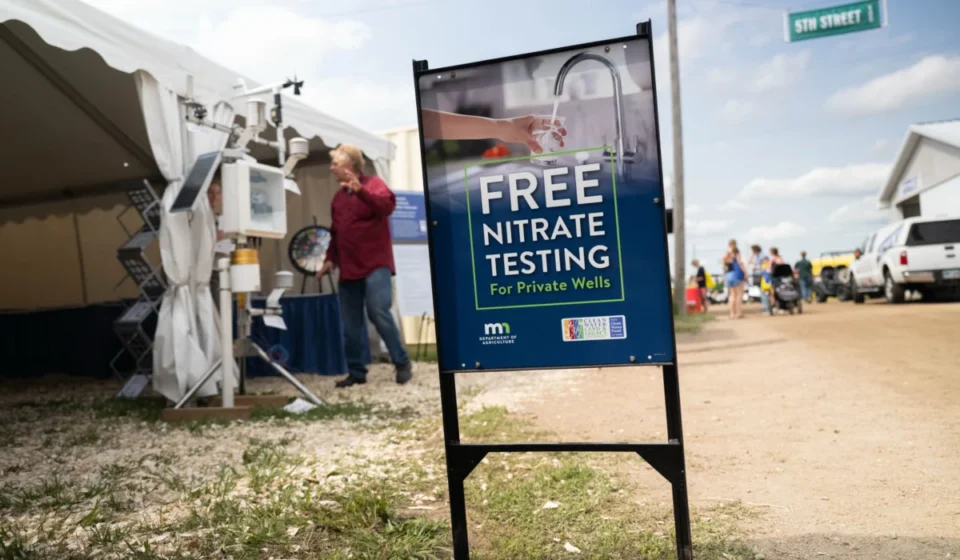

In the heart of Minnesota’s agricultural landscape, amidst the familiar bustle of Farmfest—a celebration defined by tractor displays, political stump speeches, and deep-fried corn dogs—a more somber ritual unfolds at a nondescript booth run by the Minnesota Department of Agriculture. Here, the focus is not on the bounty of the harvest, but on the hidden chemistry of the water drawn from private wells across the state.
The process is deceptively simple. A visitor approaches the booth with a Ziploc bag or a plastic cup filled with water from their home tap. Denton Bruening, an agency employee, takes the sample and feeds it into a spectrophotometer—a clunky, briefcase-sized piece of gray plastic. Within the machine, an ultraviolet ray pierces the sample, measuring light absorption to determine the concentration of nitrates. Thirty seconds later, the screen flashes a number.
On this particular day, the readout is 7.3. For the average person, the number is abstract. For the homeowner, it is a flashing warning light. With the federal safe drinking water limit set at 10 milligrams per liter (mg/L), a reading of 7.3 places the household well in a precarious, high-risk category. It is a quiet, invisible threat that has plagued rural Minnesota for decades, leaving thousands of residents to navigate a complex landscape of health risks, expensive mitigation, and political stalemate.
The Scope of the Problem: Groundwater and Agriculture
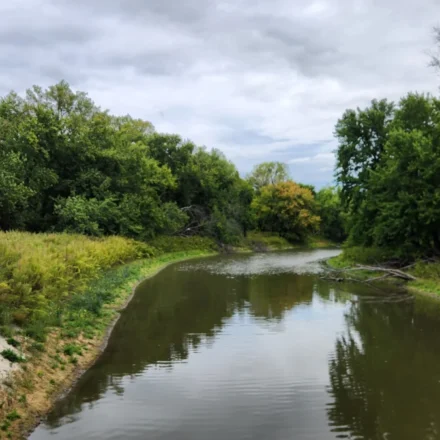
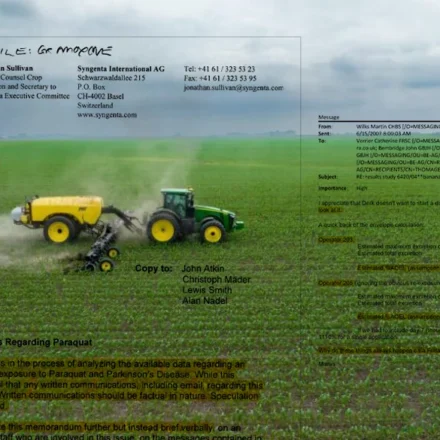
Nitrate contamination is a persistent byproduct of modern agriculture. When nitrogen-based fertilizers and manure are applied to fields, they don’t always stay where they are put. Rain and irrigation wash excess nitrogen through the soil, where it infiltrates the groundwater—the very source that rural wells rely upon.
This issue is particularly acute in regions with porous geography, such as the karst topography of southeastern Minnesota or the shallow aquifers found in the central and southwestern parts of the state. Because private wells are not governed by the federal Safe Drinking Water Act—which mandates rigorous testing and filtration for public municipal systems—the responsibility for monitoring water quality falls almost entirely on the shoulders of the individual homeowner.
For the estimated 93,000 Minnesotans relying on private wells, the lack of a regulatory safety net is a significant burden. When these residents discover their water is tainted, they are largely left to fend for themselves, facing costs that can range from a few hundred dollars to tens of thousands depending on the severity of the contamination and the complexity of the solution.
Chronology of a Public Health Challenge
The state’s involvement in nitrate testing is not new. Recognizing the severity of the risk, the Minnesota Department of Agriculture (MDA) initiated its free testing program for rural well owners in the 1990s. Over the last thirty years, the program has evolved from a niche service to a vital public health initiative supported by the Clean Water, Land and Legacy Amendment.
However, the trajectory of the issue has remained largely stagnant. While the state has invested in education and voluntary management plans, the prevalence of nitrate in groundwater has remained a stubborn feature of the landscape.
- The 1990s: The MDA establishes the first free nitrate testing clinics, responding to growing concerns about nitrogen runoff in rural communities.
- The 2000s: Legislative debates begin regarding the environmental impact of industrial farming, though focus remains on voluntary adoption of best practices rather than mandates.
- The 2010s: Increased public awareness of the health risks associated with nitrates—including studies linking long-term exposure to cancer and reproductive health issues—puts pressure on regulators to tighten standards.
- 2026 (Present): The issue remains a fixture at events like Farmfest, where the contrast between the state’s multi-billion dollar agricultural industry and the personal cost of water contamination is on full display.
Supporting Data: The Hidden Costs
The health implications of nitrate consumption go far beyond the federal "safe" limit of 10 mg/L. Research suggests that levels as low as 3.5 mg/L can correlate with adverse health consequences, including increased risks of certain cancers and complications during pregnancy.
Despite this, the financial barrier to safety is immense. A common fix is the installation of a reverse osmosis system, which can filter out most contaminants. However, the price point for these systems—ranging from $500 to $5,000—is prohibitive for many low-income rural households. While some counties, particularly in the southeast, have managed to secure funds to provide free filtration systems to affected well owners, these programs are not universal. The alternative—drilling a new, deeper well—can cost upwards of $20,000, a sum that is out of reach for many families living on fixed incomes.

At the testing booths, the data is sobering. According to Bruening, approximately 6% of the samples processed at these clinics exceed the 10 mg/L limit. This figure, while seemingly small, represents thousands of individuals unknowingly drinking water that could be damaging their health.
Official Responses and the Political Divide
The political reality of addressing nitrate contamination is arguably more complex than the science. Minnesota’s agriculture industry is a juggernaut, contributing $9.3 billion in annual exports and holding immense political influence.
Environmental advocacy groups have long called for a reduction of the state’s maximum contaminant level from 10 mg/L to 3.5 mg/L to reflect current health research. Yet, such a move faces fierce opposition. "That would just be a huge heavy lift," says Tony Runkle, lead geologist for the University of Minnesota’s geological survey. "There’d be a ton of opposition from ag."
The Department of Agriculture finds itself in the middle of this tension. On one hand, they provide the data and the tools to help families test their water. On the other, they lack the legislative mandate to regulate the polluters—the farms themselves. Instead, the agency relies on "nitrogen and fertilizer management plans." These plans encourage farmers to adopt practices like cover cropping, which traps excess nitrogen in the soil during the off-season.
However, adoption remains voluntary. Without a financial incentive or a legal requirement, many farmers are reluctant to absorb the costs of shifting their operations, even when those same operations may be impacting their own household water supply.
"If we get a farmer that comes into a water clinic, we talk about some of those tactics because a lot of times that well might be affected by his own practices," Bruening notes. It is a delicate conversation—one that balances personal responsibility with the systemic realities of the farming industry.
Implications: A Future of Bottled Water?
The implications of the current status quo are profound. When asked about the lack of long-term solutions, Bruening reflects on the resignation of many residents: "Some people just drink bottled water. That’s kind of become a preference for a lot of people."
This normalization of bottled water as a substitute for a clean, accessible public utility is perhaps the most striking consequence of the nitrate crisis. It shifts the burden of safety from the state and the industry to the individual consumer, effectively privatizing the cost of public health failure.
As Minnesota looks toward the future, the challenge will be whether it can move beyond the "testing and counseling" model toward a more robust regulatory framework. The Department of Agriculture continues to urge well owners to test their water annually, and through programs that allow Soil and Water Conservation Districts to borrow equipment, they are working to expand access to information.
But for many, the information is only the beginning of a difficult journey. As the spectrophotometer flashes another number and the cycle of testing continues, the fundamental question remains: Who is responsible for the purity of the water that flows from the earth, and what price are we willing to pay to protect it? For now, the answer remains tucked away in the Ziploc bags of Farmfest attendees, a silent, yellow-tinted reminder of the gaps between economic prosperity and public well-being.