





















































By [Your Name/Journalist]
MINNEAPOLIS — The landscape of professional football, a multi-billion-dollar juggernaut defined by player movement, competitive parity, and legal oversight, stands as a testament to the legacy of a man who never stepped onto the gridiron. David Doty, the U.S. District Judge whose courtroom became the de facto headquarters for NFL labor relations for nearly four decades, passed away on Saturday at the age of 96.
His death, confirmed by officials in the District of Minnesota just three days before his 97th birthday, marks the end of an era. For the NFL, Doty was not merely a jurist; he was the primary architect of the league’s modern era, a man whose gavel dictated the transition from the restrictive, owner-controlled landscape of the 1980s to the player-empowered, salary-capped professional league that dominates American sports today.
A Life of Service and Jurisprudence
Born into a generation defined by the crucible of global conflict, David Doty’s trajectory was marked by consistent, quiet service. Before his ascent to the federal bench, he served six years in the United States Marine Corps, an experience his colleagues noted instilled a discipline and sense of duty that characterized his later judicial life.
Following his military service, Doty pursued a legal education at the University of Minnesota, graduating in 1961. He spent the next 26 years in private practice, honing a reputation for intellectual rigor and a down-to-earth demeanor that would eventually catch the eye of the Reagan administration. In 1987, he was appointed to the U.S. District Court for the District of Minnesota. He would go on to serve with distinction until his death, taking senior status in 1998 but refusing to retire, continuing to preside over cases until just months before his passing.
The 1992 Watershed: Dismantling "Plan B"
To understand the NFL today, one must understand the legal climate of the late 1980s. Before Doty, the league operated under the restrictive “Plan B” free agency system, a mechanism that effectively allowed teams to protect 37 players from the open market, severely limiting player leverage and career mobility.
When the NFL Players Association (NFLPA) sued the league following a bruising 1987 strike, the case landed on Doty’s desk. It was a high-stakes, high-tension environment. Doty, however, was noted for a temperament that could bridge the gap between volatile labor interests and the rigid requirements of the law.
In a pivotal 1992 ruling, Doty oversaw a trial that lasted over three months. When a jury of eight women delivered their verdict, they struck down the league’s restrictive systems. Doty’s subsequent ruling in favor of the players—granting them the right to unrestricted free agency—was the domino that forced the NFL to the negotiating table.
This legal victory paved the way for the historic 1993 class-action lawsuit led by Hall of Famer Reggie White. That suit didn’t just end a dispute; it created the framework for the Collective Bargaining Agreement (CBA) that balanced the players’ desire for mobility with the owners’ need for a salary cap. It was, arguably, the most significant administrative transformation in the history of the sport.
A Constant Presence: Arbitrating the Modern Era
While the 1992 ruling was his most famous, Doty’s jurisdiction over NFL matters spanned decades. He became the "go-to" judge for the league’s most contentious disputes, acting as a permanent referee for issues that the league’s internal arbitration could not resolve.
His rulings were characterized by a pragmatic adherence to the law, often frustrating both sides at different times.
- The Vick Ruling (2008): In a high-profile case involving Michael Vick, who was incarcerated at the time, Doty ruled that the Atlanta Falcons could not recoup over $16 million in bonus money. It was a nuanced interpretation of contractual law that asserted that a player’s personal failings, while reprehensible, did not automatically void the financial obligations of a franchise under the existing CBA.
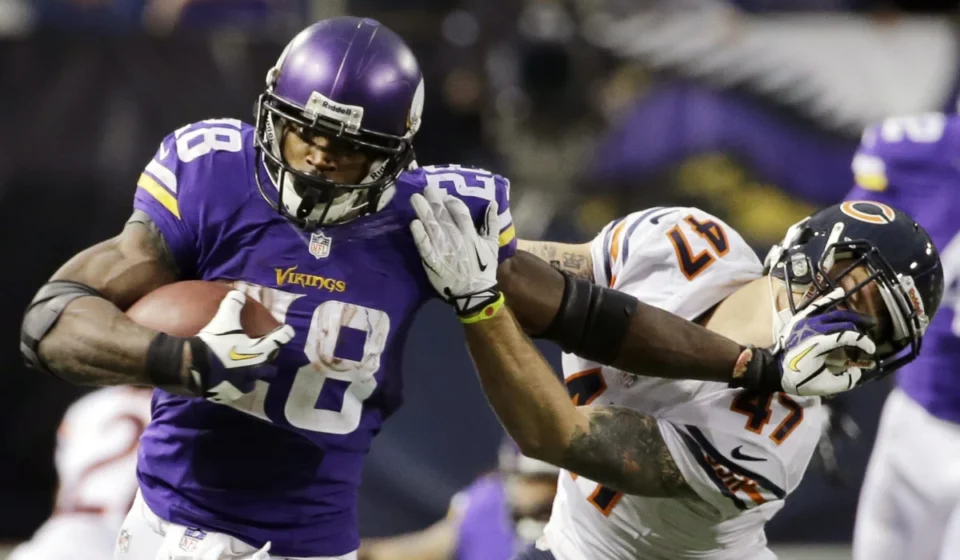
- The Peterson Suspension (2015): Perhaps one of his final major interventions in league affairs, Doty sided with the NFLPA in the appeal of Adrian Peterson’s suspension. Following the running back’s child abuse case, the league attempted to impose disciplinary measures that the union argued were outside the scope of their agreement. Doty’s decision to vacate the suspension underscored his belief that even in the high-stakes world of professional sports, the league office was not a law unto itself and remained bound by the terms of the labor contract.
Legacy of Character: "A Genuinely Humble Man"
Beyond the headline-grabbing sports cases, those who worked with Doty remember a man of profound personal decency. Chief U.S. District Judge Patrick Schiltz, in a moving tribute, highlighted the dual nature of Doty’s life: the titan of law and the man of the people.
"Judge Doty devoted his entire professional life to serving others," Schiltz noted. "He treated everyone—from the guy who shined his shoes to Justices of the U.S. Supreme Court—the same way: with kindness and compassion and a sincere interest in their lives."
This humility was his hallmark. In a legal career spanning nearly four decades, he presided over thousands of civil and criminal cases. While the public remembers him for the NFL, his colleagues remember him for his sense of humor, his trademark smile, and a judicial demeanor that was firm but fundamentally rooted in a desire to see justice done without ego.
Implications for the NFL’s Future
The league issued a statement following the news of his death, acknowledging that Doty "presided over NFL-related litigation for many years during his distinguished career." The silence from the league’s headquarters speaks volumes; they have lost a stabilizing force.
For decades, the NFL relied on the predictability and fairness of Judge Doty’s courtroom to settle the most bitter of labor disputes. His presence acted as a safety valve. When the league and the union reached an impasse, they knew the case would eventually go to Minnesota, where a judge who understood the evolution of the game would apply the law with a steady hand.
As the NFL continues to evolve in the 21st century—grappling with new technologies, global expansion, and changing societal expectations regarding player conduct—the framework left behind by David Doty remains the bedrock of the league’s competitive parity. His rulings created a "salary cap" system that, while often debated, has prevented the type of fiscal collapse seen in other professional leagues.
Conclusion
David Doty’s passing is a significant loss to the federal judiciary and the world of sports. He was a man who lived through the transition of the NFL from a weekend pastime to a cultural and economic juggernaut, and he played a role in ensuring that transition was governed by the rule of law rather than the whims of power.
He leaves behind a legacy of fairness, a blueprint for labor-management relations that is now studied by legal scholars, and a standard of character that remains an inspiration to those in the legal profession. As the NFL moves into a future without the steady hand of the Minneapolis judge who held it accountable for so long, his influence will continue to be felt in every contract signed, every salary cap managed, and every free agent moved.
Judge David Doty, a Marine, a lawyer, and a jurist of the highest order, has left the courtroom for the final time. The game, and the law, will be different without him.