
















































As the global climate crisis intensifies, a growing number of high school students are moving beyond passive anxiety to take charge of their local environments. Across the United States, an innovative educational initiative known as the "Seal of Climate Literacy" is gaining traction, providing a formal mechanism for students to prove their expertise in climate science while engaging in hands-on, community-based action.
Spearheaded by grassroots organizations and adopted by forward-thinking state legislatures, the seal is transforming the high school experience from a purely theoretical endeavor into a platform for real-world environmental problem-solving. By bridging the gap between classroom instruction and community service, the initiative aims to prepare students for the rapidly expanding green economy and provide them with a sense of agency in an era of environmental uncertainty.
The Genesis of an Idea: From Denver to the Nation
The movement began in Colorado, where the nonprofit Lyra Colorado identified a clear desire among rural students and educators to explore climate change as a tangible, daily reality rather than a abstract concept buried in a textbook.
The program requires students to complete at least two advanced courses that cover Earth’s climate systems—typically one in a scientific field like biology or environmental science, and another in a discipline such as civics, humanities, or the arts. Beyond the classroom, students must complete a school-approved "capstone" project that addresses a local environmental challenge.
The initiative has seen rapid growth. Since its approval by Colorado lawmakers in 2024, 26 of the state’s 179 school districts have implemented the program. The model is now scaling nationally: Maine adopted a climate seal earlier this year, and California recently signed into law a bill establishing the credential for its graduates. Similar youth-led movements are currently lobbying for the policy in Hawaii and Minnesota.
Chronology of a Grassroots Movement
- Early 2020s: Lyra Colorado begins working with rural districts, realizing that traditional curricula fail to engage students on climate issues.
- 2024: Colorado officially approves the Seal of Climate Literacy, marking the first state-level endorsement of its kind.
- 2025: Maine adopts the seal via administrative action, bypassing legislative gridlock.
- Late 2025/Early 2026: California lawmakers pass legislation to codify the seal, while student coalitions in states like Minnesota and Hawaii elevate the issue to the legislative agenda.
- Ongoing: Implementation hurdles, including budget constraints and shifting federal priorities, test the durability of these programs in a polarized political climate.
Case Study: The Ozone Garden
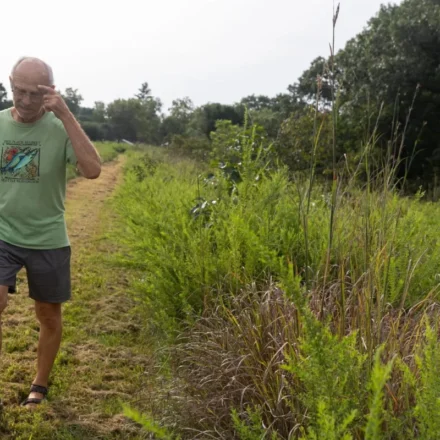
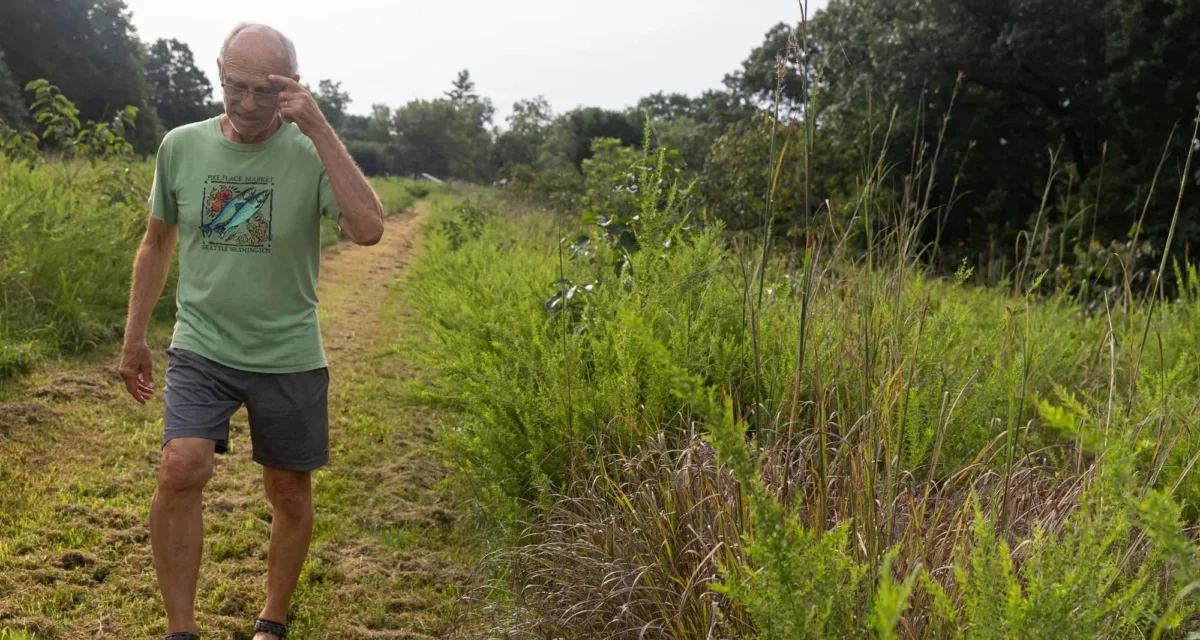
The real-world impact of the seal is best exemplified by Anthony Muñoz, a student at Vista Academy near Denver. Concerned about the proximity of his school to a major airport and the potential health impacts of jet fuel emissions, Muñoz utilized the seal’s capstone requirement to launch an "ozone garden."
Partnering with researchers from the National Center for Atmospheric Research (NCAR) in Boulder, Muñoz filled his garden with native plants capable of detecting ground-level ozone pollution. Under the mentorship of scientists, he learned to interpret the condition of leaves to track air quality and studied the critical role of milkweed in monarch butterfly migration.
"One garden is a very good data source," Muñoz reflects. "Colorado is so beautiful, and I would hate to see it wilt away." Today, as a sophomore studying mechanical engineering at the Colorado School of Mines, Muñoz continues to refine his project, writing code to help current students maintain the data collection process, even as federal funding for the research centers that mentored him faces uncertainty.
Supporting Data and Educational Outcomes
The program’s proponents argue that the seal provides a necessary bridge to the "green workforce." As the economy shifts toward solar grid management, climate-resilient agriculture, and urban heat mitigation, students with documented expertise in these areas will have a competitive advantage.
In Maine, the rollout of the seal exceeded expectations. K-12 climate education specialist Teddy Lyman noted that while he expected roughly a dozen students to apply for the pilot program, 57 seniors participated. The state, which already utilizes a "seal of biliteracy" for language proficiency, found the administrative framework for the climate seal to be a natural extension of its existing educational philosophy.
For educators like Melissa Luetje of Freeport High School in Maine, the seal provides a framework to ground science in local realities. In a region where lobster boats and aquaculture farms are struggling against the fastest-warming waters in the world, her students are researching invasive species and sustainable fisheries. "It’s up to each community to figure out what they value and how they want to roll this out," Luetje says.
Official Responses and Political Hurdles
Despite the enthusiasm from students and educators, the initiative has encountered significant opposition. Critics, particularly those from the conservative think-tank sphere, argue that the seal distracts from core academic subjects.
Lance Izumi, senior director of education studies at the Pacific Research Institute, has been a vocal critic of the program. He argues that the focus on community activism detracts from foundational science instruction. "Diverting focus away from foundational science learning could worsen California’s already abysmal performance levels," Izumi wrote, citing low state-wide science proficiency scores as a reason to prioritize traditional testing over experiential projects.
Furthermore, the initiative faces a challenging fiscal and political environment. Funding for the Colorado rollout was limited to less than $20,000, forcing students and nonprofits to rely on grants or out-of-pocket spending. The federal political climate has also created a "chilling effect" for potential donors. With federal officials questioning the validity of climate science and threatening the tax-exempt status of environmental nonprofits, many institutions are hesitant to commit long-term funding to climate-focused education.
Implications for the Future
The implications of the Seal of Climate Literacy extend far beyond the classroom. For many students, the program acts as a remedy for "climate anxiety." By shifting the focus from global, systemic doom to actionable, local change, the seal empowers youth to contribute to their communities in meaningful ways.
Laura Schifter, a senior fellow with the Aspen Institute’s This is Planet Ed, characterizes the seal as "a really promising policy." She emphasizes that it allows students to engage with a topic that is otherwise rarely covered in depth in K-12 classrooms.
As these students transition into higher education and the workforce, their impact is becoming visible. Alumni of the program, such as Rylan Neumann—who went from a high school climate seal recipient to an environmental economics student at UC Berkeley—are already lobbying state legislatures for broader environmental protections.
Ultimately, the Seal of Climate Literacy represents a fundamental shift in how society views the role of the student. By validating their work through official endorsements, states are acknowledging that the next generation is not merely a group of future voters, but current stakeholders capable of scientific inquiry, policy advocacy, and community leadership. Whether this movement survives the current political volatility will depend on the ability of local districts to secure stable funding and the willingness of state boards to prioritize climate literacy as a foundational skill for the 21st-century citizen.
As Muñoz put it, "Are you going to think beyond yourself and help not only those in need but the environment, or will you sit back and wait for someone else to change the world for you?" For the students currently earning these seals, the answer is clear: they are no longer waiting.