

























Navigating Volatility: Chris Finch on the Timberwolves’ Evolution, Coaching Transitions, and the Quest for Identity

As the Minnesota Timberwolves stand on the precipice of a new NBA season, the atmosphere within the organization is one of calculated transition. Following an 80-minute, wide-ranging interview with Timberwolves Head Coach Chris Finch, a clear portrait emerges: the team is moving away from the "continuity" narrative that defined last year’s frustration and toward a more fluid, adaptive identity.
In this final segment of our exclusive series, we delve into the development of raw talent, the shifting architecture of the coaching staff following the departure of key personnel, and an honest autopsy of the struggles that defined the previous campaign.
The "Joan Beringer" Variable: Managing High-Upside Volatility
At the center of the conversation is 19-year-old center Joan Beringer. Despite his youth, the organization’s front office—led by President of Basketball Operations Tim Connelly—remains intensely bullish on the young big man. However, Finch is quick to temper expectations with a dose of professional realism.
"You have to realize, as with all young players, there is going to be inconsistency," Finch noted. The challenge, according to the head coach, is distinguishing between "self-imposed" errors and the natural growing pains of a raw prospect. Beringer’s current struggle lies in his motor; his intensity is his greatest asset, but it frequently leads to foul trouble and poor positioning.
"He plays so hard, he’s got incredible balance and energy," Finch explained. "He’s got to figure out the balance of retaining that effort while regulating the urge to go after everything all the time."

To mitigate these physical pitfalls, the coaching staff is focusing heavily on core strength. Finch pointed to teammate Naz Reid as a blueprint for this physical transformation. "Core strength is what gives you the ability to play in the air and land on your feet," he said. "It allows you to extend at a 45-degree angle and not end up on the ground on every play."
Finch admits that Beringer’s role as the primary backup center will be a "hinge" for the team’s success. He projects a performance pattern of one good game, one "meh" game, and one subpar game—a ratio the team hopes to tilt toward productivity as the season progresses.
A Structural Overhaul: Replacing Micah Nori
The departure of lead assistant Micah Nori to the head coaching position in Portland has sent ripples through the Timberwolves’ organizational structure. Replacing a "right-hand man" is never a simple task, and Finch is currently in the process of recalibrating the granular duties of his staff.
"Pablo Prigioni moves up to being the lead assistant, but his role is very different than Micah’s," Finch explained. While Prigioni will continue to spearhead the team’s offensive strategy, the specific "special situations" duties—clock management, timeout usage, and foul tracking—are being redistributed.
"On late-game stuff, I’ll take some of it back," Finch admitted. "It’s hard to replace a player straight-up for who they are, and a coaching staff is no different. It creates opportunities for other people who are deserving."

This redesign is emblematic of Finch’s coaching philosophy: he believes in tailoring roles to specific skill sets rather than forcing square pegs into round holes. With six or seven scout coaches on board, the burden of game-planning will be shared, with Kevin Hansen taking a primary role in management, while other assistants like Jeff Newton and Nate Bubes are being challenged to "meet the moment."
Autopsy of a Disappointing Season
Reflecting on last year, Finch did not mince words. He characterized the 2025-26 season as "super-frustrating," noting that the team’s "continuity" narrative—once seen as an asset—ultimately became a liability.
"We underachieved throughout most of the year, and in the playoffs, we finally ended up where we should have," he conceded.
Finch took personal accountability for the tactical shifts that caused friction, specifically the rotation changes involving Mike Conley and Donte DiVincenzo. He acknowledged that these decisions, while intended to optimize the roster, placed unintended burdens on star players like Anthony Edwards and Julius Randle.
"We took Julius’s last 35 games from two seasons ago for granted," Finch reflected. "We didn’t create enough easy stuff for him because we relied on him to try and create for everybody. That’s not fair, and that’s all on me."

The core issue, according to Finch, was a lack of "joy." The team’s inability to maintain focus—which occasionally manifested as "boredom"—prevented them from reaching their potential. As the team moves forward, the focus is on returning to the fundamental hallmarks of the Timberwolves’ identity: ball pressure, quick decision-making, and, crucially, passing.
The Path Forward: Higher Ceilings, Lower Floors
When asked if the team’s ceiling is higher but its floor is lower this year, Finch offered a quiet, affirmative nod. "There might be more volatility," he admitted. "We don’t know how the new players are going to integrate."
The Western Conference continues to harden, making the prospect of repeating as a Conference Finalist a daunting challenge. However, Finch remains energized by the challenge of constant reconstruction.
"I have always been big on, ‘What are the four specific things that will help this team win?’" Finch said. "You might not know at the beginning of the season what those four things are. The DNA of a team is the DNA of a team."
Drawing on his extensive international coaching experience, Finch embraces the volatility of the modern NBA. He views roster turnover not as a disruption, but as a "learned skill." By focusing on what a team can actually control—rather than clinging to the expectation of continuity—Finch hopes to build a squad that is more resilient and more responsive to the unique challenges of the 2026-27 season.

Implications for the Upcoming Campaign
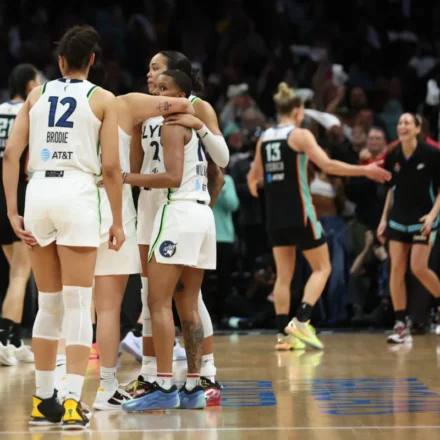
As the preseason begins, the Timberwolves are a team in transition. The integration of new personnel, the elevation of the assistant coaching staff, and the development of high-upside youth like Joan Beringer suggest a team that is intentionally moving away from the static, predictable patterns of the past.
While the volatility of the Western Conference remains a constant, the Timberwolves are betting on their ability to adapt. For Chris Finch, the goal is clear: strip away the baggage of previous years, establish a new identity through purpose-driven basketball, and foster an environment where the team’s ceiling is limited only by their collective willingness to evolve.
The season ahead will be a test of that philosophy. Whether it leads to a 60-win campaign or a more turbulent road, the Timberwolves are committed to the process of discovery—and for Finch, that is exactly where the game becomes interesting.