










































The Long Wait for the Green Light: Minnesota’s Cannabis Market Finally Moves Beyond Tribal Borders

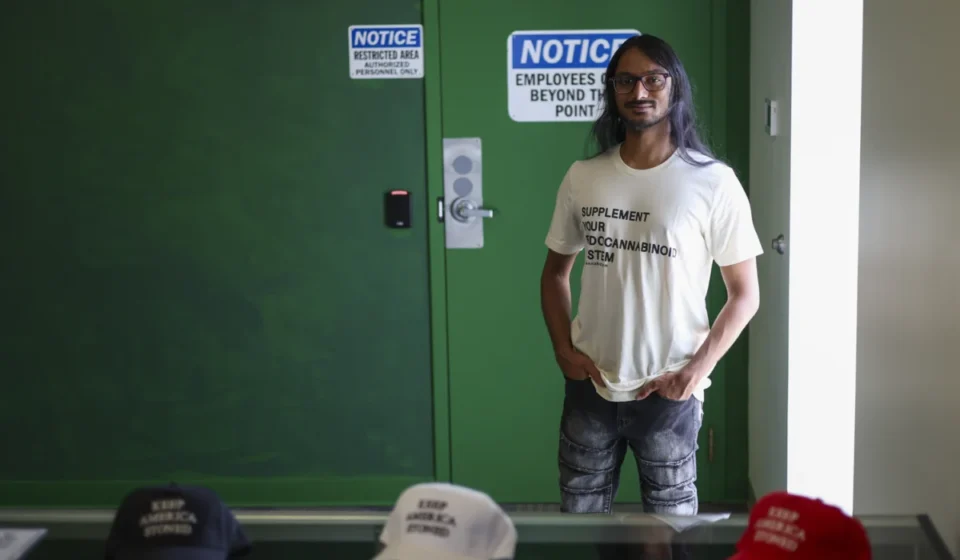
In the heart of Minneapolis, at the intersection of West 25th Street and South Lyndale Avenue, the air is often thick with the scent of tobacco and vapor. The Loon Smoke Shop has long served as a neighborhood anchor, a place where late-night crowds congregate under the neon glow. However, the atmosphere here is about to shift from tobacco to THC. Just a few blocks south, the shop’s new dispensary is entering the final stages of state licensing, and the hunt is on for "passionate" professionals to staff the front lines of Minnesota’s burgeoning legal marijuana industry.
“We’re currently looking for budtenders, lead budtenders, and store managers,” a recent Instagram post from the shop announced, signaling a new chapter for the local retail landscape.
This scene is a microcosm of a much larger, statewide transformation. After years of legislative debate, regulatory hurdles, and leadership turnover, Minnesota is finally moving past the theoretical stage of cannabis legalization. For the first time since Governor Tim Walz signed the landmark legislation in 2023, the state is seeing the emergence of non-tribal retail and cultivation operations.
Main Facts: A Market in Transition
As of July 2025, the Minnesota Office of Cannabis Management (OCM) has officially crossed a major threshold by granting final approval to five non-tribal entities to begin operations. These businesses—spanning cultivation and retail—represent the first wave of a massive influx expected to hit the market by the end of the year.
The OCM’s interim director, Eric Taubel, has indicated that the state’s "clunky" phase is nearing its end. According to Taubel, Minnesota could see upwards of 150 marijuana businesses—not owned by tribal nations—operating by the close of 2025. This marks a significant pivot from the previous two years, where the only legal avenues for recreational marijuana were located on sovereign tribal lands.
The first five non-tribal licenses were distributed as follows:
- Cultivation: Herb-Quest (Pine County) and Concentrate Labs, operating as Roots and Resin Farm (Chisago County).
- Retail: The Smoking Tree (Albert Lea), Loon Lab Extracts and Research (Isanti), and Fairwater Farm (Plainview).
While these five represent the "early movers," they are the vanguard of a much larger group. In June 2024, a state lottery awarded 249 social equity applicants the right to move forward in the licensing process. This was followed by a second lottery in July 2025, which saw 75 winners selected from a pool of 569 applicants, including those without social equity status.
Chronology: From Legislation to Implementation
The road to a legal "pot shop" on every corner has been significantly longer and windier than many proponents initially anticipated.
- May 2023: Governor Tim Walz signs the cannabis legalization bill into law, making Minnesota the 23rd state to legalize recreational use. The law sets an ambitious target for a fully functional retail market by early 2025.
- August 2023: The Red Lake Nation becomes the first to capitalize on tribal sovereignty, opening a dispensary just as possession became legal under state law. Because tribal nations operate under their own jurisdictions, they were able to bypass the state’s nascent regulatory framework.
- Late 2023 – Early 2024: The Office of Cannabis Management suffers from a series of leadership crises. A botched hire for the permanent director position led to a formal review by the Office of the Legislative Auditor. Charlene Briner served as the initial interim director before being succeeded by Eric Taubel in early 2025.
- May 2024: The White Earth Nation signs the first-of-its-kind regulatory compact with the state, allowing them to operate dispensaries outside of reservation land, eventually leading to stores in St. Cloud and Moorhead.
- June 2025: The OCM grants the first final approval for a non-tribal cultivation site (Herb-Quest).
- July 2025: The first retail licenses for non-tribal businesses are finalized, and the second state lottery is completed.
Governor Walz, reflecting on the delays, admitted that "legal weed" has been the most difficult of the 2023 legislative priorities to implement. He attributed the slow rollout to a lack of a universal model, noting that every state preceding Minnesota has faced unique struggles in balancing social equity, safety, and commerce.
Supporting Data: The Regulatory "Checkerboard"
Winning a state lottery is merely the beginning of a grueling bureaucratic marathon. For a business like The Smoking Tree in Albert Lea, the path to opening involves navigating a "checkerboard" of local and state requirements.
The Social Equity Component
Of the hundreds of applicants, the state has prioritized those with "social equity" status. This designation is reserved for:

- Military veterans.
- Individuals with prior low-level marijuana convictions (victims of the "War on Drugs").
- Residents of high-poverty areas or neighborhoods disproportionately impacted by previous drug enforcement policies.
The Municipal Hurdle
While state law prevents cities and counties from banning cannabis businesses outright, local governments maintain significant control over zoning. A store cannot be located within a certain distance of schools or playgrounds, and local councils often require their own public hearings. For example, Jacob Schlichter, founder of The Smoking Tree, had to wait for a July 28 City Council meeting in Albert Lea to finalize his municipal permit, despite having state approval in hand.
Labor and Background Checks
The OCM requires rigorous criminal background checks—not to exclude those with drug possession charges, but to weed out "white-collar criminals" and organized crime. Furthermore, businesses must sign labor peace agreements. These contracts grant employees the right to unionize or organize in exchange for a commitment not to engage in strikes or boycotts that could destabilize the emerging market.
Official Responses: The "Onus" Shift
For much of 2024, prospective business owners blamed the state for the slow rollout. In mid-2025, the narrative from the Office of Cannabis Management shifted.
“We’ve transitioned to the point where the onus is on the applicant and a prospective business owner,” Eric Taubel stated. He argued that the state has cleared the path; now, it is up to entrepreneurs to secure their real estate, finalize their local zoning, and prove their financial viability.
Governor Walz has stood by Taubel’s leadership, despite declining to say if the "interim" tag would be removed from his title. Walz emphasized that Minnesota’s choice to build a market from scratch—rather than simply letting existing medical marijuana giants take over—was a deliberate move to ensure a "larger pool of applicants" and a more diverse marketplace.
However, industry consultants like Leili Fatehi of Blunt Strategies offer a more cautious perspective. Fatehi notes that while the tribal head start was a victory for sovereignty, it has created a unique market dynamic where the first non-tribal retailers will likely be forced to buy their inventory from tribal cultivators, as state-licensed growers are only just beginning to plant their first legal crops.
Implications: Taxes, Pricing, and the "Black Market" Shadow
As the doors begin to open, two major concerns loom over the industry: the "tribal head start" and the total tax burden on consumers.
The Tax Question
In a move that surprised some industry advocates, the Minnesota Legislature recently increased the cannabis excise tax from 10% to 15% during a special budget session. When combined with state and local sales taxes, consumers in many jurisdictions will face a total levy exceeding 20%.
“There is absolutely an enormous cause of concern that it is taxed too high,” said Fatehi. The fear is that if legal marijuana is significantly more expensive than "street" marijuana, the illicit market will continue to thrive, undermining the state’s safety and revenue goals.
Taubel, however, remains optimistic, calling the tax rate "middle of the road" compared to states like Washington (37%) or Connecticut (3%). He expressed skepticism that a 5% increase would have "substantial ripple effects" on consumer behavior.
Market Longevity
The success of the 150 businesses expected by year-end depends on their ability to navigate a market that is currently being defined by tribal nations. The White Earth and Red Lake Nations have already established brand loyalty and supply chains. For small entrepreneurs like those at the Loon Smoke Shop or The Smoking Tree, the challenge will be competing with these established entities while paying a higher effective tax rate and navigating more stringent state oversight.
Conclusion
Minnesota’s cannabis experiment is entering its most volatile and exciting phase. The "bottleneck" at the state level appears to have broken, shifting the focus to local city halls and the entrepreneurs themselves. As budtenders begin their training in Minneapolis and cultivation sites in Pine County begin to bloom, the state is finally moving toward the 2025 vision of a fully realized, regulated, and taxed cannabis economy. Whether the "Minnesota Model" of social equity and tribal partnership succeeds in stifling the illicit market remains to be seen, but for the first time, the "green light" is no longer just a metaphor.