

























































Beyond the Ear: How Legato Is Using AI to Transform Hearing Care Through Smart Eyewear

In the United States, an estimated 50 million adults live with some form of hearing loss. Yet, despite the profound impact this condition has on social connection, cognitive health, and overall quality of life, only about 20% of those diagnosed seek treatment. This staggering "treatment gap" represents a massive unmet need in public health. Legato, a pioneering hearing-tech startup emerging from stealth this Wednesday, believes it has the answer—not in the form of a traditional hearing aid, but in a pair of glasses.
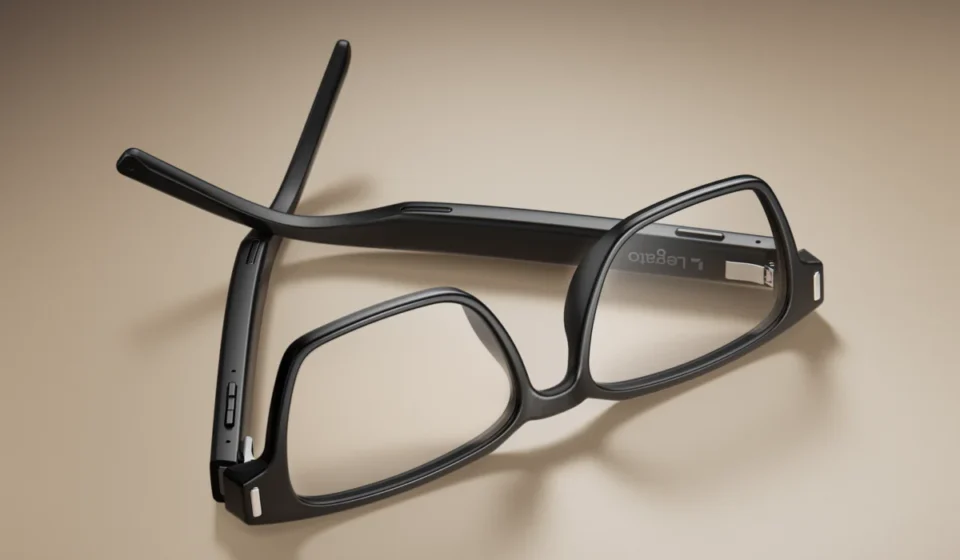
Backed by $12 million in funding, Legato is preparing to launch its flagship "Legato Frames" this fall. By integrating patented, AI-driven hearing-assistance technology into the arms of stylish eyewear, the company aims to destigmatize hearing care and make it as routine and accepted as wearing prescription lenses.
The Genesis of an Industry Disruptor
The story of Legato is rooted in the intersection of two distinct but complementary industries: wearable technology and audiology. The company was founded in late 2024 by industry veterans Mehul Trivedi and Steve Romine, both of whom cut their teeth at Bose, a company long synonymous with high-end audio engineering.
Trivedi’s background is steeped in the evolution of smart wearables. During his tenure at Bose, he led the development of Bose Frames—a groundbreaking product that proved audio could be successfully integrated into standard eyewear. Following his time at Bose, Trivedi moved to EssilorLuxottica, where he spearheaded smart eyewear initiatives and contributed to the development of the Meta Ray-Bans.
Romine, conversely, brings a deep clinical and operational understanding of the hearing care sector. Having previously managed the hearing aids division at Bose and served as the Chief Operating Officer of the hearing care firm Audicus, he possesses the industry insight required to navigate the complexities of medical-grade audio devices.

After spending years at large, established corporations, Trivedi sought a new challenge. During a sabbatical, he began investigating the potential to bridge the gap between smart optics and hearing assistive technology. Upon identifying a proprietary technological path that could unify the two, he reached out to Romine. The two saw a unique window to address the friction points that prevent millions from seeking help: cost, physical comfort, and, most importantly, the persistent social stigma associated with traditional hearing aids.
A New Paradigm: Why Glasses?
The core philosophy driving Legato is simple yet ambitious: to make hearing assistance as ubiquitous as vision correction.
"Our goal is to make hearing as ubiquitous as vision," Trivedi said in an interview. "It’s a no-brainer that you go to an eye exam, you get your glasses, you wear your glasses, and you’re happy. The idea of your vision getting blurry and you just stopping wearing your glasses is not a consideration. We want to do the same for hearing—make it something that people address and then almost forget about."
For many, the hesitation to use hearing aids stems from the "visible medicalization" of the condition. Traditional hearing aids, even the discreet ones, are often perceived as a sign of frailty or aging. By embedding the technology into the frames of glasses—a common, socially accepted accessory—Legato hopes to normalize the experience.
The Technology: AI Over Traditional Acoustics
Traditional hearing aids rely heavily on directional microphones that attempt to isolate sound by focusing on a specific vector. While this is effective in quiet, controlled environments, it often fails in complex, noisy settings like restaurants, transit hubs, or crowded social gatherings. The result is often a "cognitively draining" experience, where the wearer must exert significant mental energy to process speech amidst a cacophony of background noise.

Legato’s approach shifts the burden from the human brain to an AI-powered signal processing engine. The system is designed to distinguish between ambient noise and human speech, dynamically filtering out the former while amplifying the latter.
Key Technological Pillars:
- AI Signal Processing: A proprietary stack that intelligently differentiates between environmental noise and speech.
- Mechanical Architecture: A highly miniaturized acoustic system designed to fit into standard-looking frames without adding significant bulk.
- Dual-Speaker Privacy: Despite an open-ear design, the system uses a dual-speaker configuration that directs audio toward the ear canal while actively canceling sound leakage. The company claims this reduces audible sound by 99% for those standing just inches away, ensuring privacy.
The Economic and Clinical Implications
The $12 million in funding—provided by Neotribe Ventures, Listen, and Village Global—has been strategically allocated toward intensive product development and the infrastructure required to bring such a complex, dual-purpose device to market.
Legato is specifically targeting individuals with "mild to moderate" hearing loss, which constitutes the largest segment of the hearing-impaired population. By operating within this space, the company hopes to capture a demographic that is currently underserved because they feel "not hearing impaired enough" to endure the high costs and stigma of traditional clinical hearing aids.
Accessibility and Cost
One of the most significant barriers to hearing care is the financial burden. Traditional, high-quality hearing aids can cost thousands of dollars and often require multiple, expensive professional fittings. Legato plans to disrupt this model by distributing its frames through select eye-care providers. By utilizing the existing optometry channel, Legato hopes to offer its product at a "fraction" of the cost of traditional hearing aids. Furthermore, because the device is a form of eyewear, it may be eligible for vision insurance coverage, significantly lowering the barrier to entry for the average consumer.
The Broader Impact on Public Health
The motivation behind Legato is not merely technical; it is rooted in long-term health outcomes. The link between untreated hearing loss and various systemic health issues is well-documented. Studies have consistently shown that social isolation resulting from hearing loss is a primary contributor to the onset of depression and an increased risk of dementia.

"It’s really about connection," Trivedi explained. "When you hear better, you connect to the world. We have a product that lives on a person for 16 hours a day, trusted to help them with their hearing and their vision. We see an opportunity to help them in every way we can."
By increasing the rate of adoption for hearing-assistance technology, Legato aims to function as a preventative healthcare tool. If a person can effortlessly address their hearing loss during their routine annual eye exam, the long-term cognitive and social benefits could be profound.
Looking Ahead: The Fall Launch
As the company prepares for its product launch later this year, the industry will be watching closely. The success of Legato hinges on a few critical factors: user comfort, the efficacy of its AI in real-world "noisy" conditions, and the willingness of the optometry community to embrace a product that blends two traditionally separate medical fields.
If Legato succeeds in making hearing assistance an "effortless" experience—free from the need for constant fiddling or complex configurations—it may trigger a sea change in how the public approaches hearing loss. By treating the issue not as a medical pathology to be hidden, but as a component of one’s daily life to be enhanced, Legato is poised to turn a quiet, personal struggle into a transparent, tech-forward solution.
For the 50 million Americans living with hearing loss, the promise is simple: a future where the world sounds as clear as it looks, delivered through the familiar comfort of a pair of frames.