











































For over a century, the American elm (Ulmus americana) has stood as a ghost in the American landscape. Once the defining architectural feature of town squares, university campuses, and rural floodplains, the species was decimated by the arrival of Dutch elm disease (DED) in the early 20th century. Now, in a remote 28-acre grove in southern Vermont, a coalition of scientists is engaged in an act of "controlled sacrifice" to resurrect this iconic tree from the brink of extinction.
The Inoculation: A Necessary Cruelty
The process is methodical, quiet, and haunting. Gus Goodwin, director of science and technology advancement for The Nature Conservancy in Vermont, stands amidst 5,300 young American elms. He wears hunter-green gear and carries a drill, a pipette, and a small vial containing roughly 100,000 spores of Ophiostoma novo-ulmi—the lethal fungus responsible for DED.
Goodwin measures 12 inches from the ground, drills a shallow hole into the trunk, and injects the pathogen. It is a calculated wounding. The goal is to separate the naturally resistant from the merely lucky. In the coming weeks, the trees will be monitored for signs of systemic collapse—wilting, yellowing leaves, and the desperate, stress-induced growth of epicormic shoots. Those that succumb will be cleared away, but those that survive the infection will provide the genetic blueprint for a new generation of "super trees."
"We need to create a wound," Goodwin says, his tone pragmatic yet respectful of the life-or-death nature of his work. "We’re torturing them, but they’re serving the greater good."
A Century of Decline: A Chronology of the Plague
To understand the urgency of the Benson, Vermont project, one must look at the devastating timeline of the American elm’s collapse:

- 1910–1920s: DED, likely originating in Asia, arrives in Europe. By 1922, Dutch scientists formally describe the fungus. It soon hitches a ride to North America via imported logs.
- 1930s: The U.S. government, led by President Franklin D. Roosevelt, allocates $2.5 million to combat the spread. However, the strategy of widespread felling backfires; researchers eventually realize that removing infected trees without first severing underground root grafts only accelerates the spread of the fungus through the soil.
- 1940s–1950s: The entry of the United States into World War II diverts critical funding and labor away from the "elm war." A more virulent strain, Ophiostoma novo-ulmi, arrives, accelerating the decline and killing an estimated 100 million trees.
- 1970s–1990s: The crisis peaks in urban centers. Minneapolis, once a canopy of 400,000 elms, begins losing 20,000 per year. The term "Elm City" becomes a misnomer as New Haven, Connecticut, loses its historic stands.
- 2000s–Present: Scientific interest pivots from simple removal to selective breeding. Pioneers like Alden "Denny" Townsend at the U.S. National Arboretum develop the first disease-tolerant strains, such as "Valley Forge" and "New Harmony."
The Science of Resistance
The American elm is a masterpiece of biology. Its vase-like canopy and ability to thrive in moist, fertile soils made it the "cathedral" of the New England forest. Unlike the American chestnut, which has a clear genetic marker for blight resistance, the American elm’s defense mechanisms are complex and polygenic.
Because there is no "silver bullet" gene, scientists must rely on traditional crossbreeding—the same technique Gregor Mendel used on his peas. "It’d be like starting a population over again with six individuals," Goodwin notes, emphasizing the need for genetic diversity.
The researchers are building on the work of predecessors who tested thousands of seedlings, only to find few survivors. The difference today is the "survivor" pool. Because the disease has been so pervasive for so long, the trees that remain standing in the wild today are statistically more likely to possess genuine tolerance rather than mere chance survival.
Christian Marks, a former Nature Conservancy ecologist who helped spearhead the project, spent years clipping samples from "magnificent" surviving elms across New England, such as the Rainbow Beach elm in Northampton, Massachusetts. These cuttings formed the foundation of the current test plots, which now represent the most rigorous attempt to date to identify trees that can survive repeated exposure to DED.
Official Responses and Ecological Implications
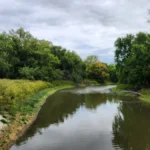
The stakes extend far beyond aesthetics. American elms are "floodplain champions"—they are shade-tolerant, flood-tolerant, and exceptionally long-lived. As climate change increases the frequency of extreme weather events, the loss of these trees has tangible economic and environmental consequences. Studies suggest that restoring floodplains could save states billions in property damage by naturally mitigating water flow.

However, the scientific community is cautious about the prospect of total restoration. "One lesson we learned from Dutch elm disease is not to plant a monoculture," says arborist Doug Still, host of the This Old Tree podcast. Urban planners now advocate for high levels of species diversity to prevent future catastrophes, a lesson learned from the recent devastation caused by the emerald ash borer.
The Moral Weight of Extinction
For the team in Vermont, the project is as much philosophical as it is scientific. "There’s a kind of moral injury of extinction," Goodwin reflects. "This is a way to try to repair that."
While the public remains overwhelmingly supportive of the efforts to save the elm, the work is grueling. It requires a high level of patience; after the current testing phase concludes in two years, it will take another 10 to 15 years before the resulting "super trees" produce seeds for wider distribution.
The site in Benson serves as a grim laboratory. As researchers Chris Hansen and John Butnor walk the rows, they tally the casualties. They identify trees that have withered to nothing alongside others that remain perky and green. "Thirty-eight," Butnor calls out, identifying the parent of a healthy specimen. This data will eventually lead to the creation of a new seed orchard—a repository of genetic resilience.
Looking Toward the Horizon
Nearby, the "Benson tree," a 50-to-100-year-old giant, stands guard over the test site. Its branches form the classic, unruly vase shape that Henry David Thoreau once famously described as being "beautiful alike by sunlight and moonlight."

Whether this elder tree survives the proximity to the newly infected test plot remains to be seen. But in its shadow, the next generation is being tested. The path to restoration is paved with sacrifice, but for those dedicated to the American elm, the potential to restore a pillar of the North American landscape is a cause worth the "trouble."
"This is the playoffs," Marks says of the current project. "What you’ve been preparing for." If the scientists succeed, the American elm may once again cast its golden-yellow shadow over the river valleys and main streets of the nation, securing a legacy that was almost lost to history.