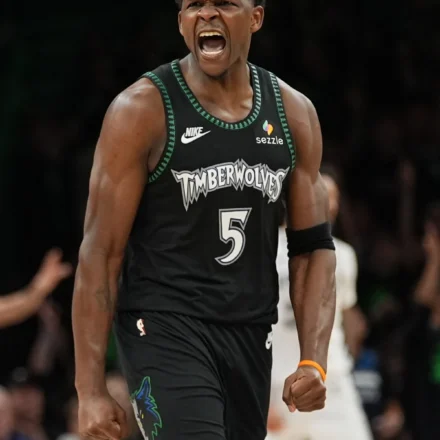


















































As the NBA calendar pivots toward the start of a grueling 82-game campaign, Minnesota Timberwolves head coach Chris Finch finds himself at a familiar, yet uniquely challenging, precipice. Following a lengthy, wide-ranging discussion, the final segment of our 80-minute sit-down with the Timberwolves’ tactician focuses on the team’s identity, the integration of high-potential youth, and the difficult lessons learned from a 2025-26 season that, by his own admission, failed to meet internal expectations.
The Raw Potential of Joan Beringer
Perhaps the most significant "x-factor" for the Timberwolves heading into the new season is 19-year-old center Joan Beringer. Despite his tender age and relative inexperience, Beringer is viewed by the front office—led by President of Basketball Operations Tim Connelly—as a cornerstone of the team’s future depth.
When asked if the organization’s bullish outlook on the teenager might be bordering on premature, Finch offered a measured assessment. "You have to realize, as with all young players, there is going to be inconsistency," Finch noted. "The question is whether it is self-imposed or growth-related. With Joan, it’s the latter. He plays with incredible energy and balance, but he is still learning to regulate that effort. He often finds himself on the ground because he is overly aggressive in pursuing every play."
Finch emphasized that the staff is focusing heavily on core strength development for Beringer. Drawing a comparison to teammate Naz Reid’s evolution, the coach explained that core stability is the prerequisite for a big man to "play in the air and land on his feet" rather than falling out of position. Regarding the teenager’s role, Finch expects a volatile contribution: a mix of "good, bad, and meh" performances. The team’s success, however, may hinge on pushing that ratio toward more consistent production.

Reshaping the Coaching Staff
The departure of lead assistant Micah Nori—who left to take the head coaching job in Portland—has forced a total reconfiguration of the Timberwolves’ coaching hierarchy. Finch is viewing this not just as a loss, but as an opportunity to inject fresh energy into the staff.
Pablo Prigioni has been elevated to the role of lead assistant. While Prigioni will maintain his primary focus on the offense, the duties previously handled by Nori—including clock management, end-of-game scenarios, and special situations—will be redistributed. Finch plans to take a more active, hands-on role in late-game decision-making, while other staff members like Nate Bubes and Kevin "Big Kev" Hansen are being tasked with stepping into larger, more vocal roles.
"I’ve always been a believer in identifying the best skill sets and crafting roles around them," Finch said. "If that means changing the way we work, so be it. Every year, we redesign our processes. The challenge for the staff is to take a step forward."
A Reflective Look at the "Disappointing" Season
The 2025-26 season remains a sore spot for the organization. Despite having a roster built on the premise of continuity, the team struggled with internal consistency, mood swings, and a lack of sustained effort. Finch was refreshingly candid about his own role in those struggles.

"I’m not going to lie, it was a super-frustrating year," the coach admitted. "We underachieved throughout most of the season, and while we ended up where we should have in the playoffs, the journey was difficult."
Finch pointed to his own strategic decisions as a contributing factor, specifically the late-season lineup adjustments. "I kicked myself all season for the late switch regarding Mike (Conley) and Donte (DiVincenzo). I didn’t realize the limiting factor of some of those changes—the toll it took on Anthony (Edwards) and the pressure it placed on Julius (Randle). We didn’t create enough easy looks for Julius because we relied on him to create for everyone else. That’s on me."
Defining the Timberwolves’ Identity
As the team looks to the future, Finch is aiming to return to the fundamental pillars that defined his early success in Minnesota: high-paced offense, aggressive ball pressure, and relentless movement. However, he is also emphasizing the need for greater strategic flexibility.
"I want to continue to play faster offensively," Finch explained. "We need to get passing back into our game; we became too reluctant as passers last year. We need to be more purposeful with our combinations, specifically using Anthony (Edwards) in more strategic two-man games. We have more flexibility now, and we intend to use it."

When pressed on whether the team’s ceiling is higher but its floor is lower, Finch offered a quiet, affirmative nod. The "cliff-dancing" nature of the team’s current construction is a reality they must navigate. With a hyper-competitive Western Conference, the team faces the reality that counting on a 60-win season is a "dumb bet." Instead, the focus remains on consolidating strengths to ensure the team is peaking post-All-Star break.
The Philosophy of Roster Volatility
Perhaps the most revealing aspect of the interview was Finch’s admission regarding the team’s aggressive approach to roster construction. While many teams prize stability, the Timberwolves—under the stewardship of Finch and Connelly—frequently tear down and rebuild their supporting cast.
Finch attributes this mindset to his formative years coaching abroad. "It’s a learned skill," he said. "Overseas, there are so many external factors you can’t control—wild environments, the volatility of losing players, or even whether you’re getting paid. I learned to embrace change. I’ve always been big on asking, ‘What are the four specific things that will help this team win right now?’ The DNA of a team changes, and you have to be willing to adapt to that."
Implications for the Upcoming Campaign
As the team enters the preseason, the stakes could not be higher. The Timberwolves are at a crossroads: they possess the star power to contend for a championship, but they also carry the baggage of a previous season defined by underachievement and internal friction.

The success of the 2026-27 campaign will likely be dictated by three factors:
- The Integration of Youth: How quickly players like Joan Beringer can transition from "raw" to "reliable" within the rotation.
- Staff Cohesion: Whether the newly assigned responsibilities for Prigioni and the rest of the coaching staff allow for smoother in-game adjustments than were seen last year.
- The "Joy" Factor: Finch’s explicit goal to re-inject a sense of purpose and enjoyment into the team’s play.
For a coach who has spent his career mastering the art of the pivot, this season represents his most complex puzzle yet. Finch is no longer just managing a team; he is managing a personality shift, an organizational transition, and the high-octane expectations of a fanbase that knows its window of contention is wide open.
"We don’t know how the new players are going to integrate," Finch acknowledged in closing. "But that’s what makes it exciting. It never gets boring."
If the Timberwolves can reconcile their high ceiling with the volatility of their new-look roster, they may yet find the consistency that eluded them last year. If they cannot, the "cliff" they are dancing on may prove too steep to climb. As the lights go up at the practice facility, one thing is certain: the architect of this team is ready to build something new, regardless of the challenges ahead.