


























































WASHINGTON, D.C. – As the political currents shift and voters increasingly demand change, Minnesota’s fiercely competitive 2nd Congressional District finds itself at a pivotal juncture. With incumbent Representative Angie Craig vacating her seat to pursue a bid for the U.S. Senate, a high-stakes Democratic primary is unfolding, featuring three distinct candidates vying to carry the party’s banner. While Craig has declared her intention to remain neutral in the race to succeed her, her formidable legacy and recent political maneuvers cast a long, intricate shadow over the August 11 primary, shaping the strategies and perceptions of the aspiring successors.
Main Facts: A Battle for the Soul of a Swing District
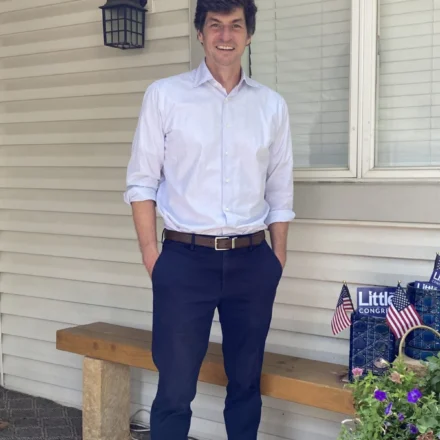
The race for Minnesota’s 2nd Congressional District is a microcosm of the broader ideological struggles within the Democratic Party. Three candidates – former state senator and Lakeville mayor Matt Little, state Senator Matt Klein, and state Representative Kaela Berg – are locked in a contest that will determine who faces Republican state Senator Eric Pratt in the general election. The district, encompassing the southern suburbs of the Twin Cities and rural farm areas, is famously "purple," having demonstrated a willingness to swing between parties in recent electoral cycles.
Representative Angie Craig, a four-term Democrat, successfully wrestled control of this crucial district from the GOP in 2019 and maintained it through a carefully cultivated moderate stance. Her ability to broaden her appeal beyond traditional Democratic strongholds was key to her electoral success, a blueprint that her potential successors are now grappling with how to emulate or diverge from. However, Craig’s own political trajectory has become more complicated in her bid for retiring Senator Tina Smith’s seat, forcing her to navigate an increasingly energized progressive base that scrutinizes every vote. This complexity is a significant factor in her decision to abstain from endorsing a candidate in the 2nd District primary, a choice she attributes to empowering the district’s voters.
Each of the three Democratic hopefuls approaches Craig’s neutrality, and her legacy, from a unique vantage point. Matt Little, positioned as the most progressive of the trio and already holding the DFL Party’s endorsement, has publicly stated he isn’t seeking Craig’s backing. Conversely, state Senator Matt Klein, who aligns more closely with Craig’s moderate political philosophy, actively sought her endorsement, expressing that he "would be honored to have it." State Representative Kaela Berg, another progressive in the race, has also pursued Craig’s endorsement, emphasizing a close working relationship and the symbolic importance of a woman continuing to hold the seat. The interplay of these strategies, combined with shifting voter sentiments and external political pressures, sets the stage for a compelling and unpredictable primary contest.
Chronology: The Evolution of a Crucial Contest
The narrative of the 2nd Congressional District’s current primary is deeply intertwined with Representative Craig’s own political journey and the broader shifts in Minnesota and national politics.
2018: Craig’s Breakthrough. Angie Craig first won the 2nd District in 2018, flipping a seat that had been held by Republicans. Her victory was seen as a significant win for Democrats, demonstrating the viability of a moderate approach in a historically swing district. She built a reputation for pragmatism and constituent service, successfully defending the seat in subsequent elections. Her 2024 re-election, which she won by a substantial 14 percentage points against Republican Joe Teirab, solidified her standing and showcased her unique ability to connect with a diverse electorate.
2025: The Senate Announcement. Senator Tina Smith’s decision not to seek re-election opened up a coveted Senate seat, prompting Craig to announce her candidacy. This move immediately put the 2nd District in play, triggering the scramble for her successor. Her decision to run for Senate also placed her under increased scrutiny from within her own party, particularly from the progressive wing.
Early 2026: Rising Progressive Activism. The period leading up to the primary has been marked by a significant surge in progressive activism within Minnesota, largely catalyzed by events such as "Operation Metro Surge." This operation, which led to widespread chaos and public debate around issues of immigration and law enforcement, galvanized many DFLers, pushing the party’s center of gravity further to the left on certain issues. This shift began to directly impact Craig, as her moderate voting record, particularly on bills related to police funding and border security, came under fire.

Spring 2026: The Laken Riley Act Controversy. A specific flashpoint for progressive discontent was Craig’s vote in favor of the Laken Riley Act. This Republican-sponsored legislation allows the Department of Homeland Security to detain and deport non-citizens charged with – not just arrested for or convicted of – certain offenses like burglary, shoplifting, or assault on a law enforcement officer. While framed by proponents as a public safety measure, progressive groups condemned it as an overreach that could lead to unjust deportations and undermine due process. Craig later expressed regret for her vote, acknowledging the backlash and its potential impact on her standing with the progressive base, a critical segment for her Senate primary against Lt. Gov. Peggy Flanagan.
Summer 2026: Primary Heats Up. As the August 11 primary approaches, the three Democratic candidates intensify their campaigns. Matt Little secures the DFL endorsement, a testament to his progressive appeal and grassroots organizing. Matt Klein leverages his moderate stance, aiming to position himself as the natural successor to Craig’s successful model. Kaela Berg, meanwhile, champions her progressive bona fides while also highlighting the importance of female representation, drawing parallels to Craig’s tenure. Craig’s explicit decision not to endorse a candidate becomes a strategic point for all three, with each candidate interpreting or utilizing her neutrality to their advantage, or at least attempting to mitigate any perceived disadvantage. The fundraising race also accelerates, revealing the financial strength and challenges of each campaign in the run-up to the decisive primary vote.
Supporting Data: Fundraising, Demographics, and Electoral Trends
Understanding the 2nd Congressional District requires a deep dive into the numbers and demographic realities that define it.
The "Purple" Demographics: The 2nd District is often described as the most "purple" district in Minnesota, a blend of suburban affluence and rural agricultural areas. It includes parts of Dakota, Goodhue, Rice, Scott, and Washington counties. These areas contain a mix of traditional Republican-leaning rural voters, suburban independents, and growing pockets of Democratic-leaning urban commuters and younger families. This demographic mosaic necessitates a candidate who can appeal across various ideological lines, a challenge Craig mastered but one her successors may find difficult. While analysts currently suggest the district leans Democratic, the margin is often narrow and susceptible to national political tides.
Craig’s Electoral Dominance: Representative Craig’s past performance underscores the potential for a Democrat to win convincingly, provided they strike the right balance. Her nearly 14-percentage-point victory in 2024 against Republican Joe Teirab was a commanding win, especially for a district previously considered a perennial battleground. This success was built on her moderate platform, which resonated with independent and even some moderate Republican voters, alongside her dedicated Democratic base. However, her formidable fundraising capacity was also a key factor. In her last re-election bid, Craig amassed an impressive $8.3 million, enabling extensive outreach and advertising.
Current Campaign Finance Landscape: The fundraising numbers for the current primary candidates reflect a different reality, significantly lower than Craig’s previous cycles, though typical for an open primary without an incumbent.
- Matt Klein: Leads the Democratic field in fundraising, having raised over $1 million as of June 30. This financial strength underscores his campaign’s ability to mobilize resources and potentially reach a broader audience through advertising and outreach.
- Matt Little: Has raised nearly $900,000, which includes a substantial $155,000 personal loan to his campaign. While a significant sum, the reliance on a personal loan indicates the challenges of grassroots fundraising at this level, even with a DFL endorsement.
- Kaela Berg: Trails her opponents, having raised approximately $355,000. Her campaign’s financial capacity, while boosted by support from groups like Emily’s List, will need to be carefully managed to compete with the better-funded campaigns.
For comparison, the Republican candidate, state Senator Eric Pratt, has raised about $462,000, indicating that the general election will also be a financially competitive endeavor, though the Democratic nominee will likely outraise him significantly after the primary. The current fundraising disparities among the Democrats could play a crucial role in voter outreach and messaging in the final weeks leading up to the primary.
Party Endorsements and External Support: Matt Little’s securing of the DFL Party endorsement is a significant internal victory, signaling strong support from party activists and delegates. Kaela Berg has garnered the backing of Emily’s List, a powerful political action committee that supports pro-choice Democratic women. This endorsement provides not only financial contributions but also strategic advice and independent expenditure ads, bolstering her campaign’s visibility and messaging, particularly around women’s issues and reproductive rights. Berg is also a prominent member of the "Blue Collar Brigade," a joint fundraising effort involving five House candidates with strong ties to organized labor, further solidifying her working-class appeal. These external endorsements and affiliations provide crucial leverage in a competitive primary where every advantage counts.

Official Responses: Navigating the Endorsement Question
The question of Representative Angie Craig’s endorsement, or lack thereof, has become a central talking point in the 2nd District primary, eliciting varied responses from the candidates and political observers.
Angie Craig’s Stance:
Craig has consistently maintained her neutrality, stating unequivocally, "I won’t pick a favorite among three Democrats vying to replace her in Congress." She frames this decision as an act of democratic principle, asserting that "that choice belongs to 2nd District voters." This public position allows her to avoid alienating any segment of the Democratic base, which is critical for her own highly competitive Senate primary against Lt. Gov. Peggy Flanagan. Political science professor Larry Jacobs of the University of Minnesota notes that it’s "not unusual for an incumbent to avoid endorsing a possible successor. I think there’s a sense of ‘letting the voters decide.’" This institutional norm provides Craig with a credible justification for her hands-off approach.
Matt Little’s Perspective:
As the DFL-endorsed progressive in the race, Matt Little has adopted a strategic stance regarding Craig’s non-endorsement. "It’s not something we’ve sought because she’s made it very clear she will not endorse," Little stated, acknowledging Craig’s firm position. Political science professor David Schultz of Hamline University offers further insight into Little’s calculated distance: "Little is trying to run as the candidate furthest to the left. And he’s concerned that because of (Craig’s) support for the Laken Riley Act, progressives may not support him if he has her endorsement." For Little, accepting an endorsement from Craig, particularly after her controversial Laken Riley Act vote, could risk alienating the energized progressive base he is working to mobilize.
Matt Klein’s Approach:
State Senator Matt Klein, who explicitly positions himself as a moderate Democrat in Craig’s mold, has openly sought her endorsement. "I would be honored to have it," Klein affirmed, underscoring his desire for the symbolic and substantive boost such a backing would provide. Klein’s strategy hinges on presenting himself as the natural continuity candidate, capable of bridging partisan divides in the "last swing district in Minnesota." He argues, "To hold it, you have to bridge a (partisan) divide," directly echoing the electoral strategy that propelled Craig to four terms. His pursuit of Craig’s endorsement aligns with his broader campaign narrative of pragmatic, broad-based appeal.
Kaela Berg’s Position:
State Representative Kaela Berg, another progressive, has also actively pursued Craig’s endorsement. Berg emphasizes her close working relationship with Craig, highlighting collaborative efforts, such as securing funding for local infrastructure projects. Beyond policy alignment, Berg also champions the importance of gender representation. "I’m the only woman in the Blue Collar Brigade, and the only woman in the race," Berg pointed out. "That matters right now. I love an ally and a great dude, but women’s voices are needed right now." Schultz notes that "because of Craig, many voters in the 2nd District ‘view it now as a female seat.’" For Berg, Craig’s endorsement would not only be a nod to their shared progressive values but also a powerful symbol of continuity in female leadership for the district.
Each candidate’s response to Craig’s neutrality reveals their strategic positioning within the primary and their understanding of the district’s complex political landscape. Whether by seeking, accepting, or deliberately avoiding the association, Craig’s legacy remains an undeniable force in the race.
Implications: The Future of CD-2 and Beyond
The outcome of Minnesota’s 2nd Congressional District primary carries significant implications, not only for the future representation of the district but also for the broader political landscape of the state and the national Democratic Party.
The Ideological Battle for the DFL: The primary is a clear ideological battleground within the DFL. The presence of two progressive candidates (Little and Berg) and one moderate (Klein) forces voters to choose not just a person, but a strategic direction for the party in this crucial swing district. If a progressive candidate wins, it will signal a shift in the district’s Democratic base and test the hypothesis of whether a more left-leaning platform can hold a "purple" seat in a general election. Conversely, a victory for Klein would suggest a continued preference for the moderate, coalition-building approach that defined Craig’s tenure. This choice could influence how the DFL approaches future campaigns in similar districts nationwide.

The "Vote Split" Scenario: A major implication discussed by experts is the potential for the two progressive candidates, Little and Berg, to split the left-leaning vote. University of Minnesota professor Larry Jacobs agrees this is a "possible scenario that would ‘open a path for Klein’ to win the nomination." If progressive voters are divided between Little and Berg, Klein, with his unified moderate base, could emerge victorious, even if he doesn’t represent the plurality of primary voter sentiment. This dynamic underscores the strategic challenges of a crowded primary field and the importance of voter consolidation.
The General Election Pivot: Regardless of who wins the Democratic primary, they will face Republican state Senator Eric Pratt in the general election. Klein is keen to remind voters of this necessity, stating, "We need a Democrat who can win every cycle," and emphasizing the need to "pivot to the center" to appeal to the district’s diverse electorate. He questions whether "a progressive candidate can win in parts of the district that are not progressive?" This highlights a critical implication: the primary winner must quickly unite the DFL base while simultaneously reaching out to independent and moderate voters who may have supported Craig in the past. Pratt’s own moderate conservative stance and local roots in Scott County make him a formidable opponent who will capitalize on any perceived ideological extremism from the Democratic nominee.
The "Woman’s Seat" Legacy: Kaela Berg’s campaign has strategically leveraged the perception that the 2nd District has become a "female seat" under Craig’s leadership. Political science professor David Schultz suggests that while an explicit endorsement from Craig might alienate Berg’s progressive base, "saying, ‘Let’s keep this seat in a woman’s hand’ won’t hurt her." The success or failure of this messaging will have implications for how gender is framed in future campaigns, particularly in districts where a strong female incumbent is retiring. The backing of Emily’s List further amplifies this message, and a Berg victory could reinforce the idea that female candidates are uniquely positioned to connect with the district’s evolving electorate.
Angie Craig’s Senate Race: Craig’s decision to remain neutral in the 2nd District primary is intrinsically linked to her own Senate campaign. Endorsing one candidate over others could alienate supporters of the unendorsed candidates, potentially costing her crucial votes in her primary battle against Lt. Gov. Peggy Flanagan. By staying out, Craig aims to preserve her standing across the entire DFL spectrum, allowing her to draw support from all factions as she seeks statewide office. The outcome of the 2nd District primary, and the relative ideological positioning of its winner, could also subtly influence perceptions of Craig’s own political brand as she navigates her Senate bid.
Ultimately, the August 11 primary in Minnesota’s 2nd Congressional District is more than just a local election; it is a critical bellwether for the Democratic Party’s direction in swing districts, a test of ideological appeal versus electability, and a testament to the enduring influence of a popular incumbent’s legacy, even in their absence. The choice voters make will resonate far beyond the district’s borders, shaping the political narrative for years to come.