


















































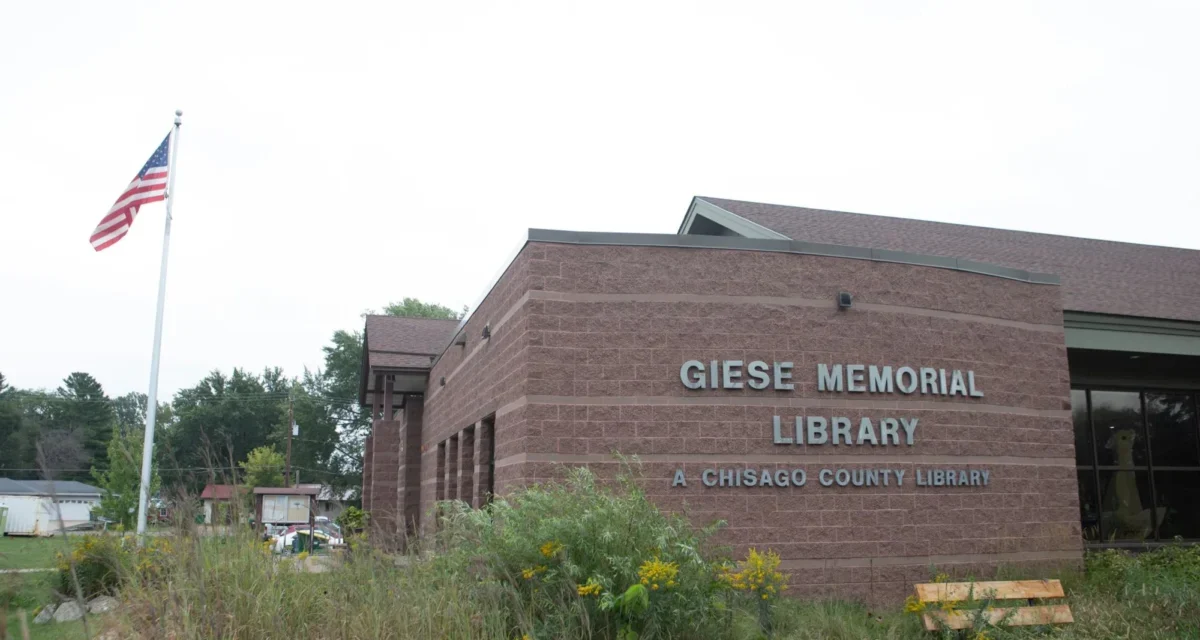





In the quiet corners of rural America, the local library has long served as the town’s living room—a sanctuary for knowledge, a hub for internet access, and a community anchor. Yet, for many residents living in sparsely populated regions, the traditional “nine-to-five” operational model has become a barrier rather than a gateway. As budgetary constraints force many library systems to trim their public-facing hours, a quiet revolution is taking hold: the rise of “Extended Access” programs.
Across the United States, library systems from Minnesota to Washington are turning to technology to keep their doors open when their staff goes home. By allowing patrons to swipe into buildings during unstaffed hours, these institutions are ensuring that the library remains a viable resource for the modern worker, student, and resident.
The Human Element: Why Extended Access Matters
For Michael Sayen, a resident of Forest Lake, Minnesota, the library is more than a building filled with books; it is a critical infrastructure for his livelihood. On the day following Labor Day—a federal holiday that shuttered most government offices and public institutions—Sayen found himself inside the Wyoming branch of the East Central Regional Library (ECRL). While the staff was away, the doors remained open, allowing him the solitude required to work on his novel.
“We just had Labor Day, the library is closed all day. But if you have extended hours, you can come in and do the work, or cool down from a hot day or whatever you need to do,” Sayen said. For him, the utility extends beyond creative writing; he frequently uses the after-hours access to navigate time-sensitive administrative tasks, such as filing job applications or processing court documents that require a stable internet connection and a quiet environment.
This sentiment is echoed by Ryan Stigile, a local pastor in Wyoming, Minnesota. For Stigile, the library’s extended hours fill a significant void in the town’s social and professional landscape. “Just being able to have an extra space to work in a community that does not have a ton of evening options available,” Stigile noted. “We don’t have any coffee shops, so it’s this or McDonald’s.”
A Chronology of the “Open+” Movement
The concept of unstaffed library access, sometimes referred to internationally as “Open+,” began as a way to maximize existing infrastructure without incurring the massive overhead of additional payroll. While the specific nomenclature varies—the Summit County Library in Utah calls it “Extended Access Hours,” while Nevada County, California, refers to it as “Open+ Access”—the underlying philosophy remains consistent: maximizing public utility through technology.
The implementation process generally follows a rigorous security and orientation protocol. In most systems, the journey to becoming an extended-access user begins with a standard library card. However, because these programs operate in unstaffed facilities, libraries require an additional layer of vetting.
- Registration: Interested patrons must sign up specifically for the extended-access program.
- Orientation: Many branches require an in-person orientation to ensure users are familiar with safety features, including the locations of defibrillators, first-aid kits, and emergency exits.
- Vetting: Some systems, such as the Timberland Regional Library in Washington, impose age restrictions—typically 14 or 16 years old—while others, including ECRL and the Summit County Library, restrict access to adults aged 18 and older.
- Operational Implementation: Once cleared, users utilize their library card as a digital key, swiping into the building. While inside, they can browse collections, use computers, and access printing services. However, some services, such as faxing or processes involving cash transactions, remain restricted to staffed hours.
Supporting Data: By the Numbers
The data emerging from these pilot programs suggests that the demand for after-hours access is not just a niche interest, but a significant service gap being filled.

The East Central Regional Library (ECRL) in Minnesota, which transitioned out of its testing phase in April, has seen a 66% growth in usage. With 55 registered users, the Wyoming branch has logged more than 800 individual visits so far this year.
On a larger scale, the Timberland Regional Library (TRL) in Washington state provides a more robust dataset. TRL operates 12 branches with extended access, serving a user base of more than 4,100 people. Between September 2023 and August 2026, the system recorded more than 63,000 instances of patrons swiping into their local libraries during unstaffed hours. These figures represent thousands of hours of productivity and educational access that would have otherwise been lost behind locked doors.
Official Responses and Security Considerations
A primary concern for library boards contemplating extended access is security. The possibility of vandalism, theft, or behavioral issues in an unstaffed public space is a valid apprehension.
ECRL executive director Carla Lydon addressed these concerns directly, noting that while the library did face initial scrutiny, the reality has been largely problem-free. To mitigate risk, ECRL invested in comprehensive security camera systems. Furthermore, the mandatory sign-in and card-swipe process creates a digital paper trail for every individual in the building.
“If we have issues, because you have to sign in and are on camera, we are able to identify the issue and revoke the privilege quickly,” Lydon stated. By tying access to a specific, verifiable identity, the library effectively creates a self-policing environment.
The Economic Paradox: Funding vs. Innovation
Despite the clear success of these programs, the path forward is paved with financial obstacles. Modernizing a facility for extended access is not inexpensive. The ECRL spent approximately $70,000 to renovate the Wyoming branch, including the installation of sophisticated security and access-control software. Maintaining this infrastructure costs the system roughly $12,000 annually.
This creates an ironic, and often painful, paradox: while extended access is a cost-effective solution for providing service, the initial capital and ongoing maintenance costs are competing with the very funding needed to keep the libraries staffed during traditional hours.
In Minnesota, the ECRL has already been forced to reduce staffed hours in three counties due to budget deficits. While local governments in Aitkin and Pine counties are discussing minor budget adjustments, these measures are generally insufficient to restore 2025 operating levels. In Washington state, the situation is even more acute. The Timberland Regional Library, which relies on property taxes for 94% of its funding, has already cut $3.69 million from its budget, affecting books, salaries, and programs.

The TRL is now placing a “levy lid lift” on the ballot, asking voters to increase the property tax rate from 22 cents to 35 cents per $1,000 of assessed value. If successful, the measure would generate $14 million; if it fails, the library system faces the prospect of further systemic cuts.
Implications: The Future of the Public Library
The shift toward extended access raises fundamental questions about the role of the library in the 21st century. Is the library a physical space defined by the presence of librarians, or is it a repository of information and community access that must adapt to the 24/7 expectations of the modern world?
Library leadership remains clear on one point: technology is a supplement, not a replacement. “Staffed hours remain as they were prior to implementation, and we expect that to continue,” said Lydon.
This view is shared by Chris Chrzan of the Timberland Regional Library. While he acknowledges that extended access is a vital tool for maintaining service continuity, he emphasizes that the human connection remains the heart of the institution. “While ‘Expanded Access Hours’ is useful for maintaining access to library facilities and some core services outside of staffed hours, our patrons tell us often how important it is to have regularly staffed hours at their local library,” Chrzan wrote.
The long-term implication for rural communities is that the library is becoming a hybrid entity. It is a place for human interaction and expert guidance during the day, and a secure, technology-enabled workspace during the evening. As the digital divide continues to widen in rural areas, the ability to provide consistent access to computers and the internet is no longer a luxury—it is a necessity for economic participation.
Ultimately, the survival of these programs depends on whether local governments can view the library as a core utility—much like water or electricity—rather than a discretionary expense. Until then, programs like the one in Wyoming, Minnesota, represent a bridge between the traditional past and a future where access is defined not by the clock, but by the needs of the people.