

















































WASHINGTON D.C. – September 21, 2026 – In a pivotal ruling that brought a collective sigh of relief to election administrators nationwide, the U.S. Supreme Court on Monday, September 19, 2026, delivered a decisive blow to the Trump administration’s efforts to impose new, restrictive rules on mail-in ballots for the upcoming November general election. The high court’s decision effectively blocked proposed changes that had cast a long shadow of uncertainty over the electoral process for months, ensuring that millions of Americans can cast their votes by mail under established procedures.
The ruling, which arrived less than 50 days before Election Day, was met with widespread approbation from state and local election officials who had warned of catastrophic logistical challenges and voter disenfranchisement if the new regulations were allowed to stand. For these administrators, already grappling with heightened scrutiny and a polarized political landscape, the Court’s intervention provided much-needed clarity and stability in a highly volatile election cycle.
“It’s a relief and it’s palpable,” stated Marybeth Kuznik, the elections director for Pennsylvania’s Fayette County, articulating a sentiment echoed across countless election offices. “I honestly don’t know how we could have complied with [the proposed Postal Service restrictions] at this point in the election cycle.” Her words underscored the immense operational hurdles that would have arisen from last-minute changes to an intricate system designed to facilitate democratic participation. The prospect of retraining staff, updating voter information, and reprinting materials on such short notice had loomed large, threatening to throw an already complex election into disarray.
The Battle for Ballot Access: A Chronology of Uncertainty
The Supreme Court’s decision culminated months of intense legal and political wrangling initiated by the Trump administration. Throughout the year, President Donald Trump had repeatedly questioned the integrity of mail-in voting, frequently asserting, without widespread evidence, that it was susceptible to fraud. These public statements were accompanied by a concerted effort to implement new rules for the U.S. Postal Service (USPS) that would have significantly altered how mail ballots were processed and delivered. While the specifics of the proposed rules were complex, they generally aimed to introduce stricter timelines for ballot delivery and return, potentially invalidating ballots that would have been counted under existing state laws.
These proposed changes were not merely administrative adjustments; they represented a fundamental shift in the operational framework of mail-in voting, a method increasingly relied upon by voters for convenience, accessibility, and, in recent years, public health considerations. The administration’s rationale often centered on enhancing "election security," yet critics, including a broad coalition of election officials from both major political parties, argued that the real-world effect would be to create chaos and suppress legitimate votes.
The legal challenges to these rules quickly escalated, with numerous civil rights organizations, state governments, and election advocacy groups filing lawsuits. They contended that the new regulations were arbitrary, lacked proper justification, and would disproportionately impact certain demographics while undermining voter confidence. As the legal battles progressed through lower courts, the specter of a last-minute disruption to the November election grew increasingly real, leaving voters and officials in a precarious state of uncertainty.
Bipartisan Opposition Takes Center Stage
Crucially, the opposition to the Trump administration’s proposed mail ballot restrictions transcended partisan lines, uniting election officials who rarely agree on such contentious issues. This bipartisan front played a central, indeed decisive, role in the Supreme Court’s ultimate ruling. More than 80 local election officials, including Fayette County’s Marybeth Kuznik, submitted an influential amicus brief to the Supreme Court. This brief meticulously detailed the practical impossibility of implementing the new requirements so close to the election. They outlined the sheer volume of work involved in processing mail ballots, from sending out applications and blank ballots to receiving and tabulating completed ones, emphasizing that any significant procedural changes at this late stage would be logistically untenable and prone to errors.
Further bolstering this unified stance, several Republican secretaries of state, including top election officials from Kentucky, Georgia, and Kansas, publicly urged the Supreme Court to freeze the proposed plans. Their plea underscored the non-partisan nature of election administration and their primary responsibility to ensure a smooth, fair, and accessible election for all citizens, regardless of political affiliation. These officials, often the first line of defense for electoral integrity, prioritized operational stability and voter access over partisan loyalty, highlighting the severe chaos the proposed rules would have unleashed. Their collective voice provided the Court with compelling evidence of the real-world implications of the administration’s policy.
Justice Kavanaugh’s Decisive Concurrence
The bipartisan consensus among election administrators proved particularly persuasive to at least one Supreme Court justice: Brett Kavanaugh. In a concurring opinion, Justice Kavanaugh acknowledged the administration’s arguments regarding the potential legal scrutiny the rules might otherwise withstand. However, he ultimately sided with the election officials, stating that applying these new regulations to the 2026 elections would be “arbitrary and capricious.” His reasoning hinged on the critical factor of timing: “state and local election officials do not have sufficient time to reasonably implement the rule.”
Kavanaugh’s concurrence highlighted the Court’s recognition of the practical realities of election administration. It signaled a judicial understanding that regardless of the legal merits of a proposed policy, its implementation must be feasible within the existing timeline and operational capacities of election systems. This pragmatic approach underscored the Court’s commitment to avoiding electoral instability and ensuring that administrative changes do not inadvertently undermine the right to vote. The decision was a powerful affirmation of the expertise and critical role played by local election officials in safeguarding the democratic process.
Rebuilding Trust: The Ongoing Challenge for Election Officials
While the Supreme Court’s ruling offered immediate relief and clarity, it did not erase the months of uncertainty and the persistent rhetoric that have sown doubt in the minds of many voters. Despite the judicial green light for established mail-in voting procedures, election officials now face the daunting task of reassuring an electorate left wary by the sustained attacks on the process. President Trump’s continued denouncements of mail-in voting as a “disaster,” a “Nation Destroying SCAM,” and something that makes America the “laughing stock all over the World”—even after he himself voted by mail in Florida—have created a significant trust deficit.
This rhetoric has tangible consequences. Some election officials and experts are observing fewer absentee ballot requests than anticipated, suggesting that voter confusion and mistrust may already be impacting participation. “It has already caused all sorts of voter confusion, and even though the rule is not in place for this election, that’s not to say that there won’t be some voters that think that it is,” explained Tammy Patrick, the chief program officer at the Election Center, a national nonprofit association for election administrators. Patrick, who also filed an expert declaration in the Supreme Court cases challenging the Postal Service rules, emphasized the ongoing need for clarity. “So it’s going to be incumbent on all of us to make sure that we just keep up the mantra that nothing has changed as a result of the rule.” Her advice to voters remains straightforward: get your ballots in as early as possible.
This challenge extends beyond simply communicating the Supreme Court’s decision. It requires actively combating misinformation and rebuilding public confidence in a system that has been relentlessly targeted. Election administrators are now doubling down on public education campaigns, utilizing all available channels—from social media to local news outlets and community outreach—to provide accurate, timely information about how, when, and where to vote. They are emphasizing the security measures in place for mail ballots, such as signature verification, ballot tracking systems, and secure drop boxes, to counter narratives of widespread fraud.
On the Ground: Innovation and Security in Pinal County
Across the nation, local election officials are demonstrating resilience and ingenuity in their efforts to ensure secure and accessible elections. Dana Lewis, the recorder overseeing elections in Arizona’s Pinal County, embodies this spirit. Known for her adaptability—she jokes she wears six-inch heels to pivot on a dime—Lewis has invested heavily in fortifying her county’s drop box system. These secure ballot drop boxes are equipped with 24/7 video monitoring and GPS-locked mechanisms, providing voters with a high degree of confidence that their ballots are protected from tampering and securely delivered for counting.
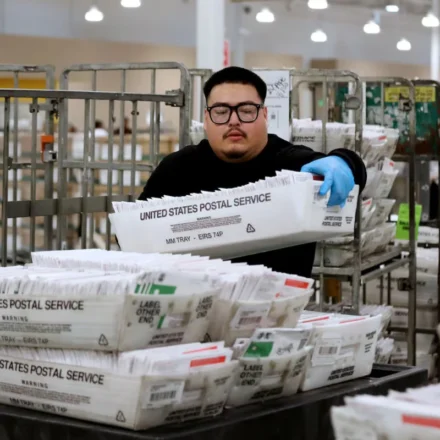
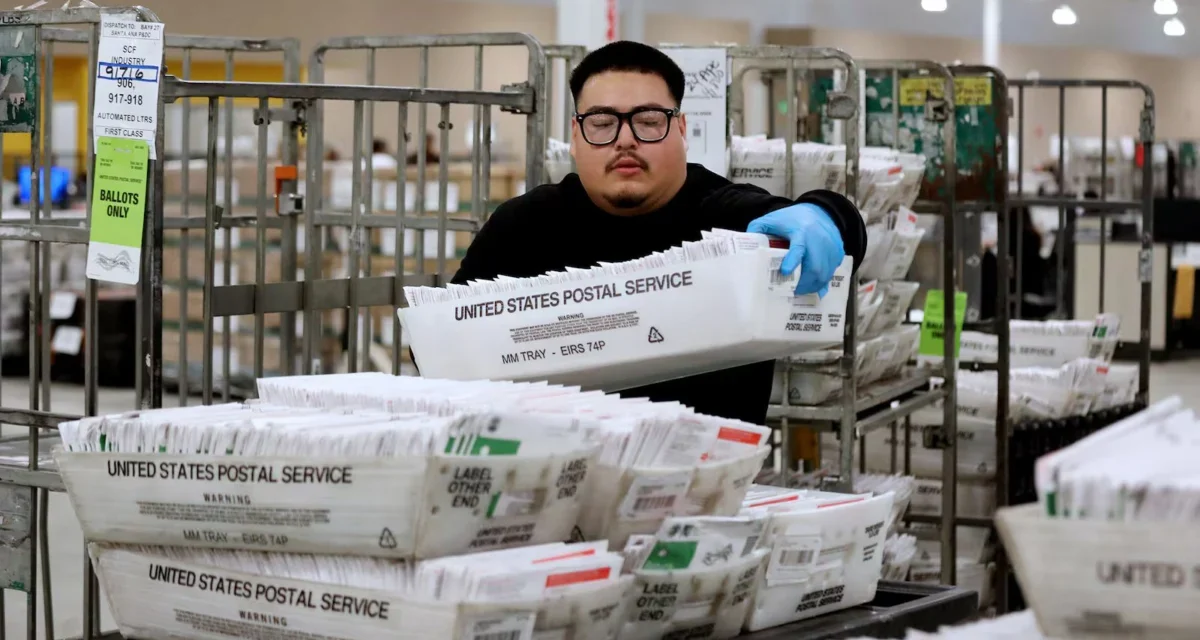
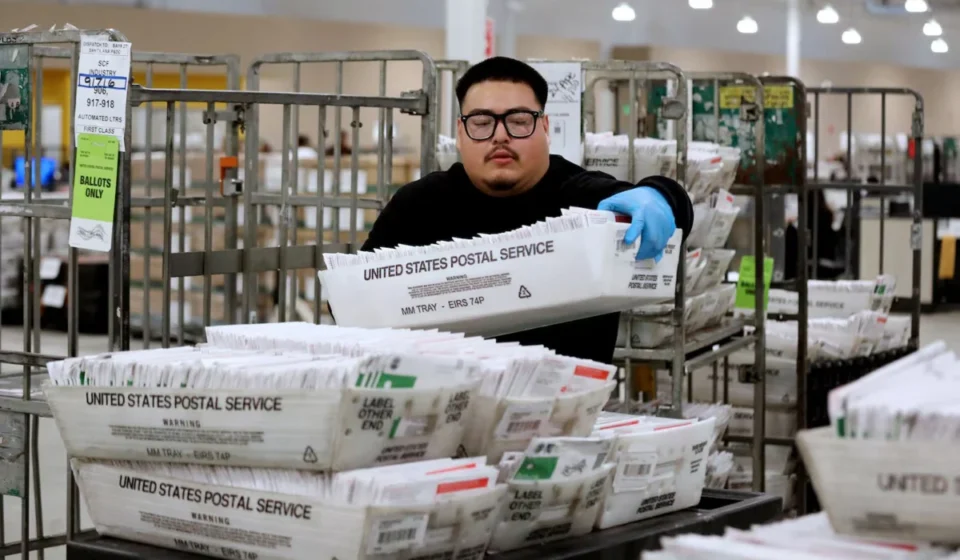
Lewis, a Republican, firmly believes in the integrity of her county’s system. “Trust the system,” she urges, reflecting a common message from administrators striving to restore faith in the democratic process. Arizona, like many states, has a long-standing history of robust mail-in voting, with federal data showing that roughly three-quarters of its voters cast mail ballots in the 2024 election. This established precedent, coupled with proactive security measures, forms the bedrock of confidence that officials like Lewis are working to reinforce. The image of an election worker meticulously sorting mail ballots in Los Angeles County, a crucial step in the processing chain, further underscores the dedicated human effort and established procedures that underpin mail-in voting.
A Nation Divided: Alarming Declines in Electoral Confidence
The Supreme Court ruling, while a victory for election administrators, arrived amidst deeply concerning trends in public trust in the nation’s electoral system. A new poll released concurrently with the Court’s decision by the University of California, San Diego (UCSD), revealed a precipitous decline in public confidence. The survey found that a mere 55% of respondents trusted that their vote would be counted fairly in the upcoming election, a significant drop from 71% in 2024. This 16-point decrease in just two years highlights a rapidly eroding faith in the foundational mechanisms of American democracy.
The UCSD poll also indicated that only 49% of Americans expected the upcoming election to be free and fair, signaling a pervasive sense of apprehension. These findings are consistent with other recent surveys, including a Pew Research Center report from August 2026. Pew’s data showed that 55% of respondents believed the upcoming election would be free and fair, marking an historic low for a question they have posed over the past six years. Such statistics paint a stark picture of a nation increasingly divided not just on political issues, but on the very legitimacy of its electoral processes.
The Broader Landscape of Electoral Integrity
The declining trust in elections is a multifaceted issue, extending beyond the immediate debate over mail-in ballots. It is fueled by a confluence of factors, including extreme political polarization, the proliferation of misinformation and disinformation campaigns, and a general erosion of faith in institutions. When a significant portion of the electorate doubts the fairness of the vote, the implications for democratic stability are profound. It can lead to decreased voter participation, increased political apathy, and even civil unrest, challenging the peaceful transfer of power that is a hallmark of democratic governance.
Local election administration, often operating out of the public spotlight, has become an unexpected frontline in this battle for democratic integrity. These officials, typically non-partisan public servants, are tasked with the immense responsibility of upholding the fairness and accuracy of elections, often with limited resources and under intense political pressure. Their ability to navigate these challenges, communicate transparently, and maintain robust, secure systems is paramount to restoring and sustaining public confidence.
Looking Ahead: Safeguarding the Democratic Process
The Supreme Court’s decision to block the Trump administration’s mail ballot restrictions for the 2026 election represents a critical moment in the ongoing national conversation about voting access and election security. It underscored the judiciary’s role in safeguarding the practical application of electoral laws and provided a necessary bulwark against last-minute administrative disruptions. However, the underlying tensions and the profound challenges to voter confidence remain.
The path forward requires continued vigilance from all stakeholders. Election officials must persist in their efforts to educate voters, enhance security measures, and communicate transparently about the integrity of the process. Policymakers must strive for clarity and consistency in election laws, avoiding last-minute changes that can sow confusion. And the public must remain engaged, seeking out reliable information and actively participating in the democratic process.
The Future of Mail-In Voting
While mail-in voting has been reaffirmed for this election cycle, the debate over its future is far from over. Future challenges to voting methods, whether through legislative action or further legal battles, are likely. The experience of 2026 highlights the necessity for clear, consistent, and well-understood policies regarding ballot access. It also underscores the importance of continuous investment in election infrastructure and the professional development of election administrators.
Ultimately, the health of American democracy depends on the ability of its citizens to trust that their vote counts and that the electoral process is fair. The Supreme Court’s ruling provided a crucial moment of stability, but the sustained effort to rebuild and maintain that trust will be the defining challenge for years to come.
Dion Nissenbaum is Votebeat’s senior national reporter and is based in Houston. Contact Dion at [email protected].
Votebeat is a nonprofit news organization covering local election integrity and voting access. Sign up for their newsletters here.