



































Staging Resistance: Twin Cities Performance Art Confronts the Echoes of Institutional Violence

In the contemporary cultural landscape of the Twin Cities, a powerful wave of performance art has emerged, directly challenging the historical and systemic violence that continues to shape modern American life. Through three distinct, high-impact productions—Marcie R. Rendon’s Sweet Revenge, Moriah Evans’s at the Walker Art Center, and Ananya Dance Theatre’s Prem—local artists are utilizing the stage not merely as a venue for entertainment, but as a crucible for processing trauma, historical erasure, and the urgent necessity of collective resilience.
The Weight of History: Marcie R. Rendon’s Sweet Revenge
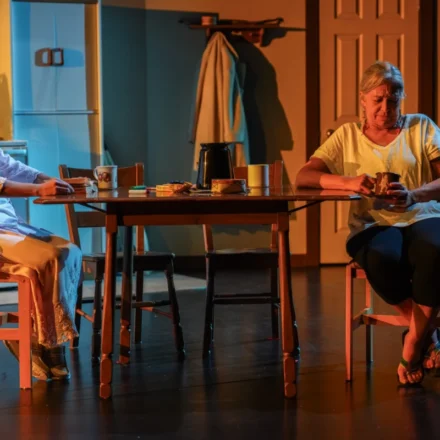
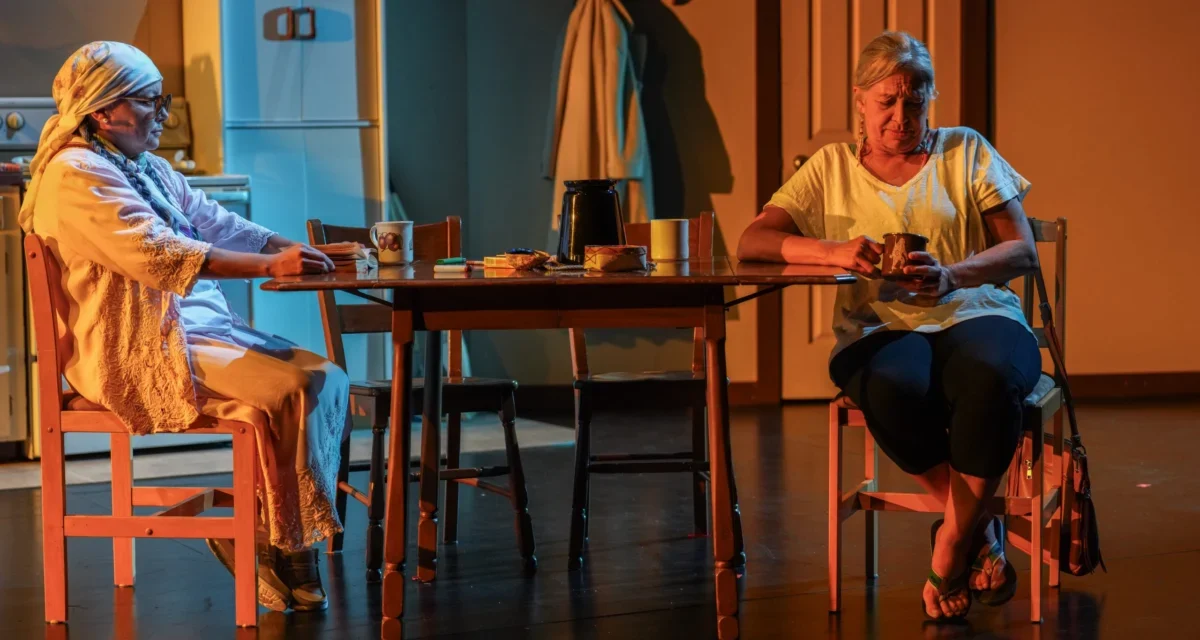
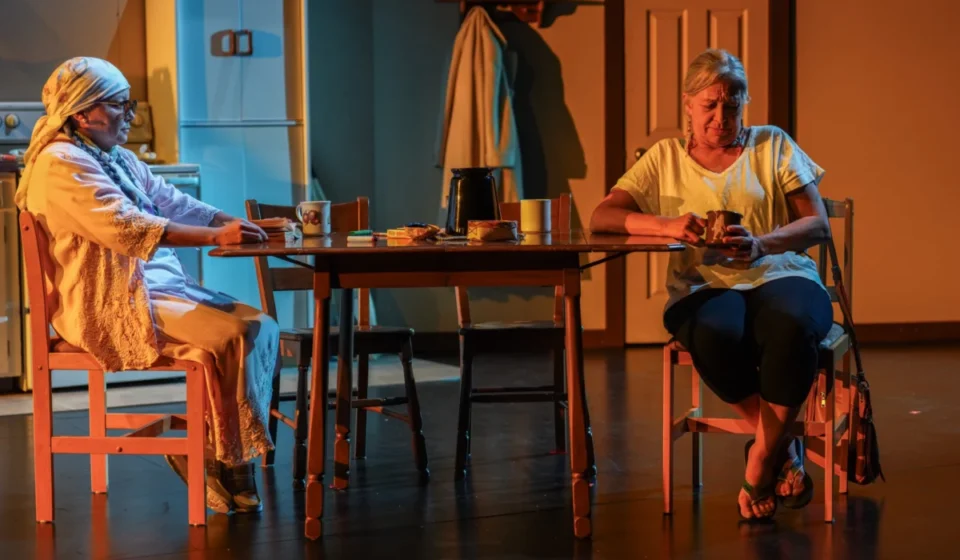
At the heart of the Red Eye Theater’s current season is Sweet Revenge, a play that serves as both a murder mystery and a profound meditation on intergenerational trauma. Written by Marcie R. Rendon and directed by Sequoia Hauck, the production focuses on Maggie, a woman attempting to navigate the complexities of urban Native life while shielding her grandchildren from the shadows of the past.
The play’s narrative tension is anchored by a visceral, recurring sound: the cheerful, off-key jingle of an ice cream truck that circles Maggie’s home every half hour. To the casual observer, it is a sound of whimsy; to Maggie and her mother, Granny Josephine (played by Oogie Push), it is a trigger of profound distress. As the play explores, the truck represents the "stolen childhood"—a biting reference to the American Indian boarding school system, which systematically stripped Native children of their language, culture, and innocence.
"I’m so tired of your rage controlling me," Maggie, played with grounded, no-nonsense confidence by Fern Renville, cries out to her mother. It is a line that encapsulates the central struggle of the play: the recognition that trauma is not a static historical event but a living, breathing force that cascades from one generation to the next.
The mystery elements—a string of murders involving local ice cream truck drivers—provide a narrative drive, but the true stakes are cultural and spiritual. The production, presented by the Mni Giizhik Theatre Ensemble and Exposed Brick Theatre, offers a nuanced, often humorous look at the internal politics of the community. From women outsourcing their spiritual labor to the detective (Brian B. Joyce) who finds a quiet, humanizing romance amidst the chaos, Sweet Revenge insists that even in the face of institutional erasure, the urban Native experience is defined by endurance, wit, and the reclamation of self.
The Geography of Rage: Moriah Evans at the Walker
While Sweet Revenge finds its power in domestic realism, Moriah Evans’s recent performance at the Walker Art Center—titled with a string of symbols, "}[¦/+*^%<>.£¥$&@!!!!^^^]{," representing an unpronounceable, explosive expletive—approached the theme of institutional violence through the lens of movement and architectural defiance.
The piece functioned as a critique of the theater itself. In a post-show discussion, Evans famously remarked that the traditional proscenium stage is an "instrument of patriarchy," a tool that dictates how an audience consumes performance. By moving the dancers from the Walker’s outdoor campus to the interior, Evans highlighted the shift from natural, wind-swept freedom to the rigid, militaristic confinement of indoor spaces.

The dancers’ movements were jarring and deliberate. They collapsed, gyrated, and screamed, using their bodies to count the toll of state-sponsored violence, referencing the deaths of individuals like George Floyd and Renee Good. By transforming the theater into a space of surveillance and confinement, Evans forced the audience to confront the "violence of choreography." The work was an exercise in exhaustion and endurance, reflecting the internal state of a public living under the constant pressure of systemic inequity.
Collective Healing and the Chorus of Survival
If Evans’s work dismantled the structure of the theater to expose oppression, Ananya Dance Theatre’s Prem seeks to reconstruct the community in the wake of catastrophe. Directed by Dipankar Mukherjee with choreography by Ananya Chatterjea, the production is a sweeping, multi-layered response to the realities of immigration crackdowns—specifically the "Operation Metro Surge" that impacted Minnesota—and the 2020 uprisings.
Prem avoids the traditional protagonist-centered narrative. Instead, it functions as a modern Greek chorus. The dancers move in cycles, representing a progression through grief, resistance, and joy. The work is not interested in individual heroism, but in the collective capacity for survival.
The production’s emotional center is found in the performance of guest artist Mankwe Ndosi, who sings with stark, haunting clarity: "We make the future together" and "no one is coming to save us because we are the ones that we need." It is a radical statement of self-reliance, acknowledging the failures of state institutions to protect marginalized bodies.
Comparative Analysis: Artistic Responses to the Current Moment
These three productions share a common DNA: they are uninterested in escapism. Instead, they provide a framework for the audience to engage with the "instability of our times."
| Production | Core Theme | Artistic Approach |
|---|---|---|
| Sweet Revenge | Intergenerational Trauma | Narrative/Mystery |
| Evans’s Piece | Institutional Surveillance | Structured Improvisation |
| Prem | Collective Resistance | Choreographic Cycle |
The thematic thread connecting these works is the recognition that the "violence of this moment" is inseparable from the history that preceded it. Whether it is the legacy of the boarding schools in Sweet Revenge, the patriarchal history of the proscenium in Evans’s work, or the federal immigration policies examined in Prem, these artists are not just reflecting the world; they are actively working to dismantle the narratives that justify its cruelty.
Implications for the Future of Twin Cities Arts
The rise of this "decisive" performance art poses a question for the arts community at large: what is the role of the performer when the stakes are literally life and death?

For the production team behind Sweet Revenge, the rough edges of their opening night—the occasional logistical hiccup or the unconventional use of props—did not diminish the impact of the work. Rather, they underscored the raw, human necessity of the project. The audience is not looking for a polished commodity; they are looking for a mirror.
Similarly, the skepticism expressed by some attendees regarding the "hopefulness" of Prem is perhaps the most important takeaway. The artists themselves do not claim that performance is a magic bullet. As the song in Prem suggests, there is a sobering realization that "no one is coming to save us." This is not a message of defeat, but of maturity. It shifts the burden of salvation away from failing institutions and places it back onto the shoulders of the community.
Conclusion: Art as an Act of Will
As the autumn season continues, the Twin Cities stand as a laboratory for this brand of courageous, uncompromising art. By refusing to look away from the histories of erasure and the ongoing realities of state violence, creators like Rendon, Evans, and Chatterjea are forging a new path for what theater can achieve.
These works serve as a reminder that the most vital art is that which is willing to be uncomfortable. It is an act of will to gather in a darkened room—or on a windy hill—to acknowledge that we are currently living through a period of immense, often painful, change. By naming the rage, mapping the geography of confinement, and singing the song of collective survival, these artists are not just documenting the crisis; they are providing the necessary tools to navigate it.
For those wishing to engage with these works, both "Sweet Revenge" and "Prem | Love: An Occupation" continue their runs through the coming weekend, offering audiences a rare opportunity to witness how the Twin Cities is defining the future of American performance.