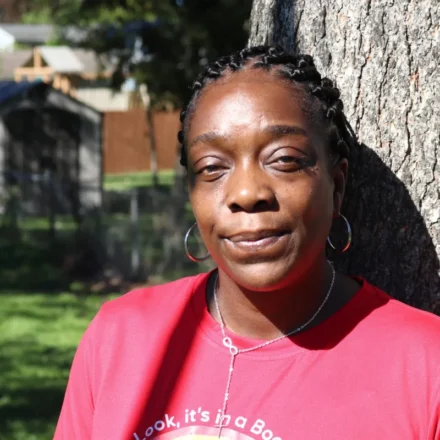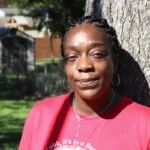
























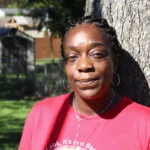















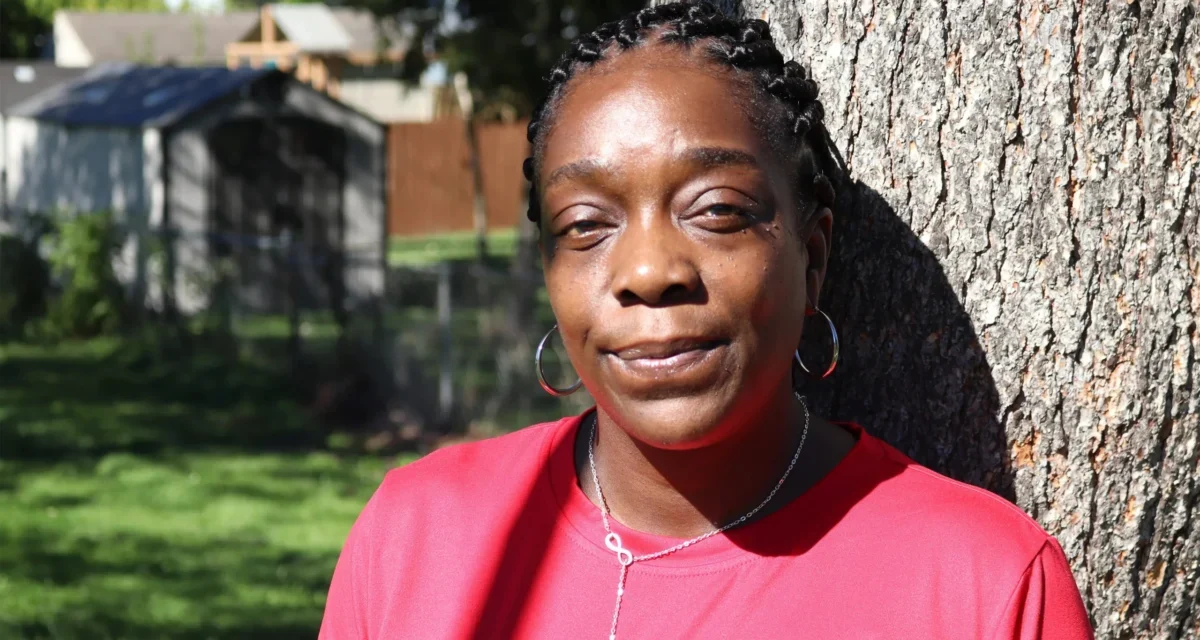




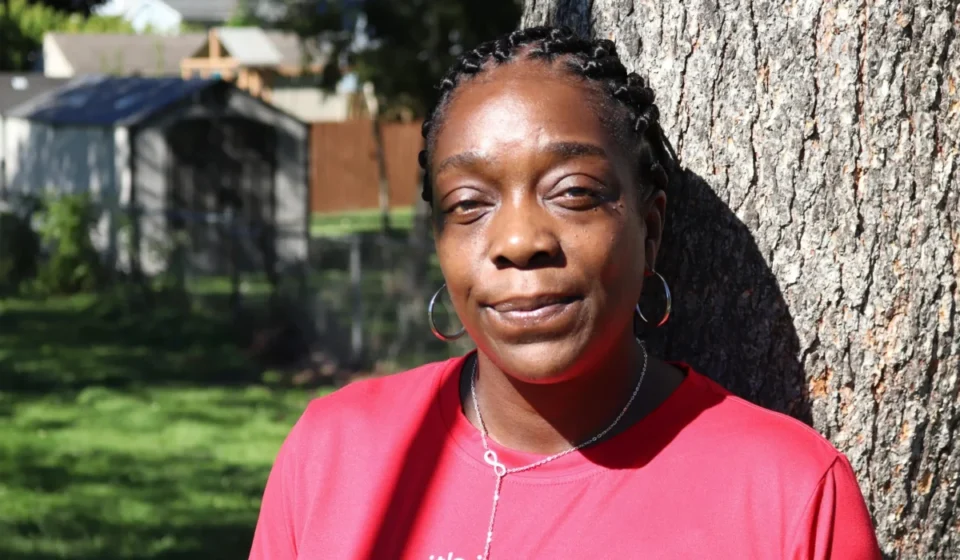

LANSING, Mich. — For Christina Starks-Clay, a childhood special education paraprofessional, the American healthcare system is not a matter of abstract policy; it is a ledger of mounting debt and agonizing choices. Standing in a sweltering line in downtown Lansing this past September, she pulled out her smartphone to display a screenshot: a $1,000 cashier’s check. It was a partial payment toward her son’s dental bills—a debt that lingered at $389 even after her insurance kicked in. Weeks earlier, a routine cleaning for herself had set her back $600.
"I’m telling myself, ‘Tina, be grateful you were in a position to do this,’" she said, reflecting on the grim math required just to maintain basic health. "A lot of people couldn’t do what I had to do today. I couldn’t do it. But I did. So now, I need to hear: How are you going to make this better for everyone?"
Starks-Clay is one of many Americans currently caught in the tightening vice of rising premiums, high deductibles, and the looming fear of medical insolvency. Her search for answers led her to a town hall hosted by U.S. Senate candidate Abdul El-Sayed, where the rallying cry "Medicare for All" served as both a campaign promise and a beacon of hope for a crowd desperate for a fundamental shift in how the nation treats its sick.
The Anatomy of a Grassroots Movement
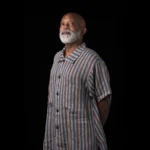
The atmosphere at the Lansing event was heavy with the shared anxieties of a middle class in decline. The line, which stretched for blocks, was a cross-section of Michigan’s economic reality: a professor emeritus at Michigan State University worrying about his grandchildren’s future due to his children’s $9,000 insurance deductible; a man recounting his brother’s descent into thousands of dollars of medical debt; and healthcare workers describing the daily tragedy of patients choosing between life-saving medication and groceries.
When El-Sayed, a physician and former public health director for Detroit, took the stage, the crowd erupted in a familiar chant: "Money out of politics! Money in your pocket! Medicare for All!"
For El-Sayed, who has championed this policy since his 2018 gubernatorial bid, the message is a distillation of systemic frustration. However, the movement is not confined to Michigan. As midterm elections approach, Democrats in states ranging from Maine to Minnesota are increasingly touting the dissolution of the private insurance status quo in favor of a single-payer system.
Chronology: From the ACA to the Current Crisis
To understand why "Medicare for All" has surged to the forefront of the political consciousness, one must look at the trajectory of U.S. healthcare policy over the last decade and a half.
2010: The passage of the Affordable Care Act (ACA) marked a watershed moment. It cut the nation’s uninsured rate nearly in half and prohibited insurance companies from denying coverage based on preexisting conditions. For years, the expansion of Medicaid across 40 states and the District of Columbia provided a safety net for millions of low-income and disabled Americans.
2016–2020: The concept of "Medicare for All" began its transition from the fringe to the mainstream of Democratic politics, propelled by the presidential campaigns of Sen. Bernie Sanders. It became the "shiny object" of progressive policy, gaining traction as a solution to the perceived inadequacies of the ACA.
2024–2025: The political tide shifted. Following the 2024 presidential victory of Donald Trump, the legislative landscape turned adversarial toward the ACA. The expiration of enhanced tax subsidies led to a 20% average hike in insurance premiums for Michigan’s individual marketplace. Concurrently, the enactment of the "One Big Beautiful Bill Act" (OBBBA) introduced significant cuts to Medicaid expansion. Estimates from the Urban Institute suggest that up to 355,000 Michiganders could lose their Medicaid coverage by 2028, signaling a rapid reversal of the gains made since 2010.
Supporting Data: The Cost of Discontent
The appetite for systemic change is not merely emotional; it is rooted in hard data. A recent KFF poll indicates that support for "Medicare for All" is at its highest level in at least a decade, with two-thirds of Americans favoring the expansion of a government-run health program.
However, the definition of the term remains fluid. "Medicare for All" traditionally entails a single, federal health insurance program that would effectively eliminate private insurance—a prospect that terrifies some and energizes others. Pollsters have noted that public support is highly sensitive to the framing of the policy; when people are warned of the potential for tax increases or the loss of existing private plans, support fluctuates.
Despite this, the urgency is undeniable. According to Gallup, fewer than half of Americans now report that they can comfortably afford their healthcare. Jonathan Oberlander, a professor at the University of North Carolina-Chapel Hill and a specialist in the politics of healthcare reform, notes that the current era is one of profound "disenchantment."
"Too many people don’t have health insurance, too many people who do have insurance can’t afford medical care, and many people are terrified about the costs of being sick," Oberlander explained. "In an electorate that wants change, Medicare for All is an important symbol."
Official Responses and the Ideological Divide
The debate has polarized the Michigan Senate race. While El-Sayed frames the issue as a human right, his opponent, Republican Mike Rogers, characterizes the proposal as a fiscal and social disaster.
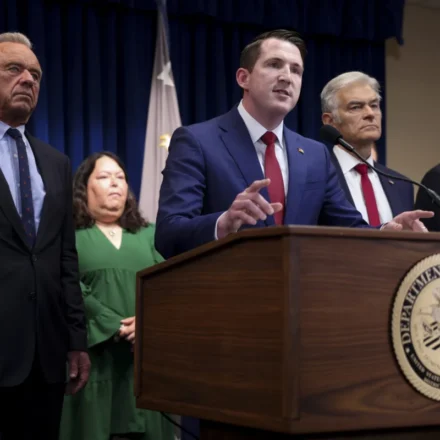
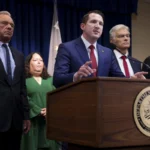
Rogers recently unveiled a healthcare platform that attacks the "Medicare for All" model as an act of state-sponsored theft. "If the government’s going to give you something, they have to take it away from someone else," Rogers argued during a press conference. He points to the estimated $4 trillion annual price tag as evidence that the system would inevitably lead to massive tax hikes and the dismantling of private coverage for millions.
Conversely, proponents point to studies like the recent preprint from Yale researchers, which suggests that while implementing a universal system would cost roughly $4.2 trillion, it would simultaneously save the economy $1 trillion in total healthcare spending through efficiency and reduced administrative bloat.
The tension, however, is not just ideological—it is practical. "It doesn’t matter if the fears [Republicans] are spreading are actually accurate," Oberlander noted. "Politically, what matters is if they can scare people."
The Human Cost: Stories from the Front Lines
The statistics often mask the visceral reality of the current system. Darleana Ash, who works at a medical diagnostics lab, reports a harrowing trend: patients are increasingly skipping essential tests because they are out-of-network or simply too expensive. For elderly patients, the choice is often binary: medication or food.
The human toll is perhaps best exemplified by Cindy Lou Coolich, a retiree who once spent her career helping others navigate the enrollment process for insurance. After a bout of sepsis left her disabled, she found herself on the other side of the desk, living on $900 a month in Social Security and having lost her 15-acre farm.
Her eventual financial stability came only after the death of her ex-husband, which allowed her to claim his Social Security benefits. "So now I’m doing quite well!" she laughed, though the irony was not lost on her. In her view, a functioning healthcare system should not require a death to provide security for the living.
Implications: A Distant Horizon
Even if the political momentum for "Medicare for All" culminates in a victory for its most vocal proponents, experts warn that the road to implementation is paved with obstacles.
"The chances of Medicare for All replacing the current system remain very remote in the short to medium term," Oberlander said. The combination of industry lobbying, moderate Democratic resistance, and Republican opposition creates a formidable firewall against such a sweeping transition.
For voters like Thomas "Jermaine" Carey, a self-described activist who attended an El-Sayed rally in Detroit, the skepticism remains palpable. Having felt "sold out" by the political establishment for years, Carey views the campaign rhetoric with a cautious eye.
"It’s still America," he said, shrugging. "You still have super PACs, the lobbyists that control everything."
As the election cycle draws to a close, the "Medicare for All" debate remains a litmus test for the American electorate’s patience. It is a conflict between the desire for a radical, protective safety net and the fear of a system that, while broken, remains the only one millions of Americans have ever known. Whether or not the policy ever becomes law, the desperation expressed by voters in Lansing suggests that the status quo is increasingly untenable, leaving the next generation of leadership with a mandate for change that they may find difficult to ignore.