
























































Crisis in the Classroom: Minneapolis Public Schools Propose Radical Restructuring Amid Enrollment Tsunami

By Staff Reporter
Minneapolis Public Schools (MPS) stands at a critical juncture. Faced with a persistent $40 million budget deficit and a demographic landscape that has shifted dramatically over the last decade, the district’s leadership has unveiled a sweeping "transformation" strategy that threatens to fundamentally alter the city’s educational map. Superintendent Lisa Sayles-Adams presented three distinct consolidation plans to the school board this week, proposals that could shutter up to 16 schools and displace thousands of students.
The intensity of the debate at Tuesday night’s board meeting underscored a deepening rift between the district’s central administration, which argues that consolidation is an existential necessity, and a growing chorus of parents and educators who fear that the proposed remedies will do more harm than good.
The Core Proposals: Reshaping the District
The three plans introduced by Superintendent Sayles-Adams aim to realign K-12 pathways and attendance boundaries, a move the district claims is essential to right-sizing its infrastructure. If a plan is selected for implementation—with a pivotal board vote scheduled for November 10—it would take effect in the fall of 2027.
The scope of the change is significant: officials estimate that up to 14% of the district’s current student body would be directly impacted by the boundary adjustments and school closures. The district’s objective is to move away from a model where too many buildings operate at a fraction of their capacity, leaving them unable to sustain robust academic programming, electives, and specialized staffing. Under the new vision, the administration asserts that over 70% of MPS students would attend schools with "complete" programming and resources.
A History of Uncertainty: The Chronology of Decline
The current turmoil did not emerge in a vacuum; it is the culmination of years of structural decline. The district currently manages a physical footprint designed for 43,000 students, while serving only 30,000. This disparity has created a "hollowed-out" effect, where operational costs remain high while per-pupil funding—the lifeblood of public schools—remains tied to headcounts.
The path to this moment has been paved with prior attempts at stabilization:
- 2020: The district implemented the "Comprehensive District Design" (CDD), a major overhaul of boundary lines and magnet programs intended to increase equity and efficiency. However, the years following the CDD saw a dramatic exodus of thousands of students, sparking intense debate over whether the plan served as a catalyst for flight or merely failed to stem an existing tide.
- 2023: The concept of the current round of "restructuring" was officially introduced, acknowledging that the CDD had not solved the district’s long-term fiscal and enrollment challenges.
- Fall 2025: The board issued a formal resolution directing the superintendent to provide actionable data and options by April 2026.
- Summer 2026: Superintendent Sayles-Adams and her administrative team spent the summer synthesizing data to create the three options presented this week.
The Data Dilemma: Efficiency vs. Community
The district’s argument is rooted in cold, hard economics. With more than half of the district’s 56 schools operating below the threshold required to provide consistent academic support, the current model is, in the eyes of the administration, unsustainable.
However, the district has yet to provide a clear fiscal analysis of the potential savings. While the consolidation is expected to streamline costs, the financial impact remains speculative, dependent on the spring budget cycle and, perhaps more importantly, the reactions of families.
Critics, including board member Greta Callahan, warn that the district is relying on a faulty premise: the "capture rate." The district assumes that students displaced by a school closure will simply move to another MPS facility. Callahan argues that historical data suggests the opposite. "Families who lose their neighborhood school do not reliably stay," she noted during the meeting, pointing to the post-2020 enrollment drop as a cautionary tale of what happens when the community fabric is disrupted.
Voices of Opposition: Parents and Teachers Respond
The sentiment among the parents who filled the meeting room on Tuesday was one of frustration, anxiety, and deep skepticism.
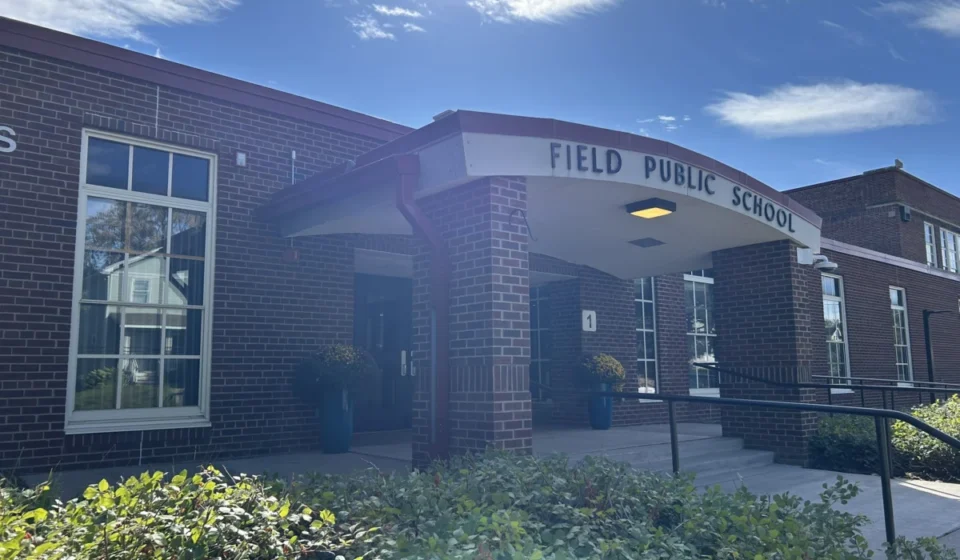
Susan Dreiling, a parent at Field Elementary—a school slated for closure under all three proposed scenarios—spoke for many when she expressed a lack of confidence in the current leadership’s strategy. "Hard plans can be the right plans, but we’ve got to have confidence in the leadership that’s putting it through," she said.
For parents like Dreiling, the school is more than just a building; it is a community hub. "It’s parents that know each other by name," she said, describing the daily rituals of drop-offs and the organic networks formed between families. "It’s the little conversations. It’s the school buses. It’s beautiful to show my child and her peers what the power of a strong school is."
The Minneapolis Federation of Teachers (MFT) has been equally vocal, characterizing the timeline as "unacceptable." MFT President Marsha Howard pointed out that the district’s assessment of "failing" schools seems detached from reality. She cited Kenny Elementary, which is on the closure list despite having recently won an award of excellence, and Bethune Arts Elementary, which currently maintains a waitlist—a metric typically associated with a healthy, desirable school.
"If you are operating under a premise that is outdated by the time you present it to the public," Howard argued, "what that shows is that you’re not reading the room."
Implications: The High Stakes of Transformation
The potential consequences of these closures extend far beyond the balance sheet. If the district proceeds with these plans, it faces the risk of a "death spiral": closing schools to save money causes families to leave the district, which leads to further drops in funding, necessitating further closures.
Furthermore, the uncertainty is placing an immense, intangible tax on the district’s workforce. Teachers and staff are being asked to maintain high-quality instruction while simultaneously fighting to keep their schools—and their jobs—from disappearing. "How do you fight to keep your school in your community and do your day job all at the same time?" Dreiling asked.
The administration contends that the alternative—doing nothing—is a guarantee of continued mediocrity and eventual systemic collapse. By consolidating, they argue they can provide better, more consistent services to a smaller number of buildings, thereby creating a more stable and equitable district for those who remain.
Next Steps: The Community’s Turn
The district has scheduled a series of community meetings between September 30 and October 9. These sessions are intended to gather public input, though many parents remain cynical about whether their feedback will actually influence a process that feels pre-determined.
As November 10 approaches, the school board faces an unenviable task. They must weigh the cold, mathematical reality of an empty, underfunded building against the warm, vibrant, and irreplaceable nature of a school community. For the families of Minneapolis, the upcoming vote is not just about logistics or boundary lines—it is about the future identity of their neighborhoods and the very definition of public education in the city.
Whether the board chooses to push forward, pause for further study, or rethink the entire approach, the outcome will define the educational landscape of Minneapolis for a generation to come. For now, the city waits, watching to see if the "transformation" will lead to a renaissance or a retreat.