













































By [Your Name/Journalistic Byline]
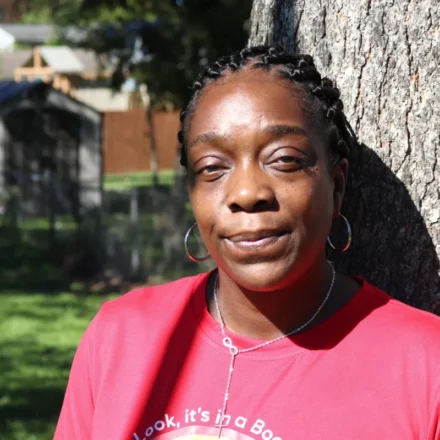
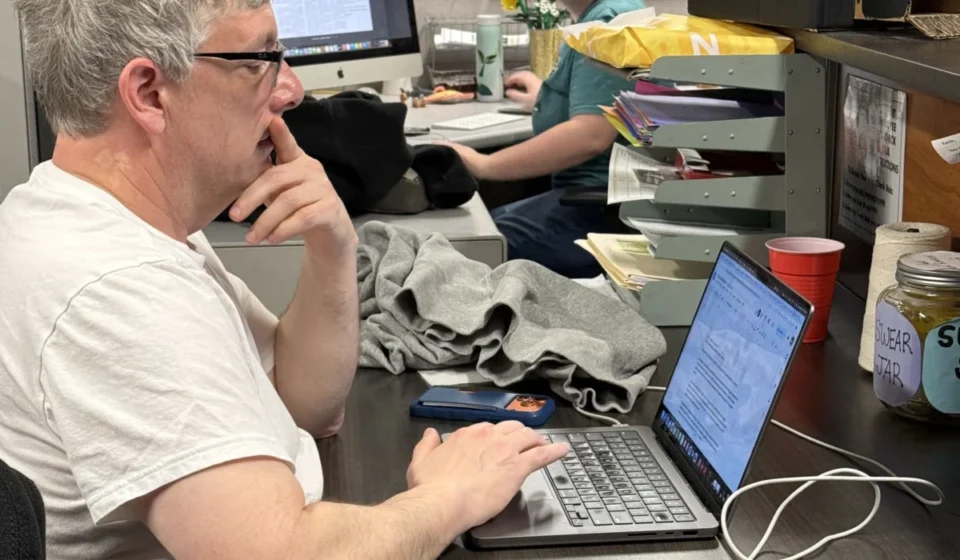
MANKATO, Minn. — It is 8:00 p.m. on a Monday, and the newsroom of The Reporter at Minnesota State University, Mankato, is a study in controlled chaos. For Anahi Zuniga, the paper’s editor-in-chief, the final hour before the print deadline is not a moment for panic; it is the rhythmic, familiar cadence of a century-old ritual.
As the clock ticks toward the 9:00 p.m. cutoff, Zuniga remains composed. While she admits her pulse quickens as the seconds slip away, the atmosphere is one of practiced efficiency. Articles are being finalized, photos are being cropped, and the delicate architecture of the front page is being set in place.
"Everyone should be done in the next half hour," Zuniga says, a slight smile betraying her calm. "It’s sometimes a close call, but that’s the nature of the beast."
Once the final files are uploaded and dispatched to the press, the physical transformation begins. By Tuesday morning, the results of the students’ labor will be hitting newsstands across campus. This week’s headline—a deep dive into a proposed 7% tuition hike—is a reminder of the vital, watchdog role these student-run publications play in the ecosystem of higher education. For Zuniga, holding the physical paper is more than just checking for typos; it is a tangible connection to a legacy. "It’s a satisfying feeling," she reflects. "It keeps history alive."
A Century of Chronicles: The Enduring Legacy of The Reporter
The Reporter recently marked its 100th anniversary, a milestone that underscores its resilience. In an era where the broader newspaper industry faces existential threats from digital disruption and declining advertising revenues, The Reporter stands as a defiant outlier. It remains one of the few student publications in Minnesota to maintain a twice-weekly print schedule alongside a robust digital footprint.
This persistence is particularly noteworthy given that Minnesota State University, Mankato, no longer hosts a dedicated mass communication department. Traditionally, such programs acted as the "feeder" for student newsrooms. Today, the staff of The Reporter comes from a diverse array of majors, united by a curiosity about the world and a desire to document the pulse of their campus.
The paper is not merely a training ground; it is a laboratory for democracy. For Zuniga, the experience has been transformative. "I wasn’t very confident with who I was when I first enrolled here," she admits. "I feel so sure of myself now and who I want to be after graduation. I can use my words as a way to express what I feel and think is necessary."
The State of the Industry: A Patchwork Landscape
The survival of student journalism across Minnesota is far from uniform. While The Reporter thrives, other institutions have been forced to navigate the "new normal" of media consumption.
The decline of print is a trend that has swept across the state’s colleges and universities, often leaving a vacuum in institutional accountability. At Bemidji State University, the Northern Student has transitioned from a weekly newspaper to a quarterly magazine. At Minnesota State Moorhead, The Advocate has pivoted to a digital-first model, printing only once per semester. Meanwhile, Minneapolis College currently lacks a student newspaper entirely, though discussions are underway within the student government to revive such a publication.
Despite this "natural attrition," as described by Doug Westerman, advisor to The Winonan at Winona State University, the spirit of student journalism remains vibrant. Westerman notes that the cyclic nature of college life—students graduating and new, eager voices replacing them—is both a challenge and a strength.
"You still have to check sources, you still need to do research, whether it’s going on a printed page or going on a post," Westerman says. He often finds himself acting as a professional bridge, fielding calls from prospective employers asking about his former students. "They’ve developed the skills to ask the hard questions. That doesn’t go out of style."

Across the state, the picture is varied:
- University of Minnesota System: The Minnesota Daily has long since abandoned the physical press for a daily digital update. Duluth’s The Bark utilizes a hybrid model, mixing daily digital content with a monthly print magazine.
- Private Colleges: The Minnesota Private College Council reports that most of its 18 member schools maintain active publications, ranging from the Gustavian Weekly at Gustavus Adolphus to The Mac Weekly at Macalester. Many of these papers persist in the absence of formal journalism degrees, proving that the drive to report is often an extracurricular passion rather than a degree requirement.
Institutional Value: Beyond the Classroom
The celebration of The Reporter’s centennial in late March brought together alumni who have gone on to forge successful careers in the industry. Among them was Myron Medcalf, an ESPN senior writer and Star Tribune columnist, who served as the paper’s first African-American editor-in-chief in 2003.
During his keynote address, Medcalf emphasized that the skills learned in the humble, cramped quarters of a student newsroom are identical to those required in a major news organization. "I learned the ins and outs of actually being on deadline, the accuracy that’s necessary in your reporting, the fact that you are communicating to an audience that’s much bigger than you are," Medcalf said. "It’s not about you. It’s about the people who are going to pick up your story and read it."
Medcalf’s remarks touched on the profound responsibility of the written word. In an era characterized by an endless flood of information, the curated, fact-checked work of student journalists provides a necessary anchor. "One-hundred years from now, all of us are gone and what we will have left is what we contributed to this world," he added. "A big part of that will be the archives from the MSU Reporter and all of these publications."
The Mechanics of a Newsroom
Back in the Reporter office, the editorial team—Addie Larson, Alexis Darkow, Isaac Rozwadowski, and Logan Schlosser—exhibit a level of editorial independence that would be the envy of many small-town commercial papers. They set their own agendas, chase their own leads, and manage their own production schedules.
The operation is supported by a lean staff. Jane Tastad, the business manager, and Dana Clark, the advertising design and production coordinator, are the only two full-time university staff members dedicated to the paper’s success. Robb Murray, an editor at the Mankato Free Press, rounds out the team as a professional advisor, providing the "extra set of eyes" necessary to maintain journalistic standards.
This structure allows the students to navigate the complexities of both editorial and business operations. It is a real-world crash course in media sustainability, forcing them to balance the need for revenue with the demand for investigative integrity.
Implications: A Lens on the World
As the final deadline of the week passes, the team does not celebrate with a long break. Instead, they immediately congregate in Zuniga’s office, the whiteboard already being wiped clean to map out the next edition. The cycle is relentless, but for these students, it is also addictive.
The implications of this work extend far beyond the campus borders. Student journalists are often the only reporters covering local school boards, tuition committees, and campus protests—issues that impact thousands of lives. By documenting these events, they provide a record that would otherwise disappear into the ether of social media or remain entirely undocumented.
"We get to have all these very meaningful conversations with classmates and see their thoughts," Zuniga says, reflecting on the power of her position. "I think, overall, working at a college newspaper just opens up a completely different lens on how you view the world."
In a time when the "newspaper industry" is often written off as a dying medium, the lights burning late in the office of The Reporter suggest a different story. Journalism, at its core, is not about the medium—it is about the act of witnessing. As long as there are students willing to ask questions, verify facts, and hold power to account, the "ink-stained" tradition will find a way to survive, one headline at a time.