


























































WASHINGTON D.C. – The quest for affordable and accessible healthcare remains a defining battleground in American politics, and within the Democratic Party, a deep ideological fissure has emerged, starkly evident in the competitive races across Minnesota. As the 2026 election cycle heats up, candidates are navigating a treacherous landscape, balancing the urgent needs of constituents with the divisive debate between a "public option" and the more sweeping "Medicare for All" proposals. This internal struggle, mirroring a national trend, highlights the profound challenges in reforming a system that many agree is fundamentally broken.
The debate came into sharp focus at a recent town hall in New Richland, where Jake Johnson, a Democrat vying to represent southern Minnesota’s 1st Congressional District, artfully sidestepped a direct endorsement of "Medicare for All." Johnson, a self-identified moderate seeking to unseat Republican incumbent Rep. Brad Finstad, expressed profound empathy for those burdened by soaring health insurance premiums and insurmountable medical costs. His proposed solution: "a strong public option to the health insurers we have now." This model, which would allow Americans to purchase a government-sponsored healthcare plan designed to compete with private insurers, represents a centrist approach aimed at driving down costs and expanding coverage.
However, Johnson’s measured stance, and that of other party centrists, finds itself increasingly at odds with the progressive wing of the Democratic Party. Fresh off impressive primary victories nationwide and a strong showing in Minnesota’s DFL endorsement process, progressive activists and Democratic socialists dismiss the public option as an insufficient remedy. They argue such reforms merely "nibble around the edges" of a systemic problem, failing to curb the perceived profiteering of insurance companies and pharmaceutical giants. For them, the only viable path forward is a complete overhaul: "Medicare for All."
The Fissure Within: Public Option vs. Medicare for All
The fundamental disagreement boils down to two distinct visions for American healthcare.
The Public Option: A Centrist Approach to Market Competition
The public option, as advocated by Johnson and other moderates, envisions a federal government-administered health insurance plan that would operate alongside and compete with existing private insurers. Proponents argue that this competition would force private companies to lower premiums, reduce deductibles, and improve the quality of their offerings to retain customers. The goal is to provide a more affordable alternative, especially for those in areas with limited private insurance choices or facing exorbitant costs, without entirely dismantling the private insurance market. It’s seen as an incremental, pragmatic step towards universal coverage, building upon the framework established by the Affordable Care Act (ACA).
The idea is not new; a public option was initially a key component of the ACA, championed by former President Barack Obama. However, powerful lobbying efforts from health insurers, pharmaceutical companies, and other healthcare industry stakeholders, coupled with opposition from some centrist Democrats, ultimately led to its removal from the final legislation. Its revival now reflects a renewed push by moderates to address healthcare affordability without embracing a single-payer system, which they view as politically unfeasible or economically disruptive.
Medicare for All: A Bold Vision for a Single-Payer System
In stark contrast, "Medicare for All" is a comprehensive proposal to replace the nation’s fragmented patchwork of private insurers and government programs like Medicaid and the existing Medicare with a single, government-run health insurance system. Under the legislation championed by Rep. Pramila Jayapal (D-Wash.) in the U.S. House and Sen. Bernie Sanders (I-Vt.) in the U.S. Senate, every U.S. resident would be guaranteed comprehensive healthcare as a human right. This would eliminate all premiums, deductibles, and most copayments, shifting the financial burden to a system funded primarily through federal income and business taxes.
While private insurers might still be permitted to offer supplemental plans for services not covered, their dominant role in providing primary healthcare coverage would largely end. Proponents argue that the administrative savings achieved by eliminating multiple insurers, marketing costs, and complex billing procedures, coupled with the ability to negotiate drug prices collectively, would offset the higher federal taxes for most working Americans and businesses. They point to the healthcare systems of other industrialized nations, which operate under single-payer or universal models, as evidence of its potential efficacy and improved health outcomes.
The concept of a national, government-run healthcare system based on the Medicare model has circulated for decades, though often with little political traction. However, the current wave of progressive activism has reinvigorated the movement, positioning it as a moral imperative and the only true solution to what they describe as a healthcare crisis fueled by corporate greed.
Minnesota’s Battleground: Congressional Races
The ideological fault lines are particularly visible across Minnesota’s congressional districts, where candidate positions often reflect the political leanings of their respective constituencies.
1st Congressional District: Jake Johnson’s Moderate Stance
In Minnesota’s 1st Congressional District, a region that gave former President Donald Trump 55% of the vote in 2024, Jake Johnson’s moderate approach to healthcare reform is a calculated strategy. His emphasis on a public option rather than Medicare for All is likely an attempt to appeal to a broader electorate, including independent and moderate Republican voters who might be wary of a full government takeover of healthcare. By sympathizing with the struggles of affording healthcare while proposing a less radical solution, Johnson aims to demonstrate responsiveness without alienating a district that leans conservative. His challenge is to convince voters that his public option proposal offers substantial relief without being dismissed as "nibbling around the edges" by progressives or as "socialized medicine" by conservatives.
2nd Congressional District: A Progressive Hotbed
The neighboring 2nd Congressional District presents a stark contrast. Here, former Vice President Kamala Harris secured 52% of the vote, making it a more fertile ground for progressive ideas. The race for the seat, currently held by Rep. Angie Craig who is running for U.S. Senate, has become a microcosm of the national Democratic healthcare debate, featuring candidates with distinctly different approaches.
-
Matt Little: A Zealous Proponent of Medicare for All
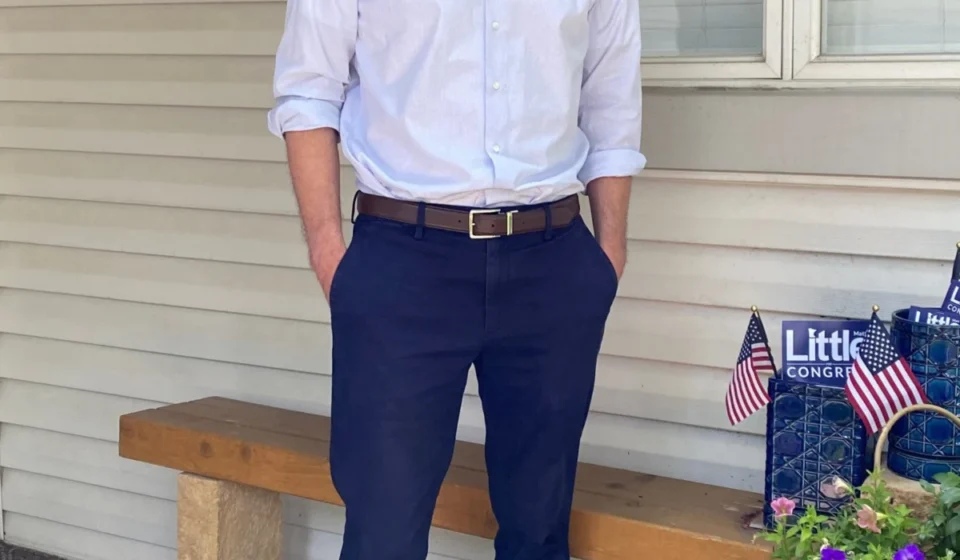
Matt Little, the DFL-endorsed candidate for the 2nd District, is an unequivocal champion of Medicare for All. A former state senator and mayor of Lakeville, Little’s advocacy is deeply personal. He recounted the harrowing experience of his mother’s grave illness, struggling for a year to access a specialist even with insurance. "And we were lucky to have insurance," Little emphasized, underscoring the systemic failures that affect even those with coverage. His personal narrative fuels his belief that healthcare should be a fundamental human right, not a privilege tied to employment or income.Little firmly supports the Jayapal-Sanders bill, which he believes would fundamentally transform healthcare by eliminating out-of-pocket costs and guaranteeing comprehensive care for all. He dismisses the public option as "just another handout to private insurance companies," arguing that it would inadvertently benefit private insurers by siphoning off healthier, younger individuals, leaving the public option with a disproportionate share of older and sicker Americans. For Little, the time is politically ripe to establish a "single payer" system, citing the recent cuts to Medicaid by the Trump administration and the GOP Congress’s failure to extend enhanced Affordable Care Act subsidies, which left approximately 90,000 Minnesotans vulnerable. He frames the current moment as a "defining moment" for the country, necessitating bold, transformative change.
-
Kaela Berg: Pragmatism Amidst Ideals
State Rep. Kaela Berg, also running for the 2nd District seat as a progressive, offers a more nuanced perspective. While aligning with the progressive ideal, Berg demonstrates a pragmatic flexibility. She supports the public option "and anything that gives people more health coverage," even as she continues to "fight for Medicare for All." Her approach acknowledges the political realities of achieving large-scale reform. "It’s great to say Medicare for All and energize people," Berg stated, "But we need to have (more) coverage now, whatever that looks like… while we continue to fight for Medicare for All."
Berg’s background as a flight attendant and union activist sheds light on her position. Organized labor is notably split on Medicare for All. While some prominent unions, like the United Auto Workers and the Association of Flight Attendants (Berg’s own union), endorse the idea, many others strongly oppose it. For decades, healthcare benefits have been a potent bargaining chip for unions, a hard-won gain for their members. The prospect of a government-run system, while potentially beneficial, could strip unions of this leverage and disrupt existing, often robust, employer-sponsored plans. Berg’s willingness to embrace immediate, incremental gains while maintaining the long-term vision reflects this complex union perspective.
-
Dr. Matt Klein: Physician’s Perspective and Public Option Preference
The third Democrat in the 2nd District race, state Sen. Matt Klein, brings a unique perspective as a physician and internist at the Mayo Clinic. Dr. Klein unequivocally states his belief in the need "to get to universal healthcare" and pledges to "support whatever bill advances that" if elected to Congress. However, his professional background appears to influence his preferred method. He stops short of endorsing Medicare for All, instead favoring the implementation of a public option.Dr. Klein’s stance aligns with the prevailing views of powerful medical organizations. The American Medical Association (AMA), for instance, is firmly opposed to Medicare for All, arguing that it would limit patient choice and physician autonomy. Similarly, the American Hospital Association (AHA) and other major medical groups express strong reservations about a government-run, single-payer plan, fearing reduced reimbursements, bureaucratic hurdles, and potential rationing of care. Dr. Klein’s preference for the public option reflects a desire to expand access while preserving aspects of the existing system that healthcare providers believe are crucial for quality care and innovation. This division is further highlighted by the fact that while Reps. Ilhan Omar (D-5th District) and Betty McCollum (D-4th District) co-sponsor Jayapal’s Medicare for All bill, Rep. Kelly Morrison (D-3rd District), also a physician, has not.
The Senate Showdown: Statewide Implications
The healthcare debate extends to the statewide U.S. Senate race for retiring Sen. Tina Smith’s seat, where two prominent Minnesota Democrats, Rep. Angie Craig and Lt. Gov. Peggy Flanagan, are also divided on the path to universal health coverage.
Lt. Governor Peggy Flanagan: Unwavering Support for Medicare for All
Lt. Governor Peggy Flanagan is a staunch advocate for Medicare for All, expressing profound dissatisfaction with the current system. "This is not working," Flanagan declared, "It is broken and I think people are ready (for Medicare for All)." She acknowledges the significant political hurdles, particularly the necessity of Democratic control of the White House and both chambers of Congress to enact such sweeping reform. However, Flanagan firmly rejects the strategy of defaulting to a public option with the hope of gradually moving towards Medicare for All. "You should not start at the bottom because you are going to get even less," she asserted, articulating a strategic perspective that demands an uncompromising pursuit of the most ambitious reform from the outset. Her stance embodies the progressive belief that incremental steps often dilute the ultimate goal and fail to address the root causes of the problem.
Representative Angie Craig: Championing the Medicare-X Choice Act
In contrast, Rep. Angie Craig, currently holding the 2nd Congressional District seat, has positioned herself as a champion of the public option. She recently introduced the "Medicare-X Choice Act," legislation designed to create a public option within the Affordable Care Act exchanges. Craig argues that this public option would "give the insurance companies some competition," thereby driving down premiums and improving coverage for all Americans. Her approach reflects a belief in market-based solutions and the power of competition to achieve better outcomes for consumers.
However, proponents of Medicare for All, like Matt Little, raise significant concerns about the public option’s potential unintended consequences. They argue that a public option, particularly if it targets a broad swath of the population, might primarily attract older and sicker individuals who struggle most with private insurance costs. This "adverse selection" could leave private insurers with a healthier, younger pool of customers, allowing them to pay out fewer claims and increase their profits, ultimately undermining the very competition the public option aims to create.
Craig also highlights other reforms she supports, including legislation to hold health insurance companies accountable for above-average denial rates and measures aimed at lowering prescription drug costs. These initiatives collectively underscore her commitment to addressing the escalating cost of medical care through a multi-faceted approach that prioritizes consumer protection and targeted interventions within the existing framework, rather than a wholesale systemic change.
Deep Dive: Economic and Political Realities
The debate between the public option and Medicare for All is not merely philosophical; it involves profound economic and political implications.
The Cost Debate: Funding Mechanisms and Economic Impact
One of the most significant sticking points for Medicare for All is its estimated cost, which some analyses project to be in the tens of trillions of dollars over a decade. Proponents argue that these figures often overlook the massive savings generated by eliminating private insurance premiums, deductibles, and co-payments for individuals, as well as the substantial administrative waste inherent in the current multi-payer system. They also point to the potential for the government to negotiate lower drug prices and healthcare service costs, similar to other developed nations. The funding mechanism would primarily involve higher federal income taxes and new business taxes, which advocates contend would be offset by the elimination of current healthcare expenditures for most working Americans and businesses.
Opponents, however, raise concerns about the immense tax burden, the potential for government rationing of care, and the disruption to a vast industry that employs millions. They also question the feasibility of such a massive transition, fearing economic instability and a decline in innovation within the healthcare sector. The public option, while also requiring government investment, is generally seen as a less costly alternative, as it maintains a significant role for private insurers and does not entail a complete overhaul of the financing system.
Public Opinion and Political Viability
Public opinion on healthcare reform is complex and often dependent on how questions are framed. While many Americans express dissatisfaction with the current system and support the idea of universal coverage, direct support for "Medicare for All" can fluctuate, particularly when framed in terms of higher taxes or the elimination of private insurance. The public option generally enjoys broader, though not universal, support as a less disruptive alternative.
Politically, the path to either reform is fraught with challenges. Medicare for All faces almost universal opposition from Republicans, who decry it as "socialized medicine" and an unacceptable government intrusion into personal healthcare decisions. Even within the Democratic Party, the divide between progressives and moderates creates a significant hurdle. For any substantial healthcare legislation to pass, it would likely require a Democratic president and control of both chambers of Congress, a formidable political alignment. The public option, while still facing Republican opposition, might garner more bipartisan support or at least face less intense internal Democratic resistance, potentially making it a more viable legislative outcome in the near term.
Stakeholder Perspectives: Unions, Medical Associations, Pharmaceutical Industry
Beyond the political parties, powerful interest groups exert significant influence on the healthcare debate. As noted, the American Medical Association and the American Hospital Association staunchly oppose Medicare for All, citing concerns about physician autonomy, patient choice, and the financial viability of healthcare providers under a single-payer system. The pharmaceutical industry, a powerful lobbying force, would also fiercely resist any system that would enable the government to negotiate drug prices, a core component of many Medicare for All proposals.
The labor movement, as evidenced by Kaela Berg’s position, remains divided. While some unions see Medicare for All as the ultimate protection for their members’ health, others are wary of relinquishing hard-won benefits negotiated with employers, fearing a loss of control and potential decline in quality. These diverse stakeholder interests add layers of complexity to an already intricate policy debate, making consensus building exceptionally difficult.
Challenges and the Path Forward
The Democratic Party’s internal debate over healthcare reform reflects a deeper ideological struggle about the role of government, the nature of economic systems, and the definition of fundamental rights in American society. Given the current political landscape, a single-payer system like Medicare for All faces significant legislative hurdles. The deep partisan divide in Congress, coupled with the internal schism among Democrats, means that a swift and comprehensive overhaul of the nation’s healthcare system is unlikely in the immediate future.
However, a Democratic takeover of the U.S. House and/or U.S. Senate in the upcoming elections could certainly unleash a flurry of Democratic healthcare legislation. This would undoubtedly lead to a vigorous debate over how best to reverse the alarming increase in uninsured Americans and curb escalating medical costs. Even if Medicare for All remains out of reach, a unified Democratic government could pursue significant reforms, potentially including the establishment of a robust public option, enhanced ACA subsidies, and aggressive measures to lower prescription drug prices. Any truly substantial, transformative change, however, would almost certainly have to await the election of a Democratic president committed to fundamental healthcare reform.
The healthcare debate in Minnesota and across the nation is more than just a policy discussion; it is a profound reflection of America’s values and priorities. As candidates like Jake Johnson, Matt Little, Kaela Berg, Dr. Matt Klein, Peggy Flanagan, and Angie Craig articulate their visions, they are not only vying for votes but also shaping the very future of how Americans access and afford the care they need. The resolution of this internal Democratic conflict, or its continued evolution, will undoubtedly be a defining narrative in the years to come.