





















































Beyond the Canopy: How "Meet Me in the Forest" Reimagines Nature as a Mirror of Human Trauma and Triumph

The Cafesjian Art Trust (CAT) Museum in Shoreview has transformed its gallery space into a sprawling, multidimensional woodland. However, visitors entering the museum’s latest exhibition, "Meet Me in the Forest," will find little in the way of traditional landscape paintings or idyllic pastoral scenes. Instead, they are met with a complex, often unsettling exploration of the forest as a metaphorical landscape—a place where the boundaries between memory, colonial history, personal trauma, and artistic sanctuary blur.
Curated by Jill Ahlberg Yohe and Linnea Seidling, the exhibition, which runs from September 3, 2026, through February 27, 2027, features a diverse array of media, including glass, ceramics, textiles, photography, and immersive installations. By grounding the show in the duality of the forest—as both a site of terror and a site of refuge—the curators have invited a dialogue about the ways we project our internal lives onto the natural world.
The Genesis of the Exhibition: From Drilling Holes to "Reverie Forest"
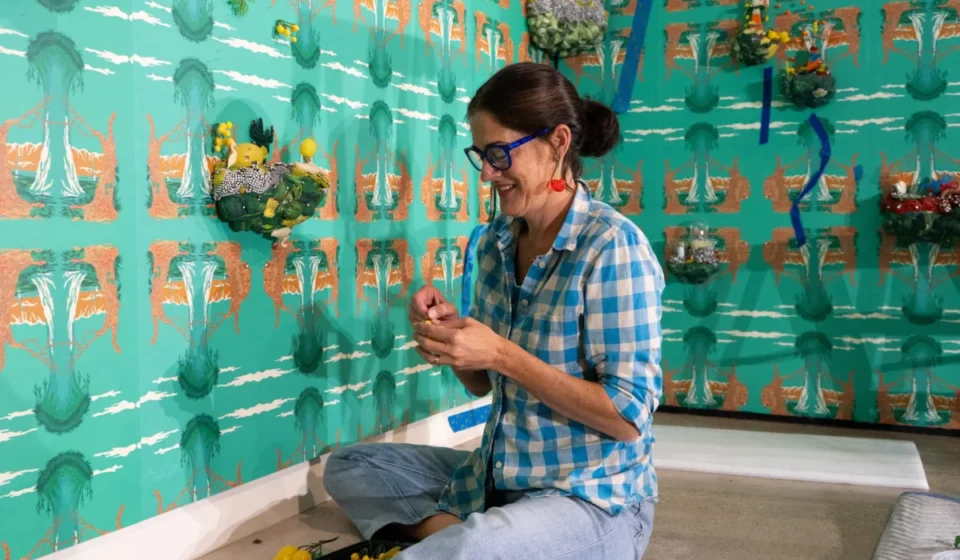
The preparation for the show was as deliberate as the art itself. Before a single piece of art was hung, museum staff began by drilling holes across three gallery walls, preparing the structural foundation for the intricate installations that would follow.
Among the primary contributors is artist Erica Rosenfeld, whose installation, Welcome to Reverie Forest: Sanctuary for Strange Creatures (2026), serves as a centerpiece for the exhibition. Rosenfeld’s process is notoriously meticulous; she constructs tiny, bespoke "nests" for a cast of bizarre, hybrid creatures she creates from glass, sculpture, and found objects.
For Rosenfeld, the forest is a place of inherent dichotomies. "It can be scary and beautiful," she notes. Her work, which began its conceptual evolution in 2017, draws heavily on the mid-century "paint-by-number" kits that surged in popularity during the McCarthy era. According to the artist, these kits—with their pastoral landscapes and adorable animals—represented a "sugar-coated reality" that was largely unattainable and served as a distraction from the pervasive fear and paranoia of the time. By subverting this aesthetic, Rosenfeld forces the viewer to confront a more surreal, fractured reality. Her forest is a sanctuary for misfits—a safe zone for the two-headed animals and hybrid beings that exist outside of societal constraints.
Chronology of a Curatorial Vision
The exhibition was developed over several years, with the museum acquiring five new works specifically for this show, supplementing them with long-term loans and pieces from its permanent collection.
- 2017–Present: Development of Erica Rosenfeld’s "Reverie Forest" body of work, focusing on the deconstruction of mid-century Americana kitsch.
- 2022–2024: Pao Houa Her completes her series "Other Pictures of Paradise," documenting the border jungles of Laos and Thailand.
- 2023: Kelly Sinnapah Mary creates She taught me to listen to the wind, exploring ancestral memory and colonial violence in Guadeloupe.
- Early 2026: Final selection of works and spatial planning by curators Jill Ahlberg Yohe and Linnea Seidling.
- September 3, 2026: Opening reception and commencement of the exhibition at the CAT Museum.
Supporting Data: The Weight of History in the Woods
The power of "Meet Me in the Forest" lies in its ability to anchor abstract metaphors in specific, often harrowing, historical realities.
Colonialism and Memory
Kelly Sinnapah Mary’s She taught me to listen to the wind (2023) is a stark reminder of the land’s dual role. By juxtaposing an intimate, erotic scene of bodies in forest leaves with a looming, menacing white claw, Mary addresses her family history as descendants of Tamil laborers in Guadeloupe. The plantation landscape is simultaneously a site of colonial violence and a vessel for her grandmother’s botanical knowledge—a bridge to the past that offers both survival and grief.
Displacement and The Secret War
Similarly, Pao Houa Her’s 3D lenticular print from her series Other Pictures of Paradise (2022–24) captures the psychological geography of the Laotian jungle. The work depicts the sites where Her’s family sought refuge during the CIA-led "Secret War." Through the lens of a lenticular print, the viewer sees a shifting reality: from one angle, poppies reach for the light in a serene landscape; from the other, the forest darkens, heavy with the implied threat of conflict. Her’s work does not choose between these states, but rather holds the beauty of the landscape and the terror of the historical trauma in a single, tension-filled frame.
Maximalism as Commentary
Ebony G. Patterson’s …among the blades between the flowers… takes a different approach. Using a hand-cut, jacquard-woven photo tapestry embellished with glitter, beads, and fabric, Patterson employs a "maximalist" aesthetic. Co-curator Ahlberg Yohe explains that this visual abundance is a strategic choice; it lures the viewer in with beauty, only to confront them with the difficult legacies of colonization and the vibrant, complex history of Carnival.

Official Responses and Curatorial Intent
Curators Jill Ahlberg Yohe and Linnea Seidling emphasize that the show was designed to challenge the traditional view of the forest as a static, romanticized space. Instead, they frame it as a site where human memory and creativity actively manifest.
"They’re just so variable and layered," Ahlberg Yohe said of the works. She pointed to the intentional dissonance created by placing glass, textiles, photography, and ceramics in close proximity. The goal is to create a "layered viewing experience"—a sentiment echoed by Seidling, who points to works like Kate Clements’ Stain (2022).
Stain is a glasswork that uses blood and scab-like textures, suspended by monofilament to cast an unsettling shadow on the wall. "It’s a layered viewing experience where it’s sparkly, colorful, and really beckoning," Seidling notes. "But then you look a little bit closer, and all of a sudden it becomes kind of terrifying."
This oscillation between attraction and repulsion is a hallmark of the exhibition. Whether through Amanda Michelle Smith’s ceramic piece Trust Issues—which navigates the emotional fallout of leaving a high-control religious community—or the broader themes of repair and belonging, the curators aim to present the forest as a space of abundance. It is a place where violence and beauty are not mutually exclusive, but are instead inextricably linked.
Implications: The Forest as a Mirror for Modernity
The implications of "Meet Me in the Forest" extend beyond the walls of the CAT Museum. In an era where our natural landscapes are increasingly vulnerable to climate change and political encroachment, the exhibition asks the viewer to consider the emotional labor we invest in the outdoors.
By framing the forest as a place where "human creativity, activity, and memory happen," the curators shift the narrative from one of loss to one of potential. The exhibition serves as a call to recognize that the land is not just a resource to be protected, but a witness to our history.
A Concurrent Cultural Dialogue
This theme of nature as a site of human connection continues in the broader community. The Mississippi Park Connection is presenting a screening of Out There: A National Parks Story on September 14 at the Parkway Theater in Minneapolis. Directed by Brenden Hall, the film captures the personal stories of park rangers, hikers, and enthusiasts. Much like the CAT Museum’s exhibition, Out There suggests that our relationship with nature is deeply personal—a source of both comfort and a reason to "keep fighting" for the landscapes we hold dear.
Conclusion: A Space for Everything
"Meet Me in the Forest" is not a quiet walk through the woods; it is an interrogation of the self. By bringing together artists who use nature to map the contours of trauma, identity, and survival, the Cafesjian Art Trust Museum has created a space that is as challenging as it is beautiful.
As visitors traverse the gallery, they are encouraged to look past the surface-level aesthetics of nature and into the complex, often messy, realities that define our human experience. Whether through the surreal "misfits" of Erica Rosenfeld or the glitter-drenched history of Ebony G. Patterson, the exhibition proves that the forest is a sanctuary—not because it is separate from the world, but because it is big enough to hold all of our contradictions.
Exhibition Details:
- Location: Cafesjian Art Trust Museum, 4600 Churchill Street, Shoreview.
- Dates: September 3, 2026 – February 27, 2027.
- Opening Reception: Thursday, September 3, 6 p.m. – 8 p.m. ($39).
- Further Information: cat.org