












































Bridging the Gap: Innovative Pilot Program Tackles Rural Lung Cancer Screening Disparities in Minnesota

This article was originally published by The Daily Yonder.
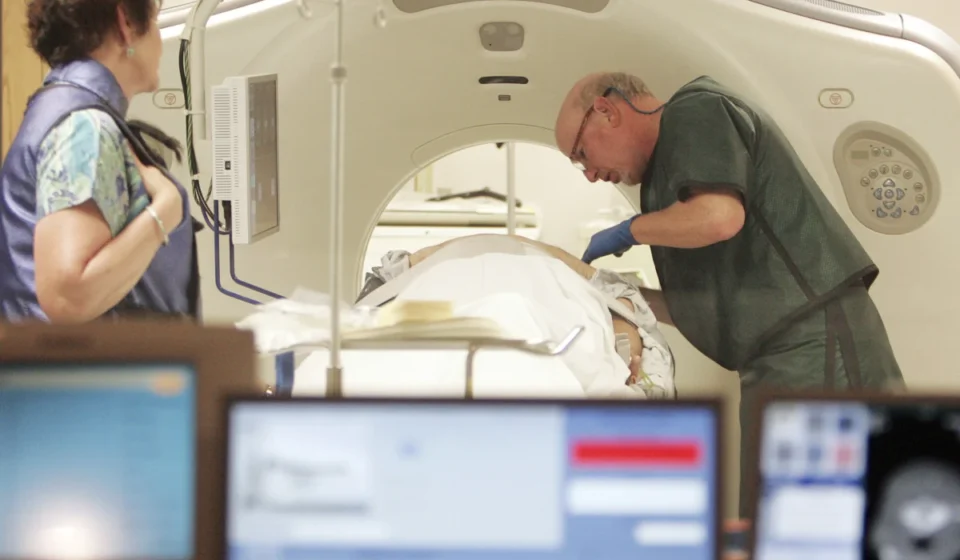
In the fight against lung cancer, early detection is the single most effective tool for survival. When caught in its earliest stages, survival rates for lung cancer can reach as high as 80% to 90%. Yet, for millions of Americans living in rural communities, these life-saving screenings remain frustratingly out of reach.
A groundbreaking research project spearheaded by the Masonic Cancer Center at the University of Minnesota, in partnership with the Minnesota Cancer Clinical Trials Network (MNCCTN), is now aiming to close this critical health gap. By fundamentally shifting how primary care clinics engage with patients, researchers hope to dismantle the barriers that have left rural residents disproportionately vulnerable to late-stage diagnoses.
The Core Problem: Why Rural Patients Are Falling Through the Cracks
Lung cancer screening is clinically recommended for individuals over the age of 50 who possess a significant history of tobacco use. Despite these clear guidelines, the uptake remains alarmingly low. According to Dr. Abbie Begnaud, a pulmonologist and associate professor at the University of Minnesota Medical School, less than 20% of eligible Minnesotans currently undergo the recommended screenings.
The barriers are multifaceted. Rural residents often face geographic hurdles, such as limited access to specialized imaging centers. However, logistical challenges are only half the battle. There is a pervasive, quiet crisis involving the psychological barriers surrounding lung cancer: the stigma of smoking.
"Anybody with lungs can get lung cancer," Dr. Begnaud told The Daily Yonder. "The problem is that less than 20% of eligible Minnesotans are actually screened for lung cancer."
Decades of public health messaging have successfully lowered smoking rates, but that success has come at a cost. The anti-smoking campaigns that saturated media for years—while scientifically sound—have inadvertently fostered deep-seated feelings of shame and blame among those who smoke or have a history of smoking.
"People who have smoked or continue to smoke are certainly aware that it’s bad for their health, and they know that everyone else is thinking about it," Begnaud explained. "I think they internalize these messages of blame. It’s really important to get people to be open to screening to try to decouple the kind of shame or blame that goes along with smoking."
A Chronology of the Pilot Program
The initiative, led by Dr. Begnaud, sought to move away from the traditional, passive model of "referral-based" screening. In the standard model, a doctor mentions screening to a patient, hands them a pamphlet, and leaves the burden of scheduling and navigating the complex healthcare system to the patient.
Phase I: The "Whole-of-Office" Approach
The pilot program, conducted across six primary care clinics in rural Minnesota, introduced a "whole-of-office" strategy. Instead of relying on a single physician to remember to bring up the screening during a busy, time-constrained visit, the program engaged the entire clinic staff—from front-desk receptionists to nursing assistants.
- Identification: Staff were trained to review patient charts to flag those who met the age and smoking-history criteria for screening.
- Engagement: The team was empowered to initiate conversations about screening, focusing on health and prevention rather than judgment.
- Logistics: Perhaps most importantly, the clinic staff took on the role of scheduling the appointment directly, ensuring that the patient left the office with a date and time confirmed, rather than a "to-do" list.
Phase II: Measuring Feasibility
The pilot aimed to answer a simple, vital question: Is this approach sustainable in a real-world, high-pressure primary care environment? The results were promising. Clinics reported a 30% increase in the number of screening orders for eligible patients.
Phase III: The Path Toward Statewide Trials
Following the success of the initial pilot, Dr. Begnaud is now working to scale the project. The next steps involve expanding the program into a statewide trial, incorporating a wider variety of rural clinics to gather more robust data. This phase is designed to prove that the initial success was not an anomaly but a scalable blueprint for rural healthcare reform.
Supporting Data: The Rural Smoking Disparity
The necessity of this project is backed by stark statistical disparities. Nationally, the American Lung Association reports that approximately 10.8% of adults smoked cigarettes as of 2023. While this represents a historic low, the geography of that data is uneven.
A 2024 report from the U.S. Surgeon General highlights a widening divide:
- Rural vs. Urban: 15.4% of rural adults smoke, compared to only 10.1% of urban adults.
- Intensity of Use: Rural smokers tend to consume more, averaging 15 or more cigarettes daily.
- Youth Trends: Rural youth are statistically more likely to start smoking at a younger age and develop a daily habit earlier than their urban counterparts.
- Regional Concentration: The Midwest and Southeast face the highest rates, with residents in states such as Kentucky, Missouri, and West Virginia being 40% more likely to smoke than those in the Northeast or West.
The Surgeon General’s findings underscore that these individuals aren’t just smoking more—they are struggling to quit. Rural adults face worse cessation outcomes and higher rates of tobacco-related mortality. The report notes that "quit ratios"—the proportion of people who have ever smoked who have since quit—are significantly lower in rural counties compared to large metropolitan centers.
Official Responses and Clinical Perspectives
The initiative has garnered support from both the medical community and public health officials who recognize that current models of care are failing rural populations. Dr. Begnaud’s approach is seen as a shift from "individual responsibility" to "systemic support."
"What we really wanted to see was: ‘Is this approach feasible? Is this doable in clinics?’" Begnaud noted. "And largely, the answer to that is ‘yes.’ In the clinics that we’ve worked in, the entire clinic teams were excited to learn more about it and excited to work on this project."
While the small sample size of the initial pilot prevents definitive claims about long-term survival increases, the data is sufficient to justify a broader rollout. For professionals in the field, this is more than a research project—it is a moral imperative.
Implications for the Future of Rural Healthcare
The implications of this study reach far beyond Minnesota. If the statewide trial proves successful, the "whole-of-office" model could be adopted by health systems across the country to address other health screenings, such as colonoscopies or mammograms, which often suffer from similar barriers to entry in rural areas.
Addressing the Stigma
By normalizing the conversation around lung cancer, clinics can help patients transition from a place of shame to a place of agency. When a healthcare team treats lung cancer screening with the same routine clinical importance as a blood pressure check or a vaccination, it reduces the emotional weight that many patients associate with their smoking history.
The Human Cost
For Dr. Begnaud, the motivation remains personal and professional. As a pulmonologist, she sees the tragic results of missed opportunities every day.
"Every time I see somebody who comes to me who should have been screened and wasn’t, and now they have a stage 3 or a stage 4 lung cancer, it motivates me to get up and work harder tomorrow," she said. "There’s still a lot of work to do."
As the University of Minnesota prepares for larger trials, the medical community is watching closely. By simplifying the path to screening and fostering a culture of support rather than stigma, this project offers a glimpse into a future where geography and history are no longer the primary determinants of a patient’s survival. Through these small, clinical adjustments, the program is effectively building a bridge between rural patients and the high-quality, early-detection care they deserve.