































WASHINGTON D.C. – A fundamental ideological fissure is deepening within the Democratic Party, both nationally and across Minnesota, over the future of American healthcare. At the heart of this divide are two distinct visions for reform: "Medicare for All," a sweeping proposal for a single-payer government-run system, and the "public option," a more incremental approach that would introduce a government-sponsored insurance plan to compete with private insurers. This internal struggle is playing out prominently in the current election cycle, influencing candidate strategies, primary outcomes, and the broader debate over access, affordability, and equity in healthcare.
The tension was palpable at a recent town hall in New Richland, Minnesota, where Jake Johnson, a Democrat vying to represent the state’s southern 1st Congressional District, artfully sidestepped a direct question about his support for "Medicare for All." Johnson, positioned as a moderate in a district that leaned heavily Republican in the last presidential election, instead articulated his support for "a strong public option to the health insurers we have now." This stance, advocating for Americans to purchase a federal government healthcare plan alongside private offerings, reflects a cautious approach aimed at increasing competition and lowering costs without completely dismantling the existing private insurance market.
However, Johnson’s moderate proposal finds itself increasingly at odds with the ascendant progressive wing of the Democratic Party. Across Minnesota and the nation, democratic socialists and progressives, who have demonstrated significant organizational power in primaries and through the DFL endorsement process, dismiss the public option as an insufficient measure. They contend that such reforms merely "nibble around the edges" of a deeply flawed system, allowing pharmaceutical companies and private insurers to continue prioritizing profits over patient well-being. This ideological battle over healthcare reform is not merely a policy disagreement; it represents a broader struggle for the soul of the Democratic Party and its vision for America’s social safety net.
The Evolution of a Defining Debate
The debate over healthcare reform in the United States is not new, but its current intensity within the Democratic Party marks a significant evolution. For decades, the nation has grappled with a complex, often inequitable "patchwork" system comprising private employer-sponsored plans, individual market coverage, and government programs like Medicare and Medicaid. The Affordable Care Act (ACA), enacted in 2010 under President Barack Obama, represented the most significant overhaul in generations, expanding coverage through marketplaces, subsidies, and Medicaid expansion while prohibiting denials based on pre-existing conditions.
Crucially, the original vision for the ACA included a public option. This government-run plan, intended to offer a competitive alternative within the new insurance marketplaces, was ultimately stripped from the legislation due to intense lobbying from the health insurance industry and opposition from some centrist Democrats. Its removal underscored the political power of existing healthcare stakeholders and the challenges of enacting truly transformative reform.
The subsequent years have seen persistent issues with healthcare costs, even with the ACA’s protections. Premiums, deductibles, and out-of-pocket expenses continue to strain household budgets, driving up the number of uninsured or underinsured Americans. The Trump administration’s efforts to repeal and replace the ACA, coupled with cuts to Medicaid and the expiration of enhanced ACA subsidies (which impacted approximately 90,000 Minnesotans), only intensified the sense of urgency for many Democrats. This period of perceived vulnerability for the existing system provided fertile ground for the resurgence of more radical reform proposals.
It was against this backdrop that the "Medicare for All" movement gained significant traction, largely popularized by Senator Bernie Sanders’ presidential campaigns. Proponents argue that the time is "ripe politically" for a "single-payer" system, echoing models found in most other industrialized nations. They view the existing system as inherently broken, designed to extract profit from illness, and believe only a complete overhaul can guarantee healthcare as a human right. The COVID-19 pandemic further highlighted systemic vulnerabilities, from the financial precarity of the uninsured to the administrative complexities that hindered a coordinated national response, adding fuel to the arguments for a unified system.
Competing Visions: Medicare for All vs. The Public Option
The two primary Democratic proposals for healthcare reform represent fundamentally different philosophies and approaches.
Medicare for All: A Bold Overhaul
At its core, "Medicare for All" advocates for replacing the existing fragmented system with a single, comprehensive government-run health insurance program that covers all U.S. residents. The legislation, championed in the U.S. House by Rep. Pramila Jayapal (D-Wash.) and in the Senate by Sen. Bernie Sanders (I-Vt.), aims to eliminate all premiums, deductibles, and co-payments, guaranteeing healthcare as a human right. Under this model, the leading role of private insurers in providing primary health coverage would end, though they could still offer supplemental plans for services not covered.
Proponents argue that while such a system would necessitate higher federal income taxes for most Americans and businesses, the elimination of out-of-pocket health costs and premiums would ultimately lead to significant savings for the vast majority. They point to the high administrative costs of the current multi-payer system, the power of pharmaceutical companies to set exorbitant drug prices, and the often-cited statistic that medical debt is a leading cause of bankruptcy in the U.S. A single-payer system, they contend, would streamline administration, empower the government to negotiate drug prices more effectively, and ensure everyone has access to necessary care without financial burden.

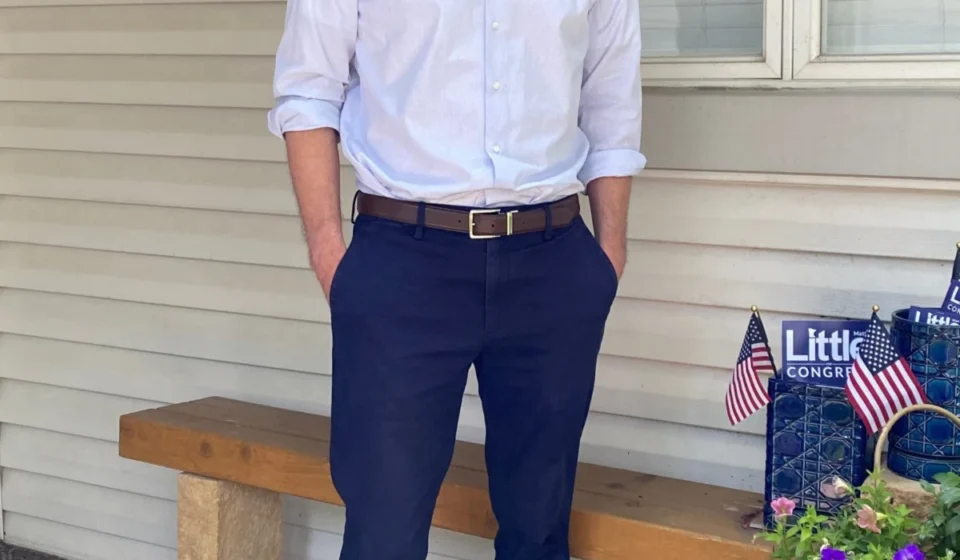
In Minnesota, this vision is vigorously championed by figures like Matt Little, the DFL-endorsed U.S. House candidate for the 2nd Congressional District. Little, a former state senator and mayor of Lakeville, speaks from personal experience, citing his mother’s struggle to access a specialist even with insurance when she was gravely ill. "We were lucky to have insurance," Little recounted, underscoring the systemic failures that affect even those with coverage. He, along with Representatives Ilhan Omar (D-5th District) and Betty McCollum (D-4th District), and Senator Tina Smith, are co-sponsors of the Jayapal/Sanders "Medicare for All" bill, signaling strong progressive support within the state. Lieutenant Governor Peggy Flanagan, a candidate for the U.S. Senate, also staunchly supports Medicare for All, arguing, "This is not working. It is broken, and I think people are ready." She cautions against starting with a public option, believing it will lead to even less comprehensive reform.
The Public Option: An Incremental Approach
In contrast, the "public option" is presented as a more pragmatic and incremental reform. It would introduce a government-administered health insurance plan, similar to Medicare, to compete directly with private insurers on the Affordable Care Act marketplaces. The goal is to drive down costs and improve coverage through market competition, offering consumers a more affordable alternative and pressuring private companies to improve their offerings.
Jake Johnson’s support for a public option in the 1st Congressional District aligns with this strategy, seeking to counter increasing health insurance costs that contribute to the number of uninsured. He believes it would provide much-needed competition to the current market. Similarly, Rep. Angie Craig, who is running for the U.S. Senate, recently introduced the "Medicare-X Choice Act," which aims to create such a public option. Craig argues it would "give the insurance companies some competition," ultimately leading to lower premiums and better coverage for all.
Other Minnesota Democrats, while acknowledging the need for universal healthcare, also lean towards the public option or a flexible approach. State Rep. Kaela Berg, also running for the 2nd District congressional seat, expresses support for the public option and "anything that gives people more health coverage." While acknowledging the energizing power of "Medicare for All," she emphasizes the immediate need for coverage, advocating for incremental steps while the larger fight continues. State Sen. Matt Klein, a physician and internist with the Mayo Clinic, is another 2nd District candidate who supports the public option, seeing it as a viable path to universal healthcare without fully dismantling the private system. Rep. Kelly Morrison (D-3rd District), also a physician, has notably not co-sponsored "Medicare for All" legislation, suggesting a similar preference for alternative reforms.
Critics of the public option, particularly those advocating for Medicare for All, argue that it is "just another handout to private insurance companies." They fear that a public option would suffer from adverse selection, primarily attracting older and sicker individuals who are often less profitable for private insurers. This, they contend, would allow private companies to continue enrolling healthier, younger individuals, thereby paying out fewer claims and increasing their profits, without fundamentally addressing the systemic issues of cost and access.
Official Responses and Stakeholder Positions
The split within the Democratic Party on healthcare reflects a broader landscape of diverse and often conflicting stakeholder interests.
- Legislative Efforts: The "Medicare for All Act" (H.R. 3069 / S. 1655) aims for a comprehensive, single-payer system. In contrast, Rep. Angie Craig’s "Medicare-X Choice Act" represents a significant legislative push for the public option. These bills exemplify the two main policy pathways currently under discussion.
- Medical Community: Powerful medical groups, including the American Medical Association (AMA) and the American Hospital Association (AHA), are "firmly opposed" to "Medicare for All." Their arguments often center on concerns about limiting patient choice, reducing physician autonomy, and the potential for government bureaucracy to stifle innovation and reduce quality of care, which they pejoratively label "socialized medicine."
- Organized Labor: The position of organized labor on "Medicare for All" is complex and often divided. While some prominent unions, such as the United Auto Workers (UAW) and the Association of Flight Attendants, have endorsed the concept, others remain strongly opposed. For many unions, employer-provided healthcare has been a hard-won bargaining chip, a cornerstone of compensation packages negotiated over decades. Shifting to a government-run system, even one with potentially greater benefits, introduces uncertainty about future negotiations and the perceived loss of a key benefit won through collective action.
- Political Parties: Republicans consistently decry "Medicare for All" as "socialized medicine," arguing it would lead to long wait times, reduced quality, and an unsustainable tax burden. This strong partisan opposition makes any single-payer reform an uphill battle, even if Democrats were fully united.
Implications for the Future of Healthcare Reform
The internal division among Democrats, coupled with staunch Republican opposition and powerful lobbying from the healthcare industry, suggests that a full single-payer "Medicare for All" system is unlikely to be established in the United States anytime soon. The political capital required to overcome these hurdles is immense, necessitating not only a unified Democratic front but also significant public buy-in and a robust strategy to counter well-funded opposition campaigns.
However, the current election cycle and the ongoing debate hold significant implications for the future of healthcare reform. Should Democrats achieve control of both the White House and Congress, even without a clear mandate for "Medicare for All," a "rush of Democratic healthcare legislation" is highly probable. This could manifest in several ways:
- Expanded ACA Subsidies: Reinstating and potentially expanding the enhanced Affordable Care Act subsidies would significantly reduce premiums for millions, making existing coverage more affordable.
- Public Option Revival: A Democratic-controlled Congress and presidency could successfully implement a public option, potentially within the ACA marketplaces or as a standalone program. This would represent a significant step towards universal coverage, offering more choice and cost competition.
- Prescription Drug Cost Controls: Legislation aimed at lowering the cost of prescription drugs, potentially through government negotiation with pharmaceutical companies, is a bipartisan concern and a likely area for action.
- Insurance Company Accountability: Bills like Rep. Craig’s proposal to hold health insurance companies accountable for above-average denial rates could address specific pain points within the current system, improving patient access to care.
- Medicaid Expansion: Further expansion of Medicaid in states that have not yet done so would also be a priority, extending coverage to more low-income individuals.
Ultimately, the healthcare debate within the Democratic Party is more than just a policy discussion; it is a reflection of the party’s broader identity and its strategy for addressing one of the most persistent and pressing issues facing American families. While the aspirational goal of "Medicare for All" energizes the progressive base, the pragmatic realities of legislating in a divided country often push moderates towards incremental reforms like the public option. The ongoing struggle will undoubtedly shape primary outcomes, voter engagement, and the legislative agenda for years to come, as Democrats continue to grapple with how best to ensure every American has access to affordable, quality healthcare.