





















































Guardians of the River: The Quarter-Century Mission to Restore the Mississippi’s Native Mussels

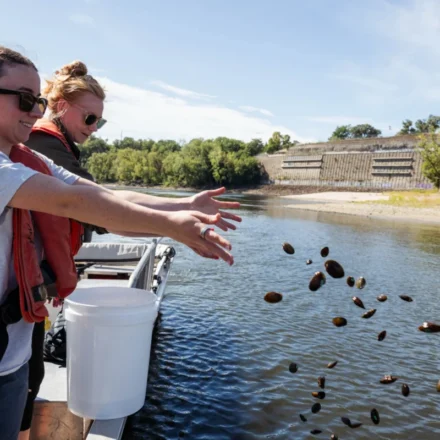
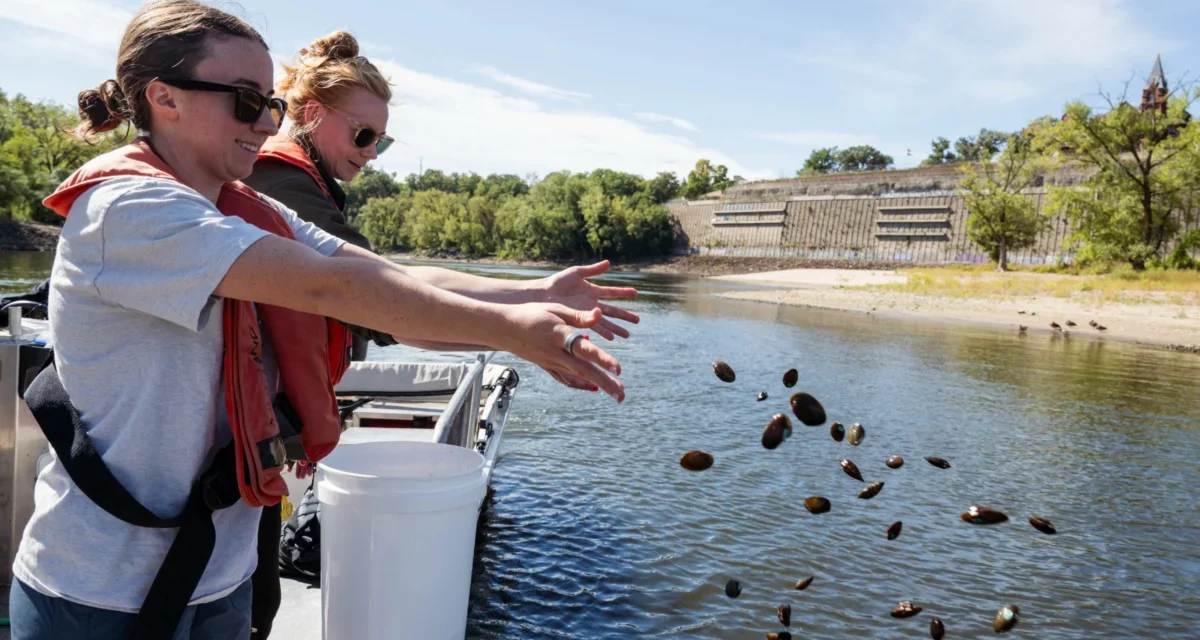
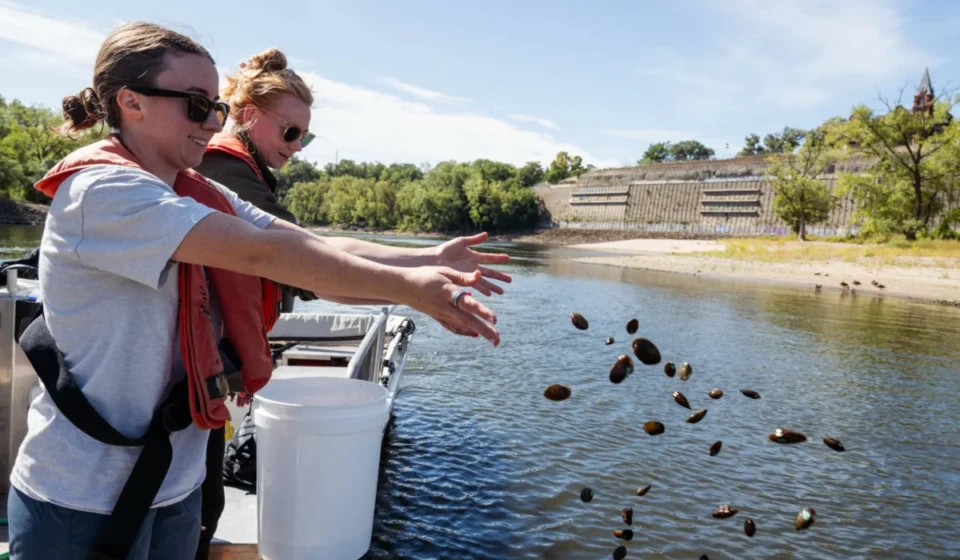
On a balmy September afternoon, a small boat drifts across the surface of the Mississippi River, navigating the waters between St. Paul and Minneapolis. To a casual observer, the crew—clad in neon orange life jackets and carrying coolers and white buckets—might appear to be setting out for a day of angling. However, the contents of their cooler are far more precious than bait or tackle. Inside are 400 Mucket and Higgins eye mussels, their brown, striped shells catching the late summer sunlight.
For the biologists from the Minnesota Department of Natural Resources (DNR), this is not a recreational outing; it is a critical milestone in a 25-year-long ecological rescue mission. By the time the sun dips below the horizon, these 400 individuals will join the tens of thousands of their kin at the bottom of the river, marking the final stage of a multi-decade effort to restore a species that was once nearly erased from the Twin Cities’ stretch of the Mississippi.
The Silent Architects of the River
Freshwater mussels are often overlooked, yet they serve as the "ecosystem engineers" of the aquatic world. They are master purifiers, filtering vast quantities of water to remove bacteria, algae, and heavy metals. When they congregate in dense mussel beds, they stabilize the river floor, providing vital habitat for fish and macroinvertebrates while acting as a natural bulwark against erosion during severe flood events.
Despite their ecological importance, these organisms have faced a harrowing decline. The collapse began in the late 19th century, driven by an insatiable demand for "pearl buttons." In a chapter of history often forgotten, Muscatine, Iowa, became the "Pearl Button Capital of the World," harvesting billions of mussels annually to serve the garment industry. By the time the industry peaked, the river’s once-abundant mussel populations had been decimated. Historians have noted that in the 1800s, the riverbed in some parts of the Midwest was so thick with mussels that it resembled a cobblestone street—a sight no one alive today has ever witnessed.
A Century of Decline: From Industry to Infrastructure
The collapse of the mussel population was not solely due to overharvesting. Following the button-making era, the 20th century brought a series of industrial and structural changes that proved catastrophic for native shellfish.

The installation of 29 locks and dams along the upper Mississippi River fundamentally altered the ecosystem. Mussels have a unique, albeit complex, reproductive cycle: they release microscopic larvae that must attach to the gills of specific host fish to survive their first weeks of life. The mussels essentially "hitchhike" on these fish to reach new habitats. However, the locks and dams created impassable barriers, fragmenting the river and preventing the fish—and their mussel stowaways—from moving upstream.
Compounding these structural barriers was the arrival of the invasive zebra mussel. An aggressive competitor, the zebra mussel outcompetes native species for food and space, often encrusting native shells until they can no longer open or close, effectively starving them. Today, the U.S. Geological Survey lists freshwater mussels as the most imperiled group of animals in North America. Of the 51 species native to Minnesota, more than half are currently listed as endangered, threatened, or of special concern, with five species presumed extinct in the state.
The Reintroduction Chronology: 2001–2026
The DNR’s current initiative, which began in 2001, represents one of the most ambitious conservation programs in the region. Since the turn of the millennium, the agency has methodically reintroduced approximately 45,000 mussels—including Mucket, Higgins eye, snuffbox, and winged mapleleaf species—into a half-mile-long stretch of the Mississippi that had been, for decades, completely devoid of these creatures.
- 2001–2010: The early years focused on establishing baseline water quality and identifying the most viable habitats. Biologists began trial releases to monitor survival rates in a post-industrial river.
- 2011–2020: As the Clean Water Act and improved wastewater treatment standards began to heal the river, the DNR scaled up propagation efforts. The Lake City, Minnesota, laboratory became a hub for raising mussels from larvae to juvenile stages, ensuring they were strong enough to withstand the river’s currents.
- 2021–2026: The program reached a state of maturity. Monitoring efforts revealed that reintroduced mussels were not only surviving but successfully reproducing. The discovery of untagged, juvenile mussels in survey sites provided the "smoking gun" of a self-sustaining population.
Supporting Data and Survival Metrics
The success of the program is measured in growth rings and recapture rates. Because mussels grow similarly to trees, biologists can track their age and health through the ridges on their shells. In the Cedar and Cannon River watersheds, where the state has also conducted reintroduction efforts, survival rates have consistently ranged between 40% and 80% annually.
While the Mississippi River population is monitored through recapturing tagged individuals, the DNR remains confident that the survival trends mirror those observed in the state’s other major watersheds. The use of epoxy-bonded tags allows researchers to track individual growth over time, providing a clear picture of how these "ecosystem engineers" are faring in the complex, high-energy environment of the Mississippi.

Official Responses: "Letting Nature Take Its Course"
For the biologists involved, the final release is a bittersweet moment. Lindsay Ohlman, a propagation biologist at the DNR who has spent years raising these animals in the laboratory, described the feeling as "anticlimactic."
"You spend five years raising these little guys just to throw them out," Ohlman said, reflecting on the transition from the controlled environment of the lab to the unpredictable currents of the river. "They’re a pretty complex animal, even though they don’t have a face. They provide a lot of function to the ecosystem."
Ben Minerich, a freshwater mussel conservation specialist at the University of Minnesota and the Minnesota Zoo, emphasized that the current recovery is a testament to the resilience of the environment when given the right tools. "They used to be so abundant, which is why they were being taken out at such large amounts," Minerich noted. "People just thought it was an endless resource."
Regarding the decision to halt reintroductions in this specific stretch of the river, Ohlman was optimistic. "We kind of feel like we’ve got enough out there, they’re taking a foothold. We’re gonna let nature take its course for a while."
Implications for the Future of the Mississippi
The implications of this project extend far beyond the recovery of a few mussel species. The presence of a healthy mussel bed is a "biological indicator" of a river’s overall health. As the Twin Cities segment of the Mississippi transitions from an industrial wasteland—which, as late as 1926, was so polluted that it struggled to support even two species of fish—to a functional, living ecosystem, the return of mussels serves as a benchmark for water quality and habitat connectivity.

However, the war against invasive species continues. The Minnesota Zoo is currently researching advanced genetic interventions aimed at curbing the reproductive success of invasive zebra mussels, which remain a persistent threat to native populations.
Furthermore, the fragmentation caused by the 29 locks and dams remains a long-term challenge for biodiversity. While the mussels have returned, the broader mission of river restoration will require ongoing vigilance regarding water quality, agricultural runoff, and the continued mitigation of industrial impacts.
As the boat turns back toward the shore, leaving the mussels to settle into the silt and sand of the riverbed, the crew looks back at the water. For the first time in nearly a century, the Mississippi is once again beginning to support its original inhabitants. It is a slow, quiet victory, but for the biologists who have dedicated their careers to these creatures, it is a significant step toward restoring the natural rhythm of the river.
"They’re a vital part of a healthy river," Ohlman remarked as the boat docked. "Now, it’s their turn to do the work."