
























































As the frost thaws and the first green shoots of spring emerge across the American landscape, a quiet, annual drama begins to unfold in suburban backyards, under front porches, and behind ornamental shrubs. For many, this season brings an unexpected guest: a wild animal seeking a sanctuary to raise its young.
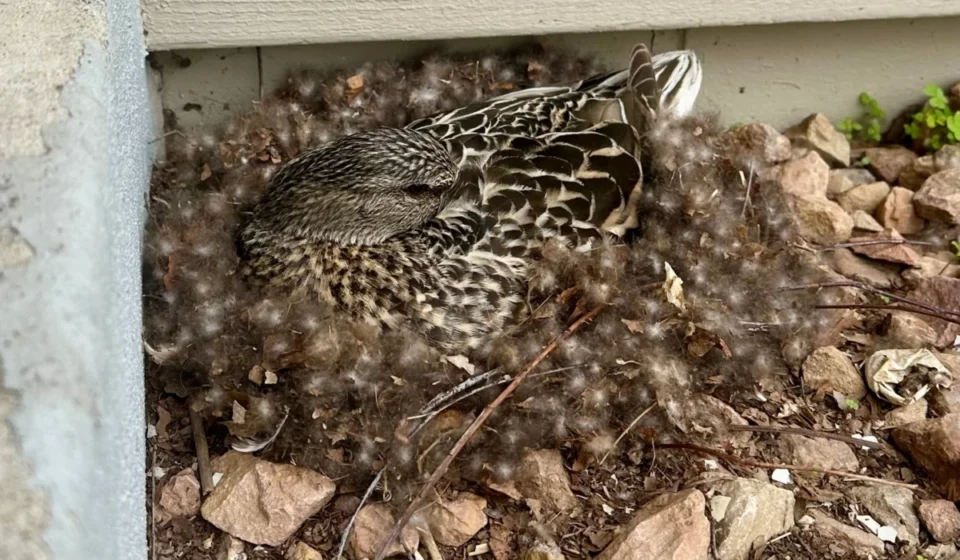
In a quiet, tree-lined neighborhood in Eagan, Minnesota, Caitlin Deal has become an unwitting host to one such visitor. For four consecutive years, a mallard duck—affectionately dubbed "Martha" by the family—has returned to nest in the exact same spot behind a bush near the front door. For the Deal family, this has evolved from a surprising inconvenience into a profound educational experience for young Owen, whose first spoken word was, tellingly, "Duck."
"It feels nice that she trusts that area, that she trusts us to be able to come back year after year," Deal says. Yet, Martha’s presence is more than just a heartwarming photo opportunity; it serves as a microcosm of a broader, nationwide trend where the boundaries between human infrastructure and natural habitats continue to blur.
The Seasonal Surge: Wildlife in the Suburbs
Spring is the peak of the "baby season" in the animal kingdom. From songbirds and cottontail rabbits to white-tailed deer and, in more temperate regions, alligators, wildlife across the continent are instinctually driven to find safe havens to bear their young. Often, the very features that make a suburb attractive to humans—well-manicured landscaping, protected structures, and lack of traditional predators—also make them prime real estate for nesting mothers.
Wildlife experts emphasize that while the sudden appearance of a wild family in one’s yard can be startling, it is rarely a cause for alarm. With a measure of patience and proper preparation, the period of cohabitation is typically short-lived and, according to many, a source of genuine joy and connection to the natural world.
"My two biggest things are: Stay away from the nest or the little family as much as possible, and stay curious," says Brittney Yohannes, a spokesperson for the Wildlife Rehabilitation Center of Minnesota.
Chronology of a Nesting Cycle
The lifecycle of an urban nest is a study in brevity and intense parental focus. In the case of the Minnesota mallard, the cycle is rhythmic: Martha typically arrives in early spring, settling into her nesting site for approximately one month of incubation. During this period, the female remains largely sedentary, relying on camouflage and stillness to protect her clutch.
Around Mother’s Day, the eggs hatch. Within a short window, the ducklings are mobile, and the family unit "toddles away," navigating the suburban landscape toward the nearest body of water. This timeline is consistent across many species. Whether it is a rabbit nesting in a shallow depression in the lawn or a songbird in a porch light fixture, these developmental stages usually span only a few weeks. The key to successful human-wildlife coexistence, experts argue, is recognizing that this is a fleeting phase rather than a permanent occupation.

Official Guidance: When to Intervene (and When Not To)
The most common mistake homeowners make is the urge to "rescue" animals that do not actually need assistance. Wildlife agencies across the country report a surge in calls every spring regarding "abandoned" fawns or baby rabbits.
Beth Quillian, a spokesperson for the Oregon Department of Fish and Wildlife, explains that nature often relies on stealth for survival. A doe, for instance, will frequently leave her fawn hidden in a quiet corner of a yard or near an air conditioning unit for hours at a time while she forages.
"That is to protect the fawn, to leave it there, sometimes hours at a time, but the doe will come back to that fawn, and that is natural and normal," Quillian notes. Interfering, moving the animal, or attempting to "reunite" it with its mother often causes unnecessary stress and can lead to the abandonment of the young.
Furthermore, legal protections play a significant role. In the United States, most migratory birds are protected under the Migratory Bird Treaty Act. Removing an active nest can be a violation of federal law. Homeowners who find themselves with an avian roommate in an inconvenient location are advised to contact local wildlife agencies or state departments of fish and wildlife for guidance before taking any action.
Protective Instincts: Respecting the Wild
While many nesting animals are docile, the "wild" in wildlife must never be underestimated. The intensity of parental protection is universal, but the defensive mechanisms vary significantly by species.
John Coluccy, a biologist with the conservation group Ducks Unlimited, warns that while mallards are relatively harmless, other waterfowl—particularly Canada geese and swans—can be remarkably aggressive. "They’re very, very aggressive. They’re long-lived and they protect their reproductive investment very vigorously," Coluccy says. A territorial goose is capable of delivering enough force to knock an adult to the ground or cause injury.
Similarly, in the American West, homeowners may encounter elk calves. A cow elk, weighing hundreds of pounds, is a formidable protector. Even in the Southeast, where alligators nest from April through June, the risk is real. Female alligators often create mound-nests of leaves and debris near water sources. They remain in close proximity, watching over the site. Experts advise keeping a wide berth from any suspicious vegetation mounds and ensuring that pets are kept on leashes and away from shorelines during this period.
Practical Solutions for Coexistence
When wildlife chooses a spot that poses a genuine safety hazard—such as a raccoon family nesting in a boat or a squirrel in an attic—homeowners often look for humane deterrents rather than lethal traps.

Tami Vogel, executive director of the Wildlife Rehabilitation Center of Minnesota, suggests "harassment" techniques that encourage the mother to move her young to a more suitable location. "One solution that doesn’t rely on live traps or hiring a pest control service is to install a shop lamp to flood the area with light," Vogel explains. Nocturnal or den-dwelling mothers, preferring darkness and security, will often relocate their litter within 48 to 72 hours if their chosen den is suddenly illuminated.
For those concerned about pets, simple physical barriers are the most effective. In the case of rabbits, which are highly prolific in the Midwest, the Wildlife Rehabilitation Center suggests placing a laundry basket over the nest during the day to prevent dogs from investigating, then removing it at dusk to allow the mother to return for her nightly feeding.
Implications for Future Generations
The presence of wildlife in our neighborhoods is a bellwether for the health of our local ecosystems. As human development continues to push into traditional habitats, the ability to adapt to our wild neighbors is becoming a necessary life skill.
For the Deal family in Eagan, the experience has yielded lessons that extend beyond biology. It has taught a young child about boundaries, patience, and the reality that humans are not the only inhabitants of the landscape.
"We want them to know we’re here as a safety net and what to look for if something goes wrong," Vogel says. "And then the good news is, two weeks later, their neighbor may have a similar situation, and they can pass along that information."
By choosing to respect the space of these nesting families, homeowners are not just observing nature—they are actively participating in a form of conservation. It is an acknowledgment that even in a bustling suburban environment, there is room for the wild, provided we are willing to share the space, observe from a distance, and trust the instincts of the mothers who have been raising their young long before the houses were built.
As the cycle continues, the advice from professionals remains consistent: Observe with wonder, keep your distance, and remember that the inconvenience is temporary. In the end, the reward is a front-row seat to the cycle of life, happening right on our own front doorsteps.