
























































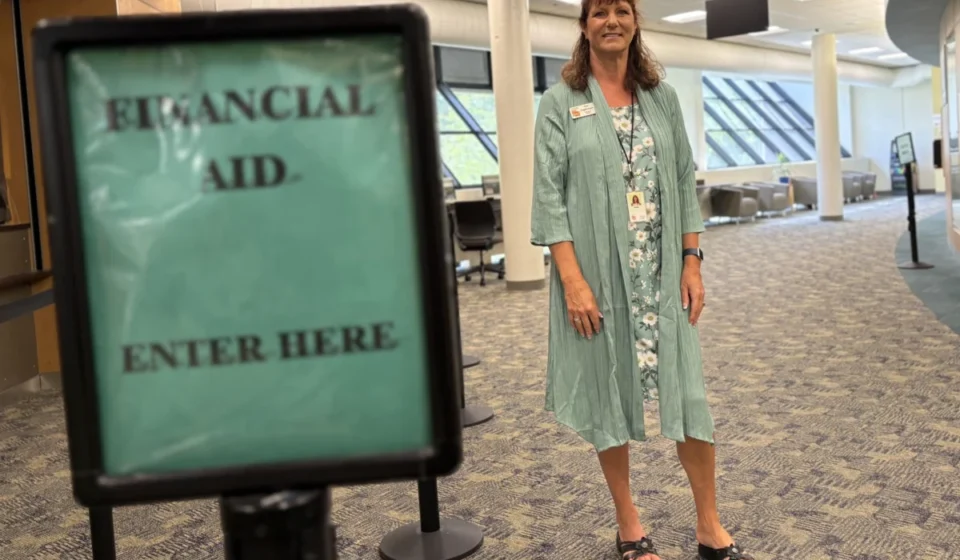

In the quiet suburbs of the Twin Cities, Century College, a two-year institution serving roughly 8,700 students, has become an unlikely frontline in a high-stakes battle against organized digital crime. While faculty and staff should be focusing on curriculum development and student success, they are instead spending an estimated 60 hours every week fending off a sophisticated wave of "ghost students"—criminals who utilize stolen or fake identities to enroll in online courses, secure federal financial aid, and vanish into the digital ether.
This phenomenon, which has seen an alarming surge since the pandemic-driven expansion of remote learning, is not unique to Minnesota. It represents a systemic vulnerability in the nation’s higher education infrastructure, forcing colleges to pivot from centers of learning to hubs of forensic investigation.
The Anatomy of a Scam: A Growing National Threat
The mechanics of the "ghost student" scam are chillingly simple. Criminal syndicates obtain stolen identities—often from the dark web or through sophisticated phishing campaigns—and use that personal data to submit fraudulent Free Application for Federal Student Aid (FAFSA) forms. Once the financial aid is approved, the U.S. Department of Education distributes funds to the colleges. The institutions then deduct tuition and fees and release the remaining "living stipend" directly to the applicant. By the time a professor realizes that a student hasn’t submitted a single assignment, or that ten "different" students are submitting identical work from the same IP address, the funds have long since been siphoned off.
The Department of Education estimates it has lost nearly $90 million to these schemes, though experts suggest the true figure is likely much higher. High-profile cases underscore the scale of the crisis: a Detroit man recently pleaded guilty to a $16 million scheme involving 1,300 fake identities across 100 schools, while a North Carolina woman was sentenced to five years in prison for a $3.5 million fraud operation.

A Chronology of Escalation
The rise of the ghost student coincides with the rapid, necessary transition to online education in 2020. What began as a temporary measure to ensure continuity during the pandemic became a permanent, lucrative playground for bad actors.
- 2021–2022: Financial aid administrators like Century College’s Pam Engebretson began noticing a sharp increase in suspicious activity. Initial attempts were crude—testing the system to see how much verification was required. As schools failed to immediately detect these patterns, the attacks grew in volume and complexity.
- 2023: Recognizing the threat, the Minnesota State system of 33 schools established a formal work group on enrollment fraud. This was a critical turning point in acknowledging that individual campuses could no longer fight this battle in isolation.
- 2025: The scale of the issue reached a breaking point. U.S. Education Secretary Linda McMahon issued a letter to Minnesota Governor Tim Walz, alleging that 1,834 fake students had successfully extracted $12.5 million from the state’s institutions.
- 2026: In response to mounting pressure, the Minnesota Legislature allocated $3 million to develop a centralized, automated identity verification system, aiming to provide the "guardrails" necessary to stop the hemorrhaging of public funds.
Supporting Data: The Hidden Costs
The true extent of the financial damage remains shrouded in mystery, partly due to the reticence of institutions to disclose information that could be exploited by hackers. While the Minnesota State system reported flagging 2,696 fraudulent applications in the 2025-26 academic year, this is a significant decrease from the 7,715 flagged the previous year—a statistic that school officials hope reflects the success of their manual interventions rather than a shift in criminal tactics.
However, anecdotal evidence from campuses suggests the problem remains acute. At Century College alone, reports indicate that roughly $500,000 was paid out to suspected fraudulent actors in a single year. In California, which has served as a bellwether for the rest of the nation, the state’s community college system spent $150 million on verification technology after losing $17.5 million to fake students between 2022 and 2025.
The human cost is equally staggering. Faculty members are forced to adopt "detective" roles, with some professors manually comparing IP addresses on spreadsheets or requiring students to appear on camera to "wave" during virtual lectures to prove their physical existence. These labor-intensive workarounds are not sustainable, yet they remain the only line of defense for many educators.

Official Responses: Between Innovation and Oversight
The response from the Minnesota State system has been described by some as a "patchwork." While the state has finally moved toward a centralized, automated solution, there is a palpable sense of frustration among staff who have been holding the line for years.
"This is not a Century College problem; it’s a system office problem," says Pam Engebretson. Her sentiment is echoed by faculty representatives like Mark Grant, who notes that the intensity of the fight depends entirely on a college’s existing resources. Wealthier campuses can afford proprietary fraud-detection software; smaller, underfunded campuses are often left vulnerable.
At the federal level, the Department of Education has launched a verification system for high-risk FAFSA applicants, requiring government-issued IDs and biometric verification. However, the Department has also made it clear that the burden of responsibility—and the financial liability for repayment—rests squarely on the shoulders of the colleges. This "policing" mandate has placed colleges in a precarious position: they are incentivized to be open and accessible to genuine students, but they are now effectively functioning as extensions of federal law enforcement.
The Implications: A Culture Shift in Higher Education
The rise of ghost students is fundamentally altering the culture of community colleges. The open-admissions policy, once the hallmark of the democratic, accessible mission of the community college, is now being scrutinized as a structural weakness.

"We believe they were testing our system to see how easy it was to get financial aid," Engebretson recalls of the early days of the fraud surge. "And the answer was, it was easy."
The long-term implications are multi-faceted:
- Budgetary Strain: Every dollar lost to fraud is a dollar taken away from legitimate student services, tutoring, and infrastructure.
- Administrative Burnout: The constant state of high-alert security, coupled with the need to handle identity theft victims who discover their data has been compromised, is driving experienced financial aid professionals out of the field.
- Institutional Reputation: As Minnesota lawmakers and the public learn of these losses, there is a risk of stigmatizing community colleges as "soft targets," which could potentially impact enrollment of genuine students who fear their data is not secure.
A Path Toward Resolution?
As Minnesota prepares to roll out its new, $3 million automated verification system, the mood across the state’s campuses is one of cautious optimism tempered by deep exhaustion. Craig Munson, overseeing information security for the Minnesota State system, acknowledges that the technology is not a silver bullet. "We aren’t satisfied until we get [fraud] as close to zero as humanly possible," he says.
However, security experts warn that the cat-and-mouse game is far from over. Maurice Simpkins, founder of the fraud-prevention firm AMSimpkins & Associates, notes that fraud trends can shift daily. "It doesn’t take long for a security system to become antiquated," he cautions.

For now, professors like Joe Haker continue to look at their class rosters with a mix of academic curiosity and professional suspicion. The dream of a purely educational environment has been interrupted by the reality of the digital age. As the state moves toward a more centralized defense, the hope is that the focus will eventually return to the classroom—but for the staff on the front lines, the vigilance will likely remain a permanent part of the job description.
The lesson for Minnesota, and indeed the entire U.S. higher education sector, is clear: in an era of universal digital access, the gatekeepers of public funds must evolve as quickly as the criminals who target them. Until then, the ghost students remain, haunting the attendance sheets and forcing a reckoning with how we define, verify, and protect the sanctity of the student experience.