

















































The Climate Credential: How a Growing Grassroots Movement is Transforming High School Diplomas

Across the United States, a quiet but profound shift is occurring in the hallways of public high schools. As the reality of a warming planet becomes increasingly difficult to ignore, students, educators, and state legislators are collaborating to create a new, tangible credential: the Seal of Climate Literacy. Designed as an endorsement on high school diplomas and transcripts, this initiative represents a pivot from abstract environmental science to active, community-based climate engagement.
What began as a localized experiment in Colorado has now blossomed into a multi-state policy movement. By combining rigorous coursework with hands-on capstone projects, proponents argue that the seal provides students with both the knowledge to navigate a changing world and the agency to mitigate the anxiety that often accompanies it.
The Genesis of the Climate Seal: From Theory to Action
The initiative traces its roots to the work of Lyra Colorado, a Denver-based nonprofit dedicated to community-led education. According to Mary Seawell, the organization’s CEO, the impetus for the seal did not come from a desire to mandate a new curriculum, but rather from rural students and teachers who felt that traditional textbooks failed to capture the climate realities they faced daily.
The model is straightforward but demanding. To earn the seal, students must complete at least two advanced courses covering Earth’s climate systems and the principles of mitigation. One course must be science-based—such as biology, environmental studies, or earth science—while the second can be interdisciplinary, often drawing from the humanities, civics, or fine arts to contextualize the human impact of climate change. Finally, students must complete a school-approved capstone project that addresses a specific environmental issue in their local community.
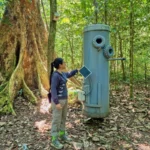
For Anthony Muñoz, a student at Vista Academy near Denver, this was a call to action. Observing the frequent flights at a nearby major airport, Muñoz questioned the impact of jet fuel on the local ecosystem. Partnering with the National Center for Atmospheric Research (NCAR) and local university experts, he constructed an "ozone garden." By planting specific native species capable of detecting ground-level ozone pollution, Muñoz turned a patch of campus soil into a sophisticated data-collection site.
"One garden is a very good data source," Muñoz reflected. "Colorado is so beautiful, and I would hate to see it wilt away." His work, which included tracking leaf conditions and monitoring milkweed for monarch butterfly migration, earned him the seal and set him on a trajectory toward a degree in mechanical engineering.
Chronology of a Policy Movement
The rollout of the climate seal has been rapid, characterized by a mix of legislative successes and grassroots advocacy.
- 2024: Colorado becomes the first state to officially approve the Seal of Climate Literacy. Since then, 26 of the state’s 179 school districts have adopted the program.
- 2025: The momentum shifts to the coasts. Maine adopts its own climate seal, opting for administrative implementation through the Department of Education to bypass legislative gridlock.
- Late 2025/Early 2026: California signs legislation into law to establish the seal for its graduates, marking a major victory for a state already grappling with severe wildfires and drought.
- Ongoing: Youth coalitions in Hawaii and Minnesota continue to lobby their respective legislatures, with Minnesota’s Youth Council formally recommending the seal during the current legislative session.
In Maine, the adoption process was streamlined by the state’s existing familiarity with similar programs, such as the Seal of Biliteracy. "Students want to be involved in climate action, in environmental literacy, in green careers," said Teddy Lyman, Maine’s K-12 climate education specialist. During a pilot program involving nine high schools, Lyman anticipated modest participation; instead, 57 seniors immediately stepped forward to earn the endorsement.
Bridging the Gap: Data and Career Pathways
The ambition behind the seal is to bridge the chasm between classroom learning and the burgeoning "green economy." As climate change alters everything from agriculture to infrastructure, proponents emphasize that students need to be prepared for jobs in solar grid management, sustainable farming, water resource management, and urban heat mitigation.
In Maine, teachers like Melissa Luetje at Freeport High School are already integrating these concepts into the classroom. Her students engage in projects ranging from monitoring insect damage in woodlands to developing sustainable aquaculture methods for oysters and seaweed—a vital necessity for a coastal region where the Gulf of Maine is warming faster than almost any other body of water on Earth.
"How climate impacts the coastal community is very different from the interior or a city," Luetje noted. "It’s up to each community to figure out what they value and how they want to roll this out."
Lyra Colorado is currently working with higher education institutions, such as Colorado Mountain College, to align the high school seal with college-level certifications in skilled trades. The ultimate goal is to create a seamless pipeline where a student’s high school capstone project serves as a precursor to vocational or academic credit in climate-resilient fields.
Official Responses and Ideological Friction
Despite the program’s popularity among students, it has faced significant resistance. Critics argue that the seal represents a "politicization" of the classroom. Lance Izumi, senior director of education studies at the Pacific Research Institute, has been a vocal opponent, arguing that schools should prioritize fundamental academic subjects over "activist" projects.
"Diverting focus away from foundational science learning could worsen performance levels," Izumi stated, pointing to state data suggesting that only a third of California students currently test as proficient in science. For detractors, the seal is seen as an unnecessary burden on school districts already struggling with tight budgets and curriculum requirements.
Furthermore, the initiative faces a challenging federal landscape. Recent political shifts have brought renewed scrutiny to climate science, with some federal officials characterizing climate change as a "hoax." This has created a "chilling effect" on funding. The potential dismantling of institutions like the National Center for Atmospheric Research—which provided the scientific framework for projects like Muñoz’s garden—threatens to strip students of the mentorship and data support they need to succeed.
"Funders are worried," Seawell admitted, noting that the threat to the tax-exempt status of certain climate-focused nonprofits has made it increasingly difficult to secure the resources necessary to scale the program.
Implications for the Future
The Seal of Climate Literacy represents more than just an extra line on a diploma; it is a psychological and structural response to a global crisis. For many students, the seal offers a remedy to the "doom and gloom" narrative that often dominates climate discourse. By empowering students to solve problems in their own backyards—whether that means creating wheelchair-accessible gardens or advocating for greener town committees—the seal provides a tangible sense of agency.
The implications for higher education and the workforce are equally significant. As institutions like the University of California, Berkeley, begin to see an influx of students who have already engaged in high-level climate advocacy and research at the high school level, the definition of a "prepared" student is evolving.
"Are you going to think beyond yourself and help not only those in need but the environment, or will you sit back and wait for someone else to change the world for you?" Muñoz asks, reflecting on his own journey.
As the movement continues to spread, the success of the climate seal will likely depend on its ability to remain locally adaptable and academically rigorous. Whether it becomes a national standard or remains a patchwork of state-level initiatives, the program has clearly tapped into a deep-seated desire among the younger generation to transition from passive observers of climate history to active participants in its solution. In a world defined by uncertainty, the seal offers at least one constant: the recognition that the next generation is not waiting for permission to lead.