

























































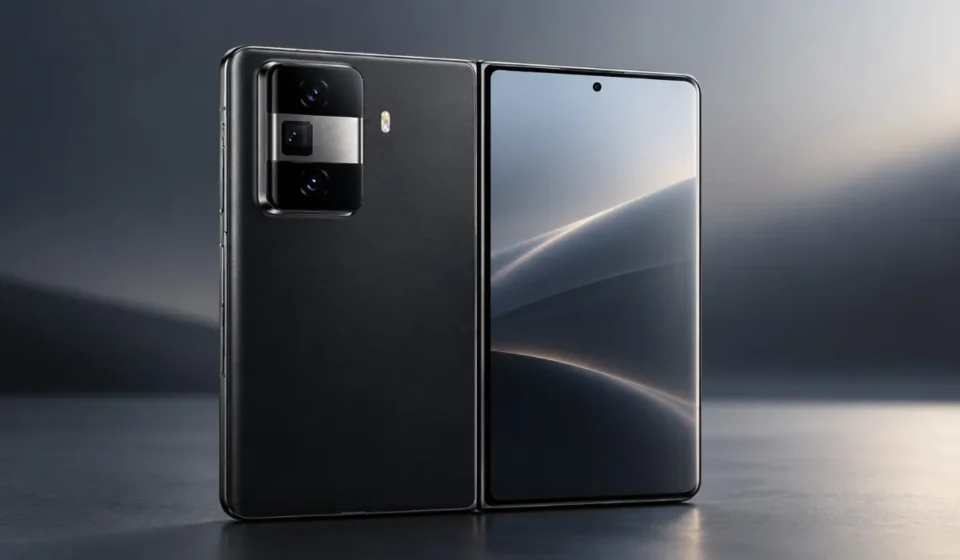
The Foldable Convergence: How Honor’s Rumored ‘Wide’ Foldable Aims to Redefine the Premium Smartphone Market

The global foldable smartphone market is approaching a critical inflection point. For years, manufacturers experimented with divergent form factors, ranging from tall, narrow external screens that resembled TV remote controls to thick, heavy dual-screen experiments. However, recent leaks surrounding Chinese technology giant Honor suggest that the industry’s biggest players are rapidly converging on a single, standardized design paradigm: the "passport-style" wide foldable.
According to prominent industry insiders, Honor is preparing to launch a radically redesigned foldable smartphone in early 2027. Positioned as a direct challenger to Samsung’s Galaxy Z Fold8 and Apple’s newly released iPhone Duo, this rumored device represents a major departure from Honor’s current design philosophy. By combining a shorter, wider aspect ratio with unprecedented battery capacity and high-end camera hardware, Honor is aiming to transition foldables from expensive novelty items into uncompromising mainstream flagships.
1. Main Facts: The Core Leaks and Specifications
The specifications of the rumored Honor foldable—tentatively referred to by industry observers as the "Magic V7 Wide" or a next-generation offshoot of the Magic series—point to a device that prioritizes ergonomics, battery endurance, and imaging capabilities.
The primary details emerged from the highly active Chinese supply chain tipster known as "Smart Pikachu," who indicated that Honor has targeted January 2027 for the device’s official unveiling. This timeline refines earlier, broader rumors that had placed the launch window simply within the first half of 2027.
Shifting Form Factors
Unlike the current Honor Magic V6, which features a tall 6.52-inch external screen and opens to a sprawling 7.95-inch main display, the upcoming model is rumored to adopt a more compact, pocket-friendly footprint. The leak points to:
- A 5.5-inch cover display
- A 7.6-inch internal folding display
This shift yields a closed aspect ratio that is shorter and wider, closely mirroring the physical dimensions of a traditional passport.
A Massive Leap in Battery Density
Perhaps the most ambitious hardware claim is the integration of a battery with a capacity exceeding 7,000mAh. In a category where devices struggle to cross the 5,000mAh threshold due to thickness and hinge constraints, a 7,000mAh+ capacity would represent a watershed moment for mobile engineering. Honor plans to leverage its proprietary silicon-carbon anode battery technology to achieve this capacity without adding significant bulk to the chassis.
Flagship-Grade Imaging
Historically, foldable devices have compromised on camera hardware due to physical space limitations. Honor reportedly intends to break this trend by testing a 200-megapixel main sensor alongside a dedicated periscope telephoto lens system. If realized, this would bring the foldable’s photographic capabilities in line with conventional "Ultra" flagship smartphones.
Pricing and Positioning
In the domestic Chinese market, rumors suggest a starting price of CNY 9,999 (approximately USD $1,380). This positioning would place the device highly competitively against premium offerings from Samsung and Apple, particularly if Honor maintains its reputation for ultra-thin manufacturing.
2. Chronology: The Road to the January 2027 Window
To understand the significance of Honor’s rumored device, it is essential to trace the development timeline of both Honor’s hardware and the broader competitive landscape that has shaped this new product class.
[Late 2025 / Early 2026] ────> [February 2026] ───────────> [July 2026] ────────────────> [September 9, 2026] ─────> [Late 2026] ───────────────> [January 2027 (Rumored)]
Honor Magic V6 Launches        Honor showcases 7,000mAh+   Samsung Galaxy Z Fold8      Apple Unveils iPhone Duo   Leaks point to H1 2027     Smart Pikachu narrows
(8.75mm thin, 6,660mAh) silicon-carbon tech at MWC Debuts (5.5" / 7.6" screens) (5.4" / 7.6" screens) Honor "Wide" Foldable launch to January 2027- Late 2025 / Early 2026: The Thinness Benchmark: Honor launches the Magic V6. Measuring just 8.75mm when folded in its lightest configuration and packing a 6,660mAh battery, it establishes Honor as the industry leader in power density and slim hardware design.
- February 2026: The Battery Breakthrough: At Mobile World Congress (MWC) 2026, Honor demonstrates next-generation silicon-carbon battery cells capable of surpassing the 7,000mAh threshold in prototype foldable chassis.
- July 2026: Samsung Shifts Stance: Samsung officially announces the Galaxy Z Fold8. Moving away from the narrow, tall cover screens of its predecessors, the Z Fold8 features a 5.5-inch cover screen and a 7.6-inch main display with a squarish 4:3 aspect ratio.
- September 9, 2026: Apple Enters the Arena: Apple unveils its highly anticipated first foldable, the iPhone Duo. Adopting a remarkably similar footprint to Samsung, the iPhone Duo features a 5.4-inch outer display and a 7.6-inch inner screen. Apple highlights the "passport-sized" ergonomics of the closed device.
- Late 2026: The First Rumors: Supply chain reports out of East Asia suggest that Honor is pivoting its development pipeline to match the 5.5-inch/7.6-inch form factor popularized by Samsung and Apple, moving away from the larger footprint of the Magic V6.
- December 2026: The Timeline Narrows: Tipster Smart Pikachu publishes details pointing to a firm January 2027 launch window, indicating that the device is nearing mass production.
3. Supporting Data: Technical Comparison and Battery Chemistry
To analyze how the rumored Honor device stacks up against its primary competitors, we must examine the technical specifications of the market leaders alongside the leaked data for the upcoming Honor phone.
| Feature | Honor Magic V6 (Current) | Samsung Galaxy Z Fold8 (Current) | Apple iPhone Duo (Current) | Rumored Honor "Wide" Foldable (Jan 2027) |
|---|---|---|---|---|
| Cover Display Size | 6.52 inches | 5.5 inches | 5.4 inches | 5.5 inches |
| Inner Display Size | 7.95 inches | 7.6 inches | 7.6 inches | 7.6 inches |
| Inner Aspect Ratio | Near-square (approx. 10:9) | 4:3 ratio | 4:3 ratio | 4:3 ratio |
| Folded Thickness | 8.75mm (lightest version) | ~10.1mm | ~9.6mm | Target < 9.0mm |
| Battery Capacity | 6,660mAh (Silicon-Carbon) | 4,800mAh (Lithium-Ion) | Undisclosed (Rated by hours) | > 7,000mAh (Silicon-Carbon) |
| Main Camera | 50MP | 50MP | 48MP | 200MP + Periscope Telephoto |
| Processor | Snapdragon 8 Elite Gen 5 | Snapdragon 8 Elite Gen 5 | Apple A20 Pro | Snapdragon 8 Elite Gen 6 (Rumored) |
| Starting Price | CNY 8,999 (~$1,240 USD) | $1,899 USD | $1,999 USD | CNY 9,999 (~$1,380 USD) |
The Physics of Silicon-Carbon Batteries
The most significant competitive differentiator for Honor is its battery technology. Traditional lithium-ion batteries utilize graphite anodes, which have a theoretical specific capacity limit of approximately 372 mAh/g.
By contrast, silicon-carbon anodes can theoretically achieve capacities up to ten times higher. While silicon expansion during charging historically caused battery degradation, Honor’s R&D has stabilized the chemistry using nanostructured carbon matrices. This allows Honor to pack a 7,000mAh+ battery into a physical volume that would normally only accommodate a 4,500mAh to 5,000mAh graphite-based battery.
4. Official Responses and Industry Skepticism
As of this writing, Honor has maintained its standard corporate policy of not commenting on unannounced products or market speculation. When queried regarding the January 2027 launch window, representatives from Honor declined to comment.
Despite the silence, industry analysts urge caution regarding several aspects of the leaks, particularly the processing platform and the camera array:
The Silicon Naming Conundrum
Some early leaks have associated the upcoming device with a "Snapdragon 8 Elite Gen 6" system-on-chip (SoC). Analysts point out that Qualcomm has not finalized or officially named its next-generation platform for early 2027. While it is highly likely that Honor will employ Qualcomm’s latest flagship silicon, the precise branding of the chip remains speculative.
Camera Integration Challenges
Fitting a 200MP sensor and a periscope telephoto module into a device targeted to be under 9mm thick presents severe engineering obstacles. Periscope zoom mechanisms require physical depth to bounce light through a prism to the sensor. If Honor achieves this integration, it will likely require a pronounced, asymmetrical camera bump, potentially compromising the device’s ability to lie flat on surfaces.
5. Strategic Implications for the Foldable Landscape
If Honor successfully delivers on these rumored specifications, the implications for the global smartphone market will be profound, affecting design standards, battery expectations, and software ecosystems.
The Death of the ‘Remote Control’ Form Factor
For years, manufacturers debated the ideal dimensions of a foldable phone. Early iterations of the Samsung Galaxy Z Fold series were criticized for being too narrow when closed, making typing on the cover screen difficult.
The convergence of Samsung (Galaxy Z Fold8), Apple (iPhone Duo), and now Honor on the 5.4 to 5.5-inch cover screen and 7.6-inch inner screen indicates that the industry has finally found its sweet spot. This "passport" size offers a standard smartphone experience when closed, while opening to a highly productive 4:3 canvas. This uniformity will make it significantly easier for app developers to optimize their layouts, as they no longer have to design for a dozen wildly different aspect ratios.
   Traditional "Tall" Foldable                  Modern "Passport" Foldable
   ┌─────────────────────────┐                 ┌─────────────────────────┐
   │                         │                 │                         │
   │                         │                 │                         │
   │    Narrow Cover Screen  │                 │    Standard Width       │
   │    (Awkward for typing) │                 │    (Comfortable typing) │
   │                         │                 │                         │
   │                         │                 │                         │
   └─────────────────────────┘                 └─────────────────────────┘
The Battery Pressure on Apple and Samsung
Battery life remains one of the primary complaints of modern smartphone users, especially those using power-hungry dual-display foldables. Samsung’s 4,800mAh capacity on the Galaxy Z Fold8 is respectable, but it pale in comparison to a 7,000mAh+ capacity.
Should Honor successfully market a device that lasts two full days of heavy use, it will expose a major hardware vulnerability in both Samsung’s and Apple’s premium lines. It may force both competitors to accelerate their own transition to silicon-carbon battery chemistries, a shift that has been slow due to conservative supply chain management.
The Software and Ecosystem Battleground
While Honor may hold a temporary hardware advantage in battery capacity and thinness, the ultimate success of the device will depend on software.
- Samsung has spent nearly a decade refining its "One UI" software for foldables, perfecting multi-window multitasking, app continuity, and stylus integration.
- Apple possesses a massive advantage with its iOS developer ecosystem. The launch of the iPhone Duo instantly incentivized thousands of developers to optimize their apps for the 7.6-inch canvas.
- Honor must prove that its MagicOS platform can offer more than just basic split-screen multitasking. To compete globally, the company must deliver intuitive, bug-free multitasking features and robust developer support to make the wider screen truly productive.
Global Market Dynamics and the Price War
At a rumored starting price of CNY 9,999 in China, Honor is positioning itself as a premium alternative that undercuts the astronomical pricing of western foldables. However, international distribution remains Honor’s greatest challenge.
To truly rival Apple and Samsung, Honor must secure carrier partnerships in Europe, Latin America, and parts of Asia, while navigating the geopolitical hurdles that have historically limited Chinese smartphone OEMs in North American markets. If Honor can establish a reliable global supply chain for this device, it could force a downward pricing correction across the entire premium foldable segment.