























































Lucid Motors, once heralded as a formidable challenger to the traditional automotive establishment and a standard-bearer for electric vehicle (EV) innovation, finds itself in a period of profound introspection. The company’s latest production data for the third quarter of 2026 paints a sobering picture of a manufacturer struggling to align its ambitious engineering pedigree with the harsh realities of the current automotive market.
The State of Play: Third-Quarter Production and Delivery Hurdles
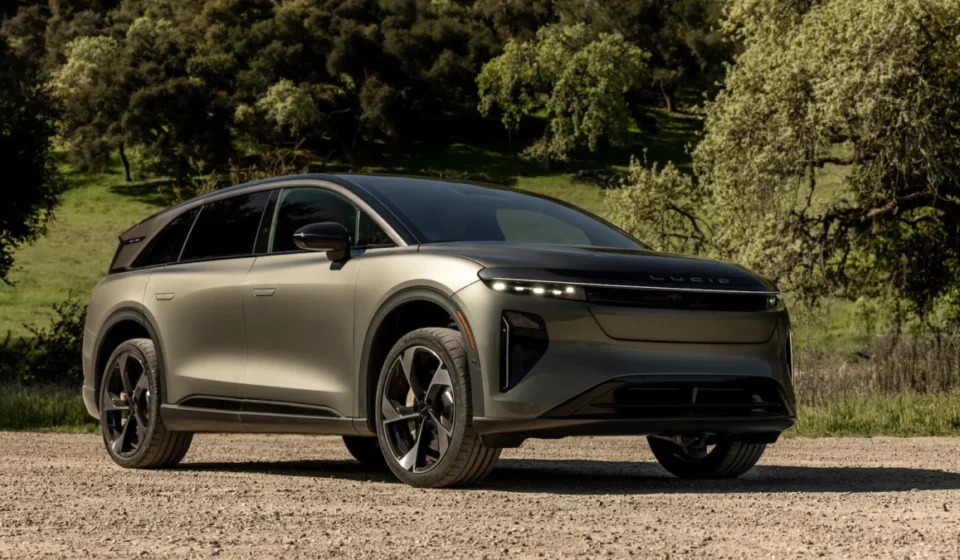
According to figures released by the Newark, California-based automaker this Monday, Lucid built 2,954 vehicles during the third quarter of 2026. This figure represents a staggering 54% year-over-year decline. Perhaps more concerning for investors is the trendline: this marks the third consecutive quarter of declining production. Current output has reached its lowest point since the first quarter of 2025, a period defined by the initial, high-hopes ramp-up of the company’s second major offering, the Gravity SUV.
Deliveries, while slightly more stable than production, remain tepid. Lucid moved 3,806 vehicles in the third quarter—a figure that is essentially flat compared to the previous quarter and roughly 200 units lower than the same period last year. This consistent gap between output and sales highlights a persistent mismatch between supply and consumer appetite. In five of the last six quarters, Lucid has manufactured more vehicles than it has managed to deliver, leading to an inventory overhang that strains the company’s balance sheet and operational focus.
A Chronology of Declining Expectations
To understand Lucid’s current position, one must look back to its splashy public market debut in 2021. When the company merged with a special-purpose acquisition company (SPAC), it did so on the back of immense hype and bold projections. At the time, Lucid leadership estimated that it would ship as many as 90,000 EVs in 2024 alone. With $4 billion in fresh capital, the path forward seemed paved with the promise of rapid scaling and technological dominance.
Instead, the intervening years have been defined by a series of missed milestones and logistical bottlenecks.
- 2021-2022: The "SPAC era" optimism, where the company focused on establishing its luxury credentials.
- 2023: The realization that production scaling was significantly harder than forecasted, leading to repeated adjustments of annual production guidance.
- 2024: The launch of the Gravity SUV, intended to broaden the company’s appeal beyond the premium sedan segment. However, the market reception remained cooler than expected.
- 2025-2026: A pivot toward aggressive cost-cutting. The company’s strategy shifted from "growth at all costs" to "simplifying the company" under new leadership.
The Napoli Doctrine: Simplifying the Company
The arrival of Silvio Napoli as CEO marked a clear departure from the company’s previous aggressive posture. Napoli has spent the last several months spearheading a painful but necessary restructuring. His mandate, internally referred to as the effort to "simplify the company," has manifested in several aggressive fiscal maneuvers:
- Workforce Reduction: Approximately 1,500 employees have been laid off, representing a significant percentage of the workforce as the company attempts to streamline its operations.
- Operational Efficiency: Lucid has eliminated a second shift at its Arizona manufacturing facility. While this reduces total output, it serves the dual purpose of lowering overhead and aligning production closer to actual market demand.
- Financial Discipline: The overarching goal is a $1.4 billion cost-savings target. This liquidity is deemed essential for the company’s survival as it pivots its strategy.
- Strategic Delays: Perhaps the most controversial move was the decision to delay the release of the "Cosmos," the company’s long-awaited, sub-$50,000 mass-market EV.
Competitive Context: The Rivian Contrast
The urgency of Lucid’s situation is amplified when compared to its peers. While Lucid struggles to find its footing, competitor Rivian is currently enjoying its best quarter in company history. Driven by the successful introduction of the R2—an SUV designed with broader market accessibility in mind—Rivian shipped nearly 20,000 vehicles in the third quarter of 2026. This is a dramatic jump from the 12,194 vehicles delivered in the second quarter.
Rivian’s success underscores a critical trend in the EV sector: the market is shifting away from ultra-high-end luxury toward "accessible" premium vehicles. By failing to bring the Cosmos to market, Lucid is effectively conceding this burgeoning segment to competitors who have successfully navigated the transition to volume production.
Official Responses and Internal Reflection
During the second-quarter earnings call in August, CEO Silvio Napoli offered a rare, candid assessment of why Lucid has failed to make the dent in the market that many early investors expected.
"While there is no question that Lucid brought leading innovations and outstanding products to the market, we have disappointed on several fronts, and for far too long," Napoli stated. He acknowledged a litany of failures: inconsistent execution, premature product launches, underinvestment in service infrastructure, slow responses to quality issues, and an organizational complexity that paralyzed decision-making.
Regarding the Cosmos, Napoli was adamant that history would not repeat itself. "We will not repeat the mistakes of the past by bringing a product to market before it is ready," he told shareholders. While this caution is intended to preserve the brand’s reputation, it leaves a massive revenue-generating gap in the company’s near-term product roadmap.
Implications: The Path to Sustainability
The implications for Lucid Motors are stark. The company is currently operating in a "survival mode" that requires a delicate balance. On one hand, it must preserve its reputation as a manufacturer of cutting-edge technology—a brand identity that is vital for the long term. On the other hand, it must demonstrate a path to profitability that investors have been waiting for since 2021.
The "Luxury Trap"
Lucid’s primary challenge remains its market positioning. It occupies a space that is too niche for mass-market volume and, due to its operational struggles, too inconsistent for the high-net-worth buyers who prioritize reliability and service. The company is currently caught in a "luxury trap" where the costs of manufacturing high-end vehicles are not being offset by sufficient volume.
The Cash Runway
The $1.4 billion in cost savings is not merely an accounting exercise; it is a vital lifeline. With production throttled and deliveries flat, Lucid’s cash burn rate is under constant scrutiny. Investors will be looking for signs that the company can sustain its current footprint without needing to return to capital markets for a dilutive fundraising round.
The Human Element
The loss of 1,500 employees is more than a line item on a spreadsheet. It represents a significant loss of institutional knowledge and morale. The ability of the remaining team to execute the "simplification" plan while simultaneously preparing for the eventual launch of the Cosmos will be the true test of the current management’s competency.
Conclusion: A Long Road Ahead
Lucid Motors stands at a pivotal juncture. The transition from a startup with bold promises to a sustainable, mid-sized automaker is notoriously difficult—a journey often referred to as "production hell." Lucid has clearly entered the most difficult phase of this journey.
The third-quarter results are a stark reminder that in the automotive industry, innovation alone is insufficient. Execution, service, and timing are the true determinants of success. Silvio Napoli has inherited a company with world-class engineering but a broken business model. Whether his "simplification" strategy can salvage the company’s original vision—or if the market has moved too far in the other direction—remains one of the most compelling narratives in the modern transportation industry. For now, Lucid is playing a defensive game, waiting for the right moment to re-emerge with the Cosmos, hoping that when it does, the market is still willing to give them a second chance.